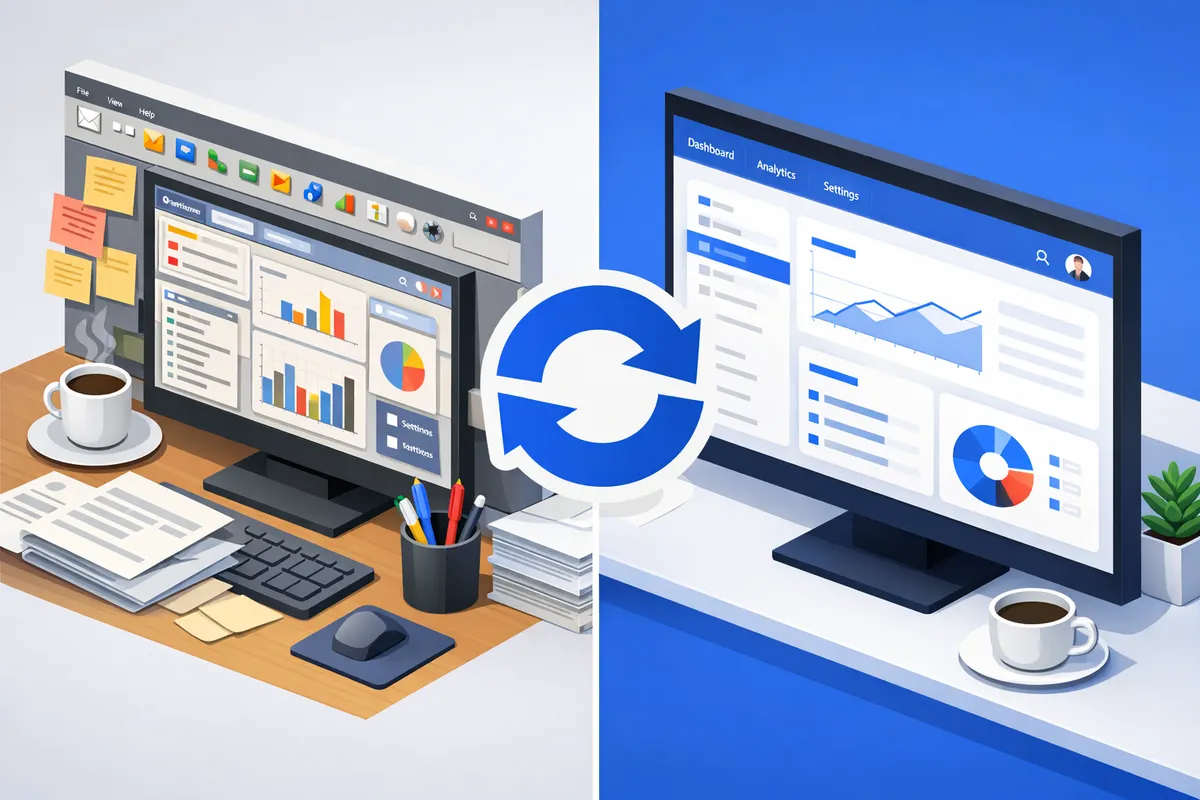
How We Build Website Redesigns for East Garfield Park
Discovery for a website redesign starts with the audiences who matter most to the organization. For a community nonprofit on Washington Boulevard, those audiences might be current program participants, prospective clients, foundation program officers, individual donors, and community partners. Each audience visits the website with a different question and needs a different answer quickly. We map the primary visitor journeys before designing a single page so the architecture serves real visitor behavior, not organizational hierarchy.
We conduct a technical audit of the existing site: page load times, mobile performance scores, broken links, outdated CMS versions, accessibility violations, and SEO health. This audit gives us a baseline and a list of the problems the new site must not replicate. For organizations that built on WordPress with accumulated plugins and customizations, the audit almost always reveals significant technical debt that is causing measurable performance and security problems.
Design begins with the brand identity. Some East Garfield Park organizations have strong visual identities that just need to be applied correctly to a modern web design. Others have allowed their visual identity to drift across different materials over time and need a refresh. We do not redesign a website without resolving the brand question first because a beautiful website that does not match the organization's printed materials or social media creates confusion rather than confidence.
Development standards are non-negotiable. Every site we build passes Core Web Vitals benchmarks, which means it loads fast on a mid-range Android phone on a 4G connection, not just on a developer's laptop on office WiFi. Every site meets WCAG 2.1 Level AA accessibility standards. Every site is built on a CMS that your staff can update without developer help, with a content management interface configured specifically to your content types. A nonprofit with a monthly program calendar should be able to update that calendar without calling us.
Industries We Serve in East Garfield Park
Community nonprofits and development organizations on Kedzie Avenue and Madison Street need websites that serve four audiences simultaneously: the residents accessing services, the funders evaluating programs, the individual donors contributing to the mission, and the community partners and media looking for information. We build nonprofit websites with clear audience-specific pathways from the homepage and conversion actions calibrated to each audience: program enrollment, grant inquiry, donation, and contact.
Food businesses and brands that graduated from the Hatchery Chicago incubator on Lake Street need websites that work as a sales tool for wholesale buyers, a brand platform for direct consumers, and a credibility anchor for press and distribution partners. A food brand website has different structural requirements than a service organization's website, and we build accordingly: product pages that satisfy retail buyer specifications, an about page that tells the founding story in a way that builds brand loyalty, and a trade inquiry pathway that captures wholesale interest efficiently.
After-school programs and youth development organizations near Garfield Park Fieldhouse need websites that serve families making enrollment decisions under time pressure. Parents searching for summer programming or after-school care are comparison shopping. A website that makes it easy to find age-appropriate programs, understand costs and scholarship availability, and complete enrollment online wins those families. We build enrollment pathways that convert interest to application, not websites that require a phone call to accomplish what a form should handle.
Barbershops and personal service businesses along Central Park Avenue benefit from redesigns that optimize for the specific conversions that matter: appointment booking, phone calls, and Google Map directions. A barbershop website that buries the booking link, loads slowly on the iPhone that every client is using, or does not show current hours is losing appointments to competitors whose websites make it easier. We build these sites to be fast, clean, and conversion-focused.
Community health organizations need websites that build trust quickly with patients making healthcare decisions. Medical trust is earned or lost in the first 15 seconds of a site visit. A health organization's website needs to communicate competence, accessibility, and sliding-scale affordability clearly before the visitor decides whether to call. We build health organization websites with particular attention to clear service descriptions, provider introductions, and language accessibility.
Churches and faith communities on Washington Boulevard maintain websites that serve both their active congregation and the broader community that might encounter them for the first time through search. A church website needs to speak to both audiences without alienating either. Regular members need quick access to schedules, events, and giving. New visitors need to understand the congregation's character and feel welcomed rather than processed. We design church websites that serve both journeys from a shared architecture.
What to Expect Working With Us
1. Audience mapping and conversion planning. Before any visual design begins, we document who visits your site, what they need to find, and what action completing that journey looks like. For East Garfield Park nonprofits, this step often reveals that the current site is organized around the organization's internal structure rather than around what visitors actually want. The new architecture resolves that mismatch.
2. Technical audit and platform selection. We audit the existing site and recommend a new platform based on your content volume, update frequency, staff technical capacity, and performance requirements. For most organizations on the West Side, a well-configured CMS with a simple administrative interface is the right answer. We configure it specifically to your content types rather than leaving staff to figure out a generic setup.
3. Design, build, and performance testing. Design is reviewed in prototype form before a line of code is written. Once approved, development proceeds against the design with continuous performance testing throughout. We do not launch a site that fails Core Web Vitals benchmarks or has accessibility violations. For organizations receiving federal funding, accessibility compliance is a delivery requirement.
4. Launch, training, and transition. We run content management training for every staff member who will update the site and provide written documentation of how to handle the most common update tasks. For organizations with board members or volunteers who need occasional access, we configure the CMS with role-based permissions that let them contribute without risking accidental damage to the site structure.