How We Build POS Systems for East Garfield Park
POS implementation for East Garfield Park begins with an honest assessment of your operation: how you sell, who your customers are, what your peak periods look like, and what reporting your business actually needs to run well. A food entrepreneur selling at the Garfield Park Conservatory seasonal market needs a fundamentally different system than a community health clinic on Central Park Avenue processing insurance co-pays. We do not apply a single template.
For food businesses, particularly those emerging from the Hatchery Chicago incubator on Kedzie Avenue, menu architecture matters more than most owners expect. A product line that includes multiple SKUs at different price points, with wholesale pricing for restaurant accounts and retail pricing for direct consumers, needs a POS menu structured to handle both without requiring the operator to do mental math or switch between system modes at the counter. We build that structure before the system goes live.
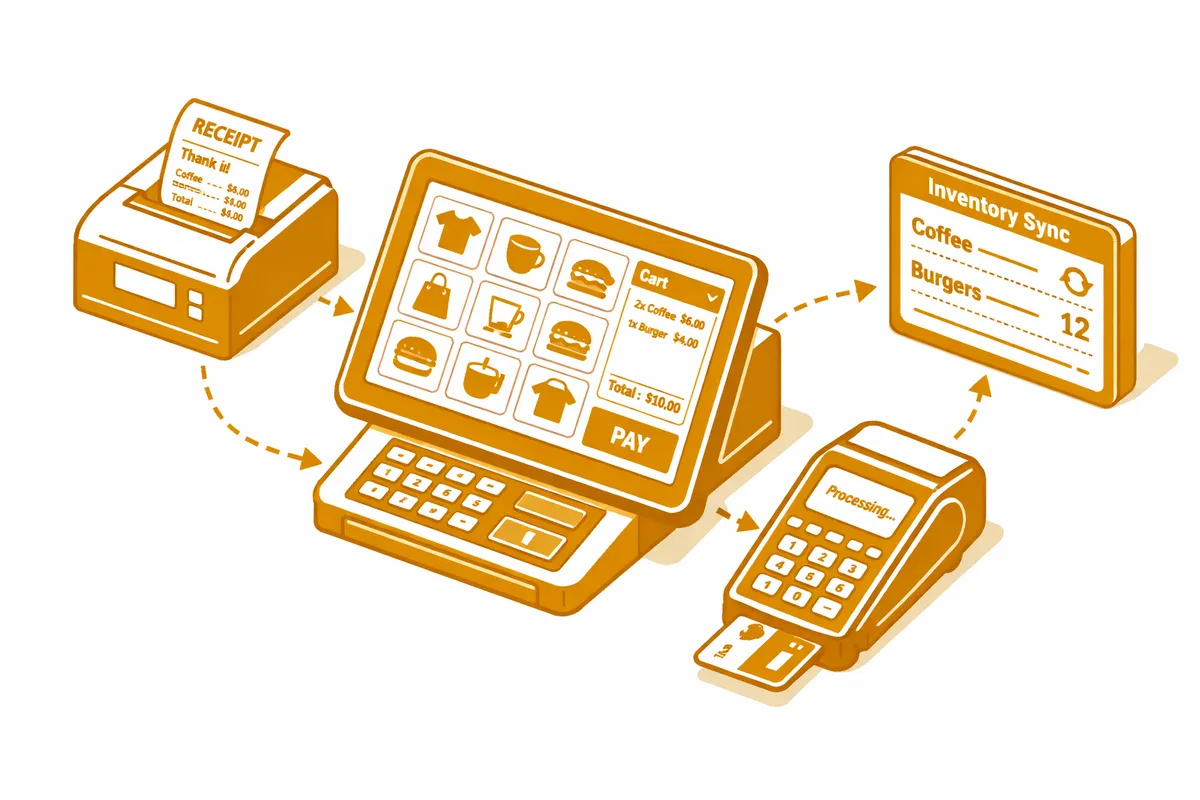
Hardware selection for East Garfield Park's commercial environment leans toward mobile-first configurations. Many early-stage food businesses and nonprofits do not have permanent retail counters. They sell at markets, operate from shared spaces, or run pop-up events at Garfield Park during seasonal programming. A tablet POS with a mobile card reader that can be packed up and taken to an event, then used at a fixed station the next day, serves the actual operating model.
Network reliability is a real factor on the West Side. We specify POS hardware that handles offline transactions gracefully, so a dropped internet connection during a busy event at the Garfield Park Fieldhouse does not mean the business stops accepting card payments. Transactions process locally and sync when connectivity restores.
We also address the accounting and reporting side upfront. East Garfield Park food entrepreneurs and nonprofits often need POS data in formats compatible with QuickBooks, grant reporting templates, or investor updates. Building those connections into the initial implementation means the operator has clean financial records from day one rather than a backlog of manual reconciliation to catch up on.
Industries We Serve in East Garfield Park
Food entrepreneurs and Hatchery Chicago incubator graduates launching commercial food businesses on the West Side need POS systems that handle production-scale thinking alongside retail sales. A Hatchery tenant on Kedzie Avenue who sells packaged goods at markets and online needs inventory tracking tied to production batches, not just product units on a shelf. A food business that sells both wholesale to restaurants and direct to consumers through a farmers market needs pricing tiers and order types built into the POS menu structure. We configure POS systems for food entrepreneurs with the operational complexity their businesses actually have.
Barbershops and personal service businesses along Washington Boulevard and Madison Street serve loyal neighborhood clienteles and benefit from POS systems that track revenue by service type, handle tip processing cleanly, and integrate with appointment scheduling platforms. A barbershop that has operated on Madison Street for years and is adopting digital payment for the first time needs a POS that is intuitive enough for any staff member to use immediately, with tip prompts and service menus configured for how a barbershop actually operates rather than adapted from a coffee counter template.
Community nonprofits and after-school programs near Garfield Park Fieldhouse and the Garfield Park Conservatory collect program fees, process event ticket sales, and sometimes sell branded merchandise. The POS requirement for a community organization is typically simplicity and low operating cost above all. We configure nonprofit POS deployments on platforms with no monthly software fee or very low base costs, with reporting structured to produce the revenue summaries that board members and grant administrators need.
Community health organizations operating near Central Park Avenue handle a mix of payment types that generic retail POS systems do not manage well: insurance co-pays, sliding-scale program fees, health product retail sales, and sometimes grant-funded services that carry no patient charge. We design community health POS configurations that keep each revenue stream clearly separated in reporting while remaining simple enough for front desk staff to operate without specialized training.
Churches and faith-based enterprises along Lake Street and Washington Boulevard run facilities, food ministries, and community programs that generate revenue from multiple sources simultaneously. A church hosting a community meal program that also sells produce from a community garden, charges nominal fees for ESL classes, and accepts donations needs a POS flexible enough to categorize all of those transactions correctly without requiring a separate system for each. We configure faith-based POS deployments for operational clarity and accurate financial reporting.
Small retail businesses near the Garfield Park Green Line stop serving daily neighborhood needs on Madison Street need fast, reliable POS systems with the full range of payment options that West Side residents expect: credit, debit, contactless, and for food retailers, EBT. A neighborhood grocery or convenience store near the Green Line conservatory stop sees a mix of walk-in customers from the transit corridor alongside regular neighborhood shoppers. POS systems that handle that customer mix quickly and correctly, without transaction errors or slow card processing, build the repeat business that sustains a neighborhood retail operation.
What to Expect Working With Us
1. Operations and business model review. We start by understanding how your business runs: your transaction types, your peak periods, your staffing level, and what you currently use to track sales. A food entrepreneur selling at Garfield Park seasonal markets has a different profile than a community health clinic on Central Park Avenue. We do not recommend a system until we understand the operation.
2. System design with full cost transparency. We design the complete POS setup, including hardware, software platform, payment processing structure, and any integrations you need, and review every line of ongoing cost with you before any commitment. Monthly software fees, payment processing rates, and hardware costs are all explicit. For East Garfield Park small businesses where margin is real, the cost of running the POS matters as much as the setup.
3. Configuration and pre-launch testing. We configure the full system, including your menu or service structure, pricing tiers, tip handling, reporting, and any integrations, and test it completely before your first live service. Problems with configuration are identified and fixed before customers are at the counter, not after.
4. Training and accessible post-launch support. Every deployment includes hands-on training for the owner and any staff who will use the system. We remain reachable after launch for configuration adjustments and operational questions. East Garfield Park businesses should not navigate an automated support queue to get answers in the weeks after a new POS goes live.