How We Build ERP Integrations for East Garfield Park
Every engagement starts with a full technology audit covering every system the organization currently uses, the data flows that exist between them, and the manual reconciliation steps an integration would eliminate. For a Hatchery food business, that audit covers the inventory management system (or the lack of one), the accounting platform, the e-commerce or wholesale ordering system, and the procurement workflow. For a community development organization on Madison Street, it covers the accounting system, the grant management or program tracking tools, the payroll system, and the reporting templates each funder requires.
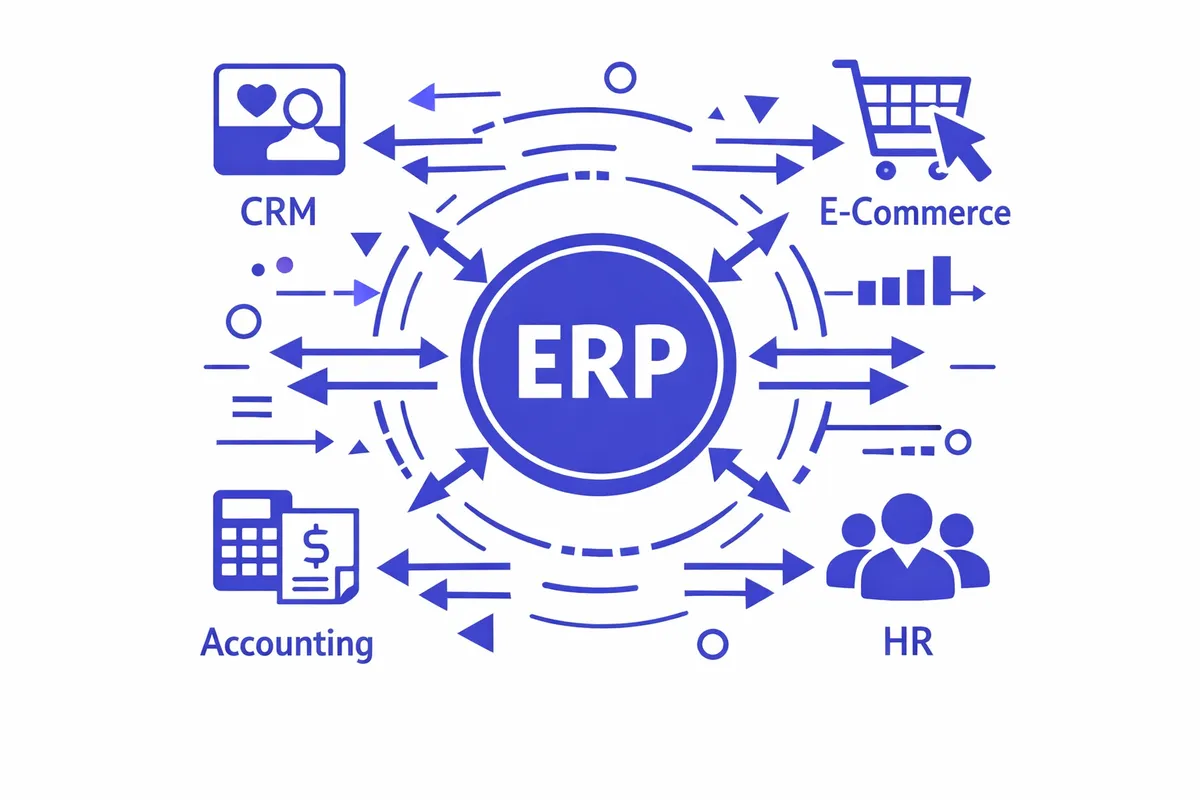
From the audit, we produce an integration architecture that specifies which systems connect, how data flows between them, and what transformation logic is required to maintain accounting integrity across the connection. For food businesses, the most critical integrations are inventory-to-accounting (ensuring product cost is captured correctly as inventory is consumed in production) and order-to-accounting (ensuring revenue is recognized when sales orders are fulfilled, not when the check arrives). For community development organizations, the critical integration is program expenses-to-fund accounting, ensuring every expenditure is coded to the correct funding source at the point of entry rather than reallocated manually at month end.
We select ERP platforms appropriate to the scale and complexity of each East Garfield Park organization. A food manufacturer at the early growth stage may need a platform like QuickBooks Enterprise with inventory add-ons, or a purpose-built food manufacturing ERP like Fishbowl or Vicinity Software. A community development organization managing multiple grant sources needs a nonprofit-capable fund accounting platform like Sage Intacct or Blackbaud Financial Edge. We do not recommend enterprise platforms with enterprise price tags and implementation timelines for organizations that do not require enterprise scale.
Error handling is built into every integration from the beginning. When a sync fails, the failure is captured with full context, queued for retry, and surfaced to the finance team with a clear explanation of what happened and what needs to be resolved. We design for the reality that integrations break occasionally, and that the failure mode matters as much as the success mode.
Industries We Serve in East Garfield Park
Food manufacturers and specialty producers at Hatchery Chicago and in independent facilities along the Lake Street and Madison Street corridors need ERP integration that connects production planning, raw material inventory, batch costing, finished goods inventory, and accounting. When a hot sauce producer on Lake Street runs a production batch, the ERP integration automatically depletes the raw material inventory for each ingredient, records the labor and overhead costs for the batch, and creates the finished goods inventory record for the batch output. The cost of goods for each SKU reflects actual production cost, not an estimate, and the accounting matches the physical inventory without a manual reconciliation.
Community nonprofits and social services organizations along Madison Street and Washington Boulevard manage program budgets that require fund accounting, grant reporting, and multi-funder financial management. ERP integration with a fund-accounting-capable platform creates the structure where every dollar of expense is tracked to the correct funding source from the moment it is entered, and every funder's reporting template can be generated from the system rather than assembled manually from exported spreadsheets at each reporting deadline.
Community development financial institutions and lending organizations in East Garfield Park manage loan portfolios, grant funds, and program investments that require specialized financial reporting. ERP integration connects the loan management system, the grant tracking tool, and the core accounting platform so the organization's financial reports reflect the full picture of all financial activity without a separate consolidation exercise at period end.
Food retail and cooperative businesses along Madison Street and the Garfield Park Conservatory corridor manage inventory, procurement, member equity, and retail accounting through systems that often do not communicate with each other. ERP integration for cooperative businesses includes the membership equity accounting that standard retail ERP systems do not typically handle natively, requiring customization or a specialized cooperative accounting platform.
Contractors and construction businesses serving the East Garfield Park community development corridor manage job costing, subcontractor payments, lien waiver tracking, and compliance reporting for projects involving public funding. ERP integration connecting the project management system, accounting platform, and compliance reporting tools eliminates the manual data assembly that consumes project administrator time on every public-funded project.
After-school programs and youth services organizations in East Garfield Park manage program enrollment, attendance tracking, grant billing, and financial reporting through disconnected systems. ERP integration connects program data to the billing and accounting workflows so grant invoices based on attendance or service delivery generate automatically rather than requiring manual count and calculation.
What to Expect Working With Us
System Audit and ERP Assessment. We document your complete technology stack and evaluate every current integration and manual data flow. For East Garfield Park organizations at the growth stage, this audit frequently surfaces data that exists in multiple places with inconsistent values, a sign that the manual reconciliation processes are not keeping pace with the volume. We identify the most critical gaps and design the integration sequence to address them in priority order.
Platform Selection and Architecture. For organizations that do not yet have a capable ERP, we recommend platforms appropriate to the scale, budget, and operational requirements of an East Garfield Park business or nonprofit. We do not default to the largest platform available; we recommend the platform that meets the actual requirements at a cost the organization can sustain. For food manufacturers, for community development nonprofits, and for small manufacturers, the platform recommendations differ because the operational requirements differ.
Build and Validation. We build integrations with accounting integrity validation built in. For every integration that touches financial data, reconciliation checks run after each sync to verify totals match across systems. Discrepancies surface and are resolved before they compound into a month-end problem.
Launch and First Cycle Support. We launch with monitoring active and provide direct support through the first full reporting cycle after go-live: the first month-end close, the first grant report, the first production batch cost calculation. The first cycle always surfaces edge cases that did not appear in testing; we resolve them and refine accordingly.