How We Build Custom ERP for East Garfield Park
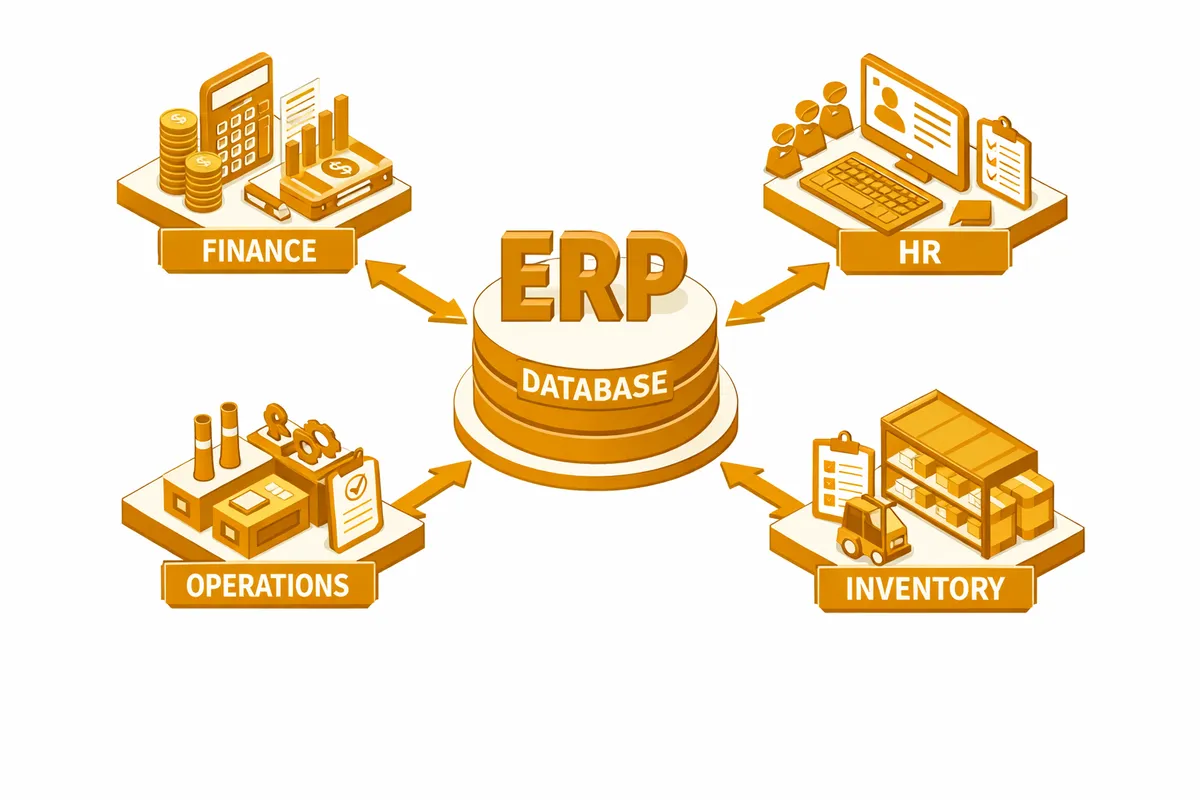
Discovery for a custom ERP project takes four to six weeks. We interview every department head, observe operational workflows in detail, audit existing data systems, and map every piece of information that currently lives in a spreadsheet, a tool, or someone's head that the organization wishes were systematically tracked. For a CDC on Kedzie Avenue in East Garfield Park, that audit typically surfaces five to eight distinct data domains: clients, properties, tenants, grants, projects, staff, vendors, and assets.
From the audit, we design a data model that connects those domains with the right relationships. The design is reviewed with the executive team before development begins because the data model is the foundation the entire system runs on. A data model that does not reflect how the organization actually thinks about its work will produce an ERP that nobody trusts.
Development is modular. We build core financial and operational modules first and deliver them for staff use while continuing development on secondary modules. This means the organization is getting value within three to four months of project start rather than waiting for a full-system launch 12 months in. Each module is built against the shared data model so integration between modules is native, not bolted on.
We build administration interfaces that give non-technical staff control over configuration. Field labels, workflow rules, report templates, and user permissions are all manageable without developer involvement. Organizations with staff turnover and evolving funder requirements cannot afford to call a developer every time a form field needs to change.
Industries We Serve in East Garfield Park
Community development corporations and housing nonprofits along Madison Street and Kedzie Avenue manage the most complex operational environment in the neighborhood: mixed housing portfolios with multiple income tiers, commercial corridor properties, service programs running on separate grant cycles, and capital projects with their own budgets and timelines. A custom ERP for a CDC integrates all of those into a single operational picture, with the financial reporting flexibility to satisfy every funder's different format requirements.
Food manufacturers and product businesses that grew through the Hatchery Chicago incubator need production management, procurement, inventory, order management, and accounts receivable in a single system. Custom ERP for a food manufacturer on Lake Street means a system that knows that a low-inventory alert on a key ingredient should trigger a purchase order at the approved vendor price, and that the purchase order should sync automatically to accounts payable when the goods arrive.
After-school programs and youth development organizations managing multiple program sites near Garfield Park Fieldhouse need a system that tracks enrollment, attendance, academic outcomes, and grant-required service metrics across sites and rolls them up into consolidated funder reports. Custom ERP handles the site-level detail and the portfolio-level summary in the same system without requiring staff to manually aggregate data from multiple databases.
Community health organizations running federally qualified health center programs, grant-funded outreach, and sliding-scale clinic services need a system that integrates clinical encounter data with billing, program reporting, and grant management. Custom ERP built for a community health organization near the Garfield Park corridor connects those functions so the CFO, the program director, and the billing manager are all working from the same data.
Faith-based organizations and churches on Washington Boulevard that run social service programs alongside their congregational operations benefit from custom ERP that separates church management from program operations while giving leadership a consolidated view of both. Fund accounting for a church with a DCFS-licensed childcare program and a congregational budget requires more structural separation than most off-the-shelf church management software provides.
Workforce development programs operating in East Garfield Park manage participant intake, case management, training program enrollment, employer relationships, placement tracking, and outcome reporting in a unified system. Custom ERP ties those functions together so a case manager's placement note automatically updates the funder's outcome metric without a separate data entry step.
What to Expect Working With Us
1. Operational audit and data domain mapping. Four to six weeks of interviews, process observation, and data inventory. The output is a detailed map of every operational domain, the data it contains, and the relationships between domains. For East Garfield Park nonprofits with complex program portfolios, this map often reveals data that currently exists nowhere in any system and needs to be created.
2. Data model design and review. We present the proposed data model for executive and department head review before writing a line of code. Revisions at this stage cost days. Revisions after development is underway cost weeks. We insist on this review because the data model is the most important decision in the project.
3. Modular development with rolling delivery. Core financial and operational modules launch first. Secondary modules are delivered in subsequent phases. Staff begin using the system within months of project start, and their feedback shapes the development of later modules. By the time the full ERP is live, your team has been using and trusting the core for six months.
4. Training, documentation, and operational handoff. We do not deliver software. We deliver operational capability. That means role-specific training for every user group, administrator documentation for the staff managing the system long-term, and a structured handoff period during which our team is on call for questions and issues before support transitions to a maintenance agreement.