How We Build API Development for East Garfield Park
The starting question is not what technology to use. It is what data needs to travel where, how often, and under what conditions. We map every data flow the organization or business currently handles manually or wishes it could automate. For a community nonprofit near Garfield Park Fieldhouse, that mapping session surfaces things like: the monthly export from Salesforce to the city's HMIS database, the weekly roster reconciliation between the program database and payroll, and the funder-specific outcome report that requires combining data from three systems that have never been connected.
From that map, we design an API architecture that handles each flow with the appropriate authentication, error handling, and logging. Community organizations need auditable data pipelines. When a funder asks why the quarterly report numbers differ from the prior quarter, the organization needs to be able to trace every data point back to its source. We build that traceability into the API layer from the start rather than retrofitting it.
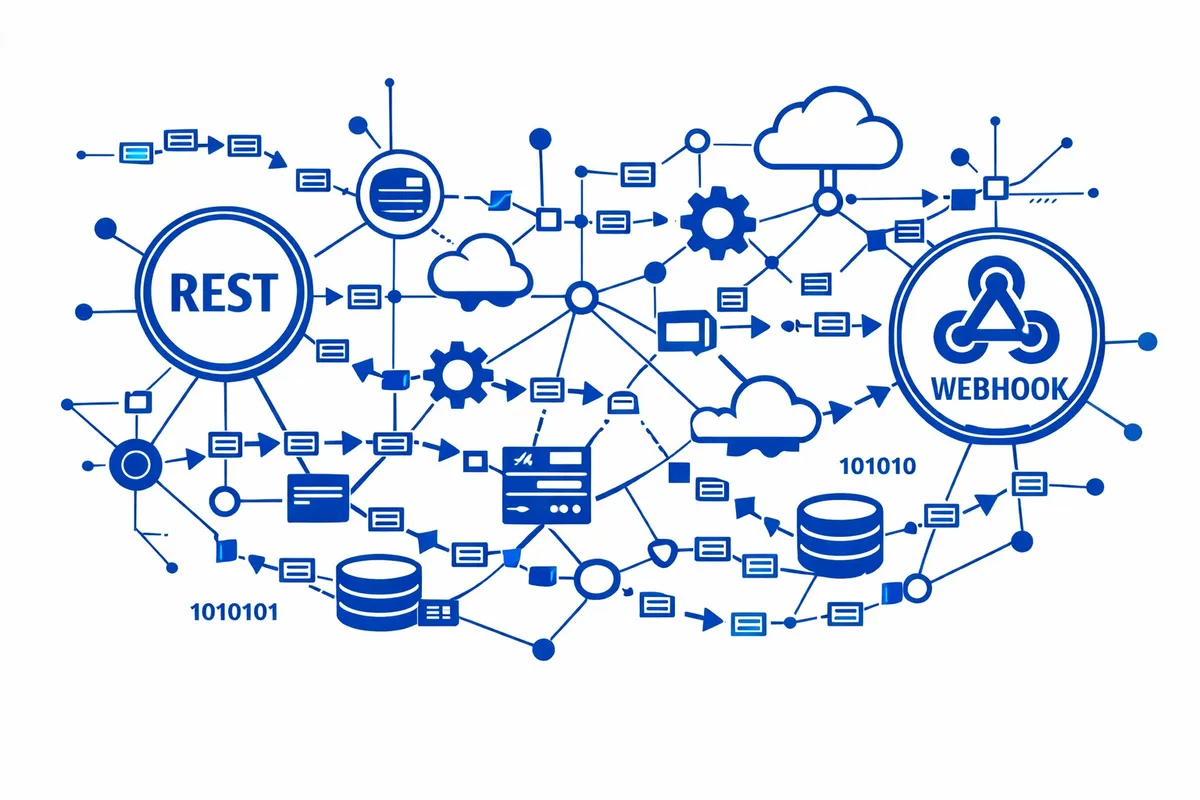
For food businesses with established platforms like distributor EDI systems or retail POS integrations, we work within those systems' existing API documentation and build the middleware that translates between formats. Most business platforms expose REST APIs or webhook endpoints. Where they do not, we build file-transfer automation that handles the EDI or SFTP handoffs these older systems still require.
Testing for community organizations includes data integrity validation: we verify that every record that leaves the source system arrives correctly in the destination system and that the error handling catches and alerts on exceptions before they propagate into funder reports.
Industries We Serve in East Garfield Park
Community nonprofits on Madison Street and Kedzie Avenue use API integrations to connect client management systems to funder reporting databases, eliminating the manual data entry that consumes case manager time and introduces errors. We have built integrations between common nonprofit platforms including Salesforce, Apricot, HMIS, and city contractor portals.
Food manufacturers and distributors who built their business through Hatchery Chicago's Lake Street incubator need API connections to grocery distributor ordering platforms, third-party logistics providers, and retail portals like KeHE or UNFI. These integrations turn a manual order-fulfillment process into an automated pipeline that scales with order volume without scaling the administrative burden.
After-school programs and youth development organizations near Garfield Park Fieldhouse collect program attendance, academic progress data, and family contact information across multiple tools. API development connects those tools so reports to Chicago Public Schools, DFSS, and private foundations draw from a single authoritative data source rather than requiring manual assembly from three separate exports.
Community health organizations running sliding-scale clinics and outreach programs across East Garfield Park manage patient encounter data, billing records, and grant-funded program metrics in separate systems. APIs between EHR platforms, billing systems, and grant management tools reduce double-entry and ensure that program outcome metrics match billing data when both are reported to the same funder.
The churches and faith communities anchoring Washington Boulevard and surrounding blocks increasingly run digital giving platforms, volunteer management systems, and event registration tools that could share data but do not. A simple API integration between a church management platform and its giving portal eliminates reconciliation work for the volunteer treasurer and gives leadership real-time visibility into giving trends.
Workforce development programs operating in East Garfield Park connect applicant tracking systems to employer partner portals via API so job placement tracking happens automatically rather than through coordinator follow-up calls. Placement data flows into funder reporting systems in real time, improving reporting accuracy and reducing the end-of-quarter scramble that consumes program staff time.
What to Expect Working With Us
1. Data flow mapping and priority ranking. We spend the first sessions mapping every data transfer your organization currently handles manually or struggles with. We then rank them by time cost, error risk, and funder importance. East Garfield Park nonprofits with quarterly reporting deadlines get their highest-stakes integrations built first.
2. Architecture design with your platforms in mind. We design the API layer around the actual systems you use, not the systems we prefer to work with. Whether that means building against a Salesforce API, an HMIS webhook, or an EDI file-transfer protocol that a grocery distributor requires, the design fits your real stack.
3. Build, test, and validate against real data. We test every integration against actual data from your systems before going live. For community organizations, we validate that historical records match across systems after the initial sync. For food businesses, we run test orders through the full pipeline before connecting to live distributor accounts.
4. Documentation and staff handoff. Every API integration we build is documented in plain language: what data it moves, when it runs, what to check if it stops working, and who to contact if the source system changes. Organizations on Kedzie Avenue with high staff turnover need documentation that survives transitions, not institutional knowledge held by one developer.