How We Build AI Strategy Consulting in East Garfield Park
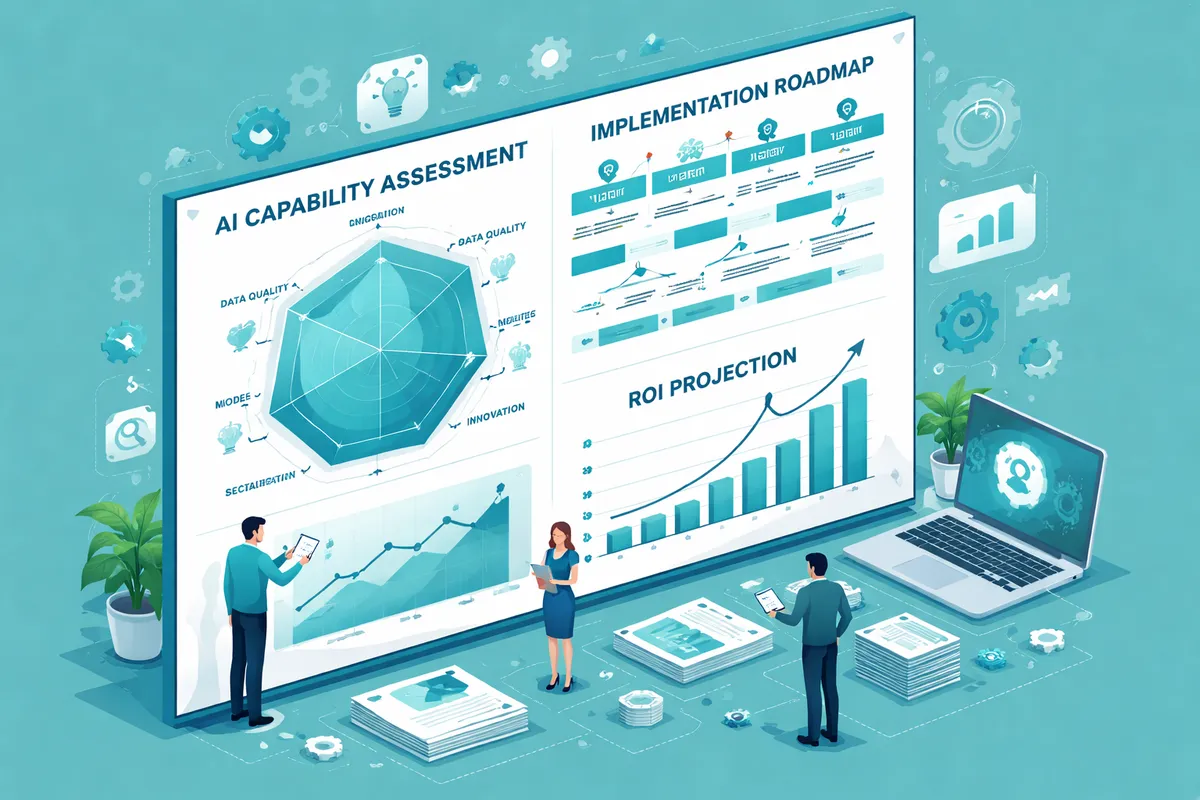
We begin with a business assessment: what you sell, who buys it, what tools you use, where you lose time or money, and what growth looks like for you over the next year. Then we build a prioritized AI roadmap with clear milestones, cost estimates, and projected returns for each initiative. The roadmap is sequenced so each investment builds on the previous one. Your first implementation generates data that makes the second one more effective. We also identify what you should not invest in yet, which is often as valuable as knowing what to do first because it prevents wasted spending on tools your business is not yet ready to use effectively. Every recommendation includes specific timelines and measurable success criteria so you can evaluate performance objectively.
What to Expect Working With Us
1. Business assessment. We review your operations, team structure, technology, and customer data to understand where you are starting from and what your most pressing bottlenecks are. For East Garfield Park businesses, we pay particular attention to the gap between where your operation is today and where it needs to be to capture growth as the neighborhood develops. 2. Opportunity identification. We surface every AI application relevant to your business type and size, then rank them by impact, cost, and implementation complexity. The ranking is specific to your situation, not a generic list. 3. Roadmap delivery. You receive a written, prioritized AI strategy with specific recommendations, budget ranges, timelines, and success metrics for each initiative. Every recommendation is actionable and sized for your actual capacity. 4. Implementation guidance. We guide the first implementation from tool selection through launch. We check results against projections and update the roadmap before proceeding to the next phase to ensure each step is working before more resources are committed.
Industries We Serve in East Garfield Park
Retail businesses get strategies focused on the highest-impact applications for their current size: search optimization for customer acquisition, marketing automation for retention, and inventory forecasting for cost reduction along Madison Street. For a store doing $150K to $300K annually, the AI strategy looks very different from one serving a $3M retailer. We size recommendations appropriately and prioritize the tools that generate the fastest payback for a business at your revenue level.
Food businesses receive roadmaps that typically start with marketing automation or demand forecasting, depending on whether customer acquisition or waste reduction is the bigger opportunity based on your specific numbers. A takeout operation on Lake Street near the Green Line has different priorities than a sit-down restaurant with a dinner reservation model. The strategy starts with your actual menu, your actual customer flow, and your actual data before making a single recommendation.
Community organizations get AI strategies for document processing, data pipeline automation, and program impact measurement, often starting with whatever frees the most staff time from administrative work. An organization near Malcolm X College running workforce development programs may find that automated intake forms and document processing free enough staff hours to serve 20 percent more participants without adding headcount. Service providers along Lake Street receive plans for scheduling automation, customer communication, and lead management that generate more business without requiring the owner to work more hours.