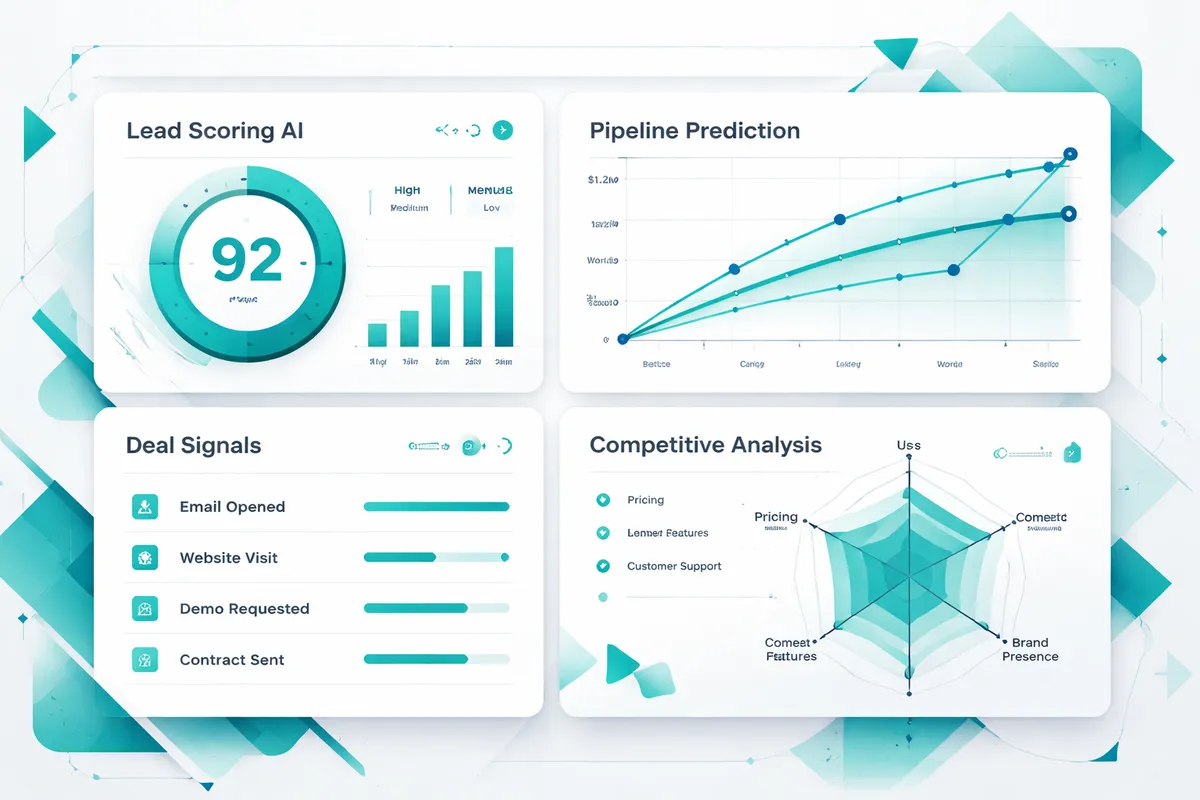
How We Build AI Sales Intelligence in East Garfield Park
We connect your customer data sources: POS records, email interactions, social media engagement, and transaction histories. The AI cross-references these signals to identify your highest-value customer segments and predict which prospects are most likely to convert. For retail on Madison Street, that means identifying repeat buyers for targeted loyalty outreach. For service providers near the conservatory, it means prioritizing leads who show genuine engagement signals. For community organizations, it means identifying potential donors and partners based on engagement patterns with your programs and content.
The deployment process includes hands-on setup and training for your team. In East Garfield Park, where business resources are often lean, we design systems that are simple to use and immediately actionable rather than requiring ongoing data analysis expertise.
Industries We Serve in East Garfield Park
Retail businesses on Madison Street use sales intelligence to identify their top 20% of customers by lifetime value and build targeted retention campaigns around them. A shop can discover that its most loyal customers share specific characteristics, such as living within a six-block radius or having been introduced by a specific community event, and use that insight to find more customers like them in the surrounding blocks. The discovery of what your best customers have in common is one of the most actionable outputs of an AI sales intelligence system.
Food businesses analyze ordering patterns to identify customers ready for catering upsells, predict which days need promotional pushes, and optimize loyalty programs for maximum retention. A restaurant that identifies its top catering clients and reaches out proactively before the holiday season captures bookings that would otherwise go to competitors who called first.
Service providers track prospect engagement across phone, email, and web to focus outreach on the leads most likely to convert, reducing wasted time on cold contacts by 40 to 50 percent. For businesses with limited sales staff, this focus is not a luxury. It is the difference between a business development approach that generates growth and one that generates exhaustion without results.
Community organizations identify potential donors and partners based on engagement with programming, event attendance, and communication responsiveness. The system surfaces which community members are most engaged across multiple touchpoints and most likely to respond to a deeper commitment ask, whether that is a donation, a volunteer commitment, or a board position.
What to Expect Working With Us
1. Data audit and integration. We review your existing customer data and connect it to the intelligence platform. For East Garfield Park businesses that have not previously used customer intelligence tools, we start with whatever data exists, even if it is limited, and build the collection infrastructure to grow it from day one of deployment.
2. Customer scoring and segmentation. We build value scores and identify your customer tiers: top loyalists, at-risk regulars, new customers with high return potential, and lapsed customers worth targeting for re-engagement. For community organizations, we add donor and volunteer scoring alongside customer segmentation.
3. Outreach playbook and alert setup. We configure alerts for the situations that matter most to your East Garfield Park business and create outreach templates for each alert type. Every alert comes with a recommended action so your team knows exactly what to do when the system flags a relationship that needs attention.
4. Ongoing support and quarterly reviews. We check in quarterly to review results, assess which outreach strategies are converting, and update the scoring models. For East Garfield Park businesses in a rapidly evolving commercial environment, we also track neighborhood-level changes that might affect customer behavior and warrant adjusting the intelligence approach.