How We Build Accounting Automation for East Garfield Park
Discovery starts with a conversation about funding structure, not software. Before we write a line of configuration, we sit with the organization's financial manager or the business owner and map every revenue stream, every expense category, and every reporting obligation. For a nonprofit near Garfield Park Fieldhouse, that means understanding which grants allow indirect cost recovery and at what rate, and building chart-of-account logic that tags expenses correctly at the point of entry. For a food business, it means mapping COGS, packaging, co-packing fees, and distribution costs into categories that produce accurate per-unit profitability data.
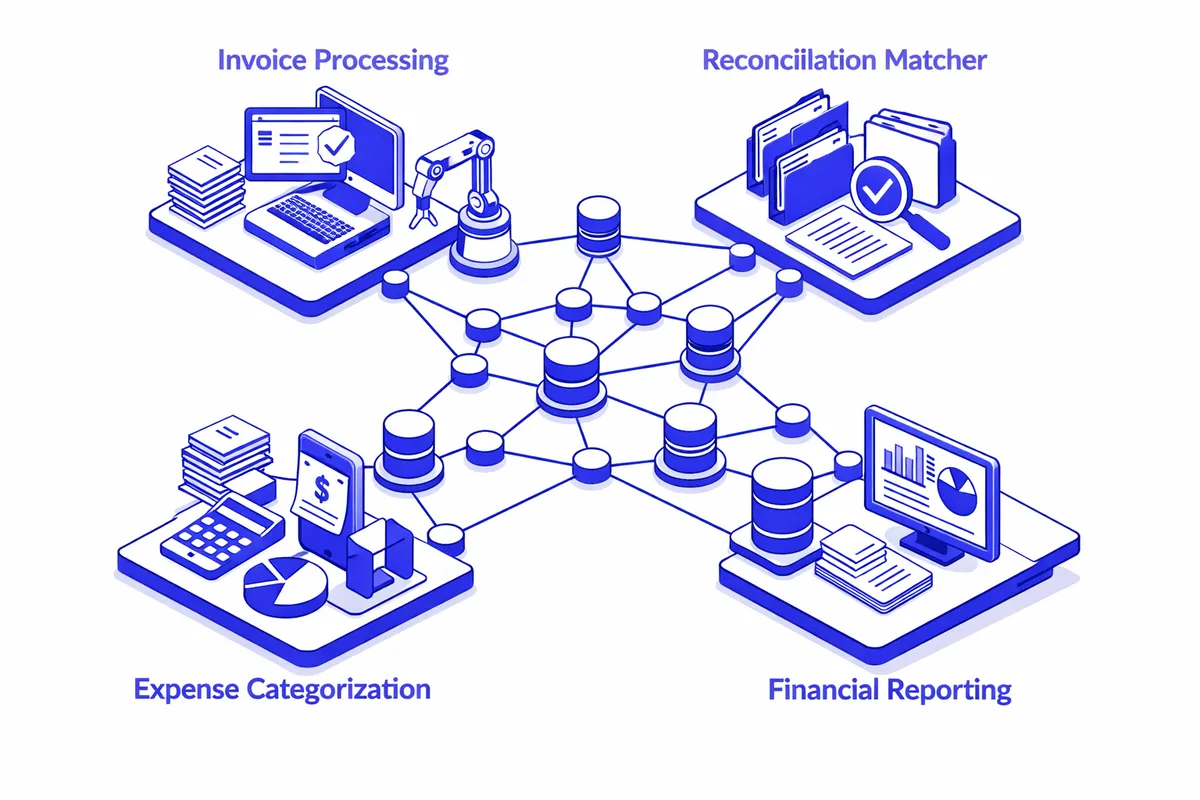
From that map, we configure the automation layer: transaction rules that categorize recurring expenses automatically, invoice generation that fires when a job or order closes, payroll journal entries that sync from the payroll system, and grant expense reports that populate from tagged transactions rather than manual assembly. Every rule is tested against three months of historical data before going live so the owner sees the system working with real numbers.
We do not hand off a configured platform and leave. The first 90 days include weekly check-ins during which we review categorization accuracy and adjust rules as new transaction types appear. Most organizations reach 85 to 90 percent automation of routine bookkeeping within three months, freeing the financial staff to focus on analysis and compliance rather than data entry.
Industries We Serve in East Garfield Park
Community nonprofits and social service organizations operating out of Madison Street corridors use accounting automation to manage multi-funder grant portfolios, track restricted versus unrestricted funds in real time, and generate audit-ready financial statements without consulting-firm fees. The system flags restricted fund overruns before they become compliance problems.
Food manufacturers and product businesses who have moved through the Hatchery Chicago incubator on Lake Street deploy automated COGS tracking tied to production batches, purchase order matching that reconciles vendor invoices against delivery records, and wholesale invoice generation that scales without additional administrative staff as their retail accounts grow.
Barbershops and personal care businesses along Central Park Avenue benefit from point-of-sale integration that posts daily revenue automatically, tracks booth rental income separately from service income, and calculates self-employment tax estimates monthly so owners are not caught short at filing time.
At Garfield Park-area churches and faith-based organizations, accounting automation handles tithe and offering tracking, designated fund management for building campaigns or mission projects, and the annual financial reporting their congregations expect at annual meetings. These organizations often have volunteer treasurers who need a system that is forgiving of infrequent use.
After-school programs and youth development organizations near Garfield Park Fieldhouse manage contract revenue from Chicago Public Schools and DFSS alongside private donations. Automation handles the split-coding of shared expenses across funding sources and produces the program-level financial reports each funder requires.
Community health organizations working across the East Garfield Park and Humboldt Park corridor deal with Medicaid billing cycles, grant-funded program costs, and fee-for-service revenue from sliding-scale clinics. Automated reconciliation between billing systems and the general ledger eliminates one of the most error-prone manual processes these organizations face.
What to Expect Working With Us
1. Funding and revenue mapping. We document every revenue source, funding restriction, reporting requirement, and expense category before touching any software. For East Garfield Park organizations with complex grant portfolios, this step prevents months of rework downstream. The map becomes the blueprint for every automation rule we build.
2. System configuration and historical testing. We configure transaction rules, chart-of-accounts structure, and report templates, then run them against at least one full fiscal quarter of historical transactions. You see accurate automated output before the system goes live on current data.
3. Parallel running period. For the first 30 days after launch, we run automated and manual processes simultaneously and compare outputs weekly. Discrepancies surface rule gaps that we close before you rely on the system exclusively. This is especially important for organizations approaching a grant reporting deadline.
4. Reporting calibration for your funders. Different funders want different formats. We build report templates for each major funder's requirements so quarterly and annual reporting becomes an export rather than a rebuild. When the November crunch arrives, the reports are already formatted.