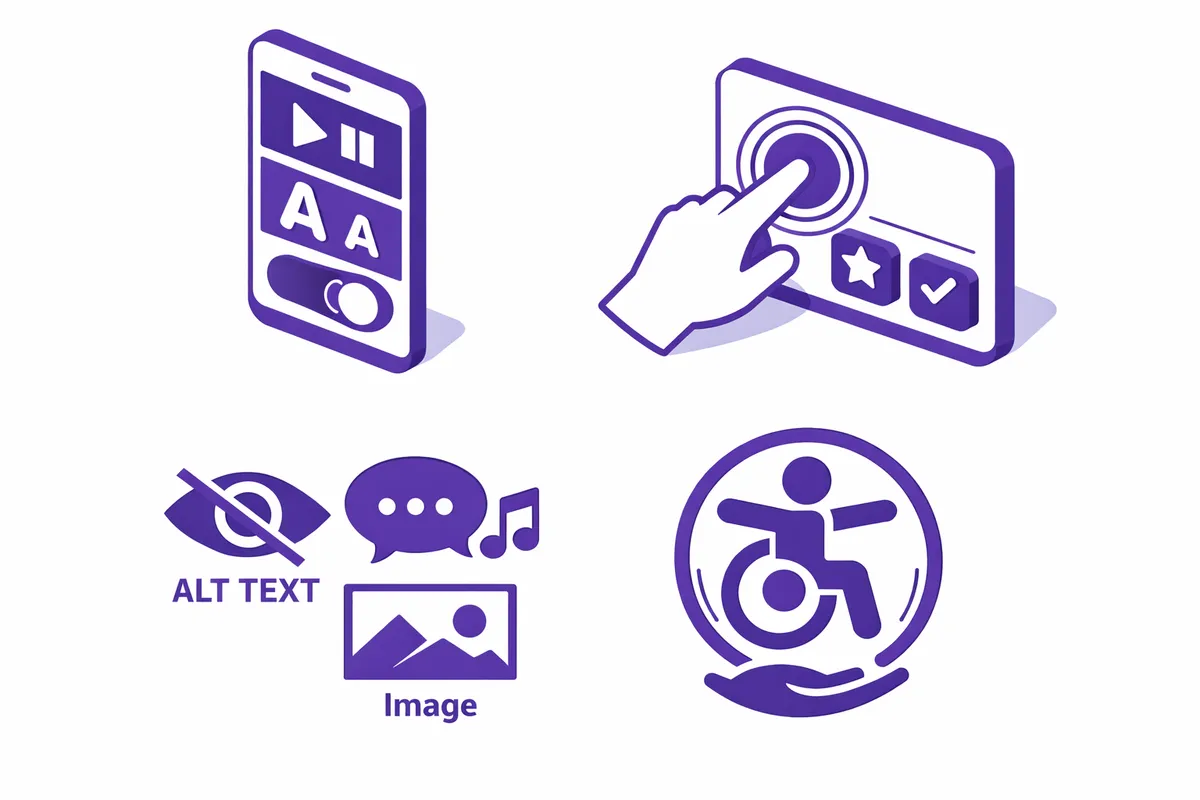
How We Build Accessible Design for East Garfield Park
Every engagement begins with a full audit of your current digital presence. For East Garfield Park community organizations, this typically means auditing a main organizational website plus any additional tools: program registration pages, volunteer portals, event calendars, and donation flows. We use automated scanning tools to surface systematic issues efficiently, then conduct manual testing of every key user journey.
Manual testing is the only way to find the accessibility failures that matter most to real users. We navigate your site using keyboard-only control, test every form field and interactive element, and run screen readers including NVDA on Windows and VoiceOver on iOS through the complete experience. For East Garfield Park nonprofits whose community members may access the web on older Android phones or entry-level tablets, we also test for performance and compatibility across device types.
For Hatchery Chicago entrepreneurs building new product websites, we integrate accessibility from the design stage. This is more efficient than fixing a completed site and produces a better final result. We review color systems, typography choices, button and link design, and form structure before any code is written. For food entrepreneurs who need a professional website to show retail buyers, an accessible site built from the start is the right investment.
For organizations with Section 504 obligations, we document audit findings and remediation work in a format that supports federal reporting. We also help draft accessible digital communications policies that prevent new issues from accumulating after the initial project is complete.
Industries We Serve in East Garfield Park
Community nonprofits and development organizations operating along Madison Street and Washington Boulevard need accessible grant program pages, service eligibility forms, and resident intake tools. For organizations receiving federal funding through HHS or HUD, WCAG compliance is an enforceable condition. An inaccessible intake form on a federally funded program creates legal exposure while also failing the residents the program was designed to serve.
Food entrepreneurs at Hatchery Chicago on Lake Street need accessible product websites, wholesale inquiry forms, and e-commerce storefronts that function for every buyer and consumer who visits. Retail buyers evaluate vendor websites as part of qualification, and an accessible, well-structured site signals operational maturity. For food businesses expanding from farmers markets into grocery retail, a professional accessible website is a required asset, not an optional upgrade.
After-school programs and educational organizations serving East Garfield Park youth need accessible enrollment portals, program schedule pages, and parent communication tools. Parents and guardians navigating program enrollment on behalf of children may themselves have visual, cognitive, or motor impairments. Enrollment systems that fail for keyboard or screen reader users create real barriers to program participation for families who need those programs most.
Community health organizations and clinics serving residents near the Green Line Conservatory stop and along Kedzie Avenue need accessible appointment scheduling, health information resources, and insurance navigation tools. Community health clients include high rates of elderly residents and residents with chronic conditions. For these populations, an accessible digital scheduling experience is often the difference between getting care and not getting it.
Churches and faith institutions anchoring community life along Central Park Avenue and Washington Boulevard use digital tools for service announcements, event registration, and community support programs. Faith community websites need accessible event calendars, streaming pages for services, and donation systems that work for elderly and disabled parishioners who are often the most consistent members of those communities.
Barbershops and small personal care businesses along Madison Street with online booking tools need accessible appointment systems. The booking platforms used by small businesses are frequently inaccessible out of the box. We audit the tools you are using and advise on compliant alternatives or custom configurations that serve your customers correctly.
What to Expect Working With Us
1. Discovery and audit. We evaluate your current digital properties with automated and manual testing. You receive a prioritized report that separates critical failures from secondary issues, so East Garfield Park organizations can act on the most important problems first within their budget.
2. Remediation planning. We build a sequenced roadmap organized by severity and impact. For nonprofits with grant deadlines or federal reporting requirements, we identify the work that addresses compliance obligations first and plan remaining improvements in subsequent phases.
3. Code-level remediation. We fix HTML, CSS, ARIA, and JavaScript directly. No overlays. Every fix is tested with real assistive technology before being closed. For organizations with online intake or registration flows, we test the complete journey from landing page through form submission and confirmation.
4. Documentation and training. We deliver an updated accessibility statement and practical content guidance after remediation. Staff who update your site regularly receive focused training on the most common ways accessible sites accumulate new issues and how to prevent it.