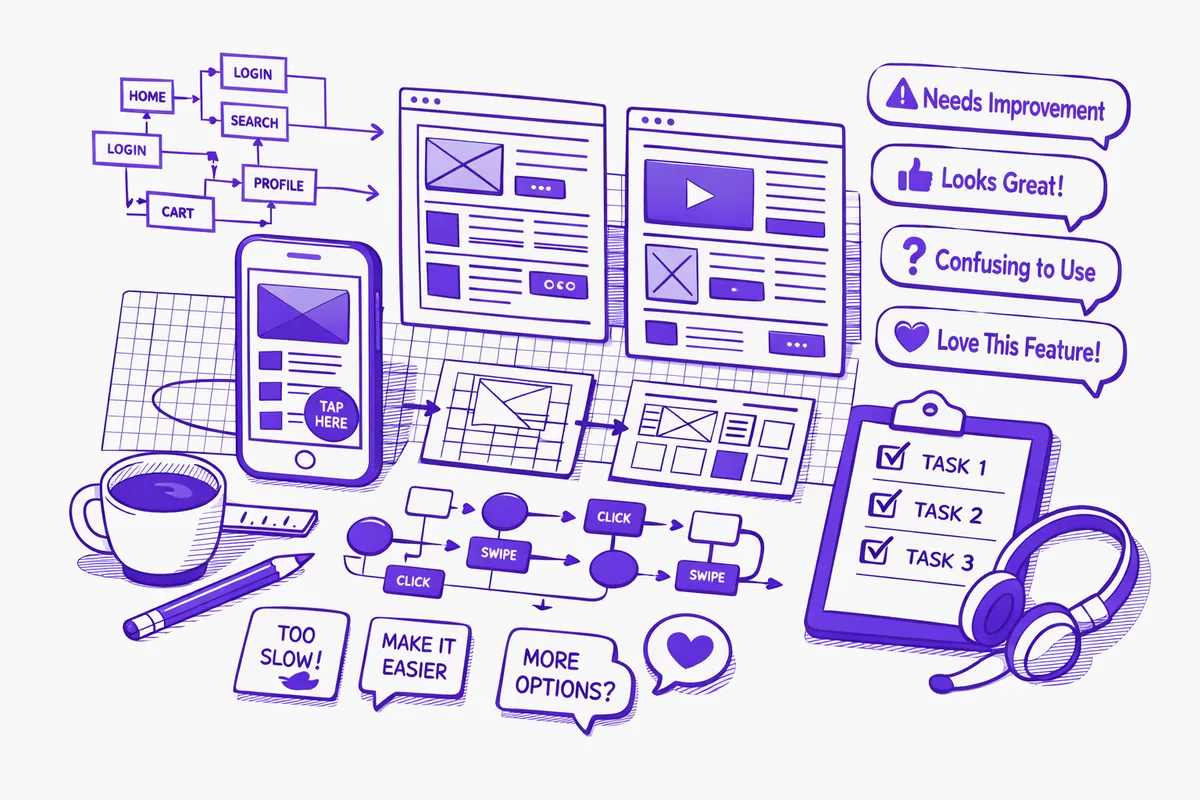
How We Build UI/UX Design for Douglass Park
Design for Douglass Park starts with a research commitment that many design firms do not make: conducting research with the actual user population rather than a convenient panel. For a community health clinic on California Avenue, this means interviewing patients who range from digitally comfortable to digitally reluctant, in English and in Spanish, across a wide age range. The research findings from this population are different from findings from a generic user panel, and those differences are where the most important design decisions hide.
We apply an accessibility framework that goes beyond WCAG 2.1 AA compliance. WCAG is a technical baseline, not a UX quality threshold. An interface can pass all WCAG criteria and still be difficult to use for a community member navigating in a second language, using a slow phone, or managing other demands. Our framework adds: tested at 200% zoom on Android, tested on 3G speeds, and tested with participants completing the task in Spanish for the first time.
Local knowledge shapes design at a practical level. Residents near the California Blue Line station access services differently than those using Ogden Avenue as their commercial corridor. The organization serving youth near North Lawndale College Prep has a different user population than the clinic serving elderly patients near Sacramento Boulevard. We design with these distinctions in mind, not a single generic "Douglass Park user" that averages them away.
Industries We Serve in Douglass Park
Community Health Clinics and Federally Qualified Health Centers. The health clinics serving Douglass Park near Roosevelt Road and California Avenue provide care to a population that has not always had accessible health options. We design patient portals, appointment scheduling tools, and health communication interfaces that reduce the barriers to engagement rather than adding to them, with genuine bilingual design and accessibility built from the beginning.
Nonprofits and Community Service Organizations. The nonprofits and community organizations working in Douglass Park, from youth programs to legal aid to food security organizations, need digital tools that serve the communities they work with, not just the staff who manage them. We design client intake platforms, service scheduling tools, and community communication systems for organizations whose constituents deserve the same design care as any paying customer.
Local Bodegas and Neighborhood Food Businesses. The neighborhood food businesses and bodegas near Ogden Avenue and 19th Street serve residents who may prefer the simplicity of in-person transactions but would benefit from digital tools that reduce friction without requiring technical sophistication. We design online ordering systems and inventory platforms for small food businesses with limited technical infrastructure.
Family Restaurants and Catering. The family-run restaurants in Douglass Park serve a neighborhood customer base through personal relationships and consistent quality. We design ordering, catering inquiry, and customer communication tools that extend those relationships into digital channels without replacing the personal character that makes neighborhood restaurants a community institution.
Auto Repair and Service Shops. The auto repair shops serving Douglass Park's working households provide essential services that residents depend on. We design scheduling, estimate, and service communication tools for the auto service businesses that need to reduce phone tag and missed appointments without requiring customers to navigate complex platforms.
Churches and Faith-Based Organizations. The churches that anchor Douglass Park's community life, particularly those near Sacramento Boulevard and Roosevelt Road, serve as coordination hubs for community services, food distribution, and mutual aid in addition to religious programming. We design community communication tools and event coordination platforms for faith-based organizations whose congregation members range from digitally fluent to digital newcomers.
What to Expect Working With Us
1. Accessible Research and Discovery. Research for Douglass Park clients reaches the full range of the community the product will serve. This means sessions with less digitally experienced participants, bilingual research with Spanish-primary participants, and testing on the devices and connection speeds that Douglass Park residents actually have. We do not extrapolate from a comfortable participant pool. We reach the harder-to-reach one.
2. Accessibility-First Information Architecture. Structure is designed with accessibility as a first-order constraint, not a post-design audit. Navigation depth, form length, error message design, and confirmation flows are all evaluated against the needs of users with lower digital literacy, limited device capabilities, and language barriers before wireframes are finalized.
3. High-Fidelity Design Tested on Real Devices. Visual design is built in Figma and tested on Android devices across price ranges, not just on the designers' own computers. For Douglass Park products where Android and lower-end devices are common, device testing during the design phase catches layout and interaction problems before they reach development.
4. Community-Validated Handoff. Final designs are tested with community participants before handoff. Findings are incorporated so development builds what is known to work for Douglass Park users, not what passed testing with a comfortable participant pool. Developer documentation specifies accessibility requirements and bilingual behavior alongside visual specifications.