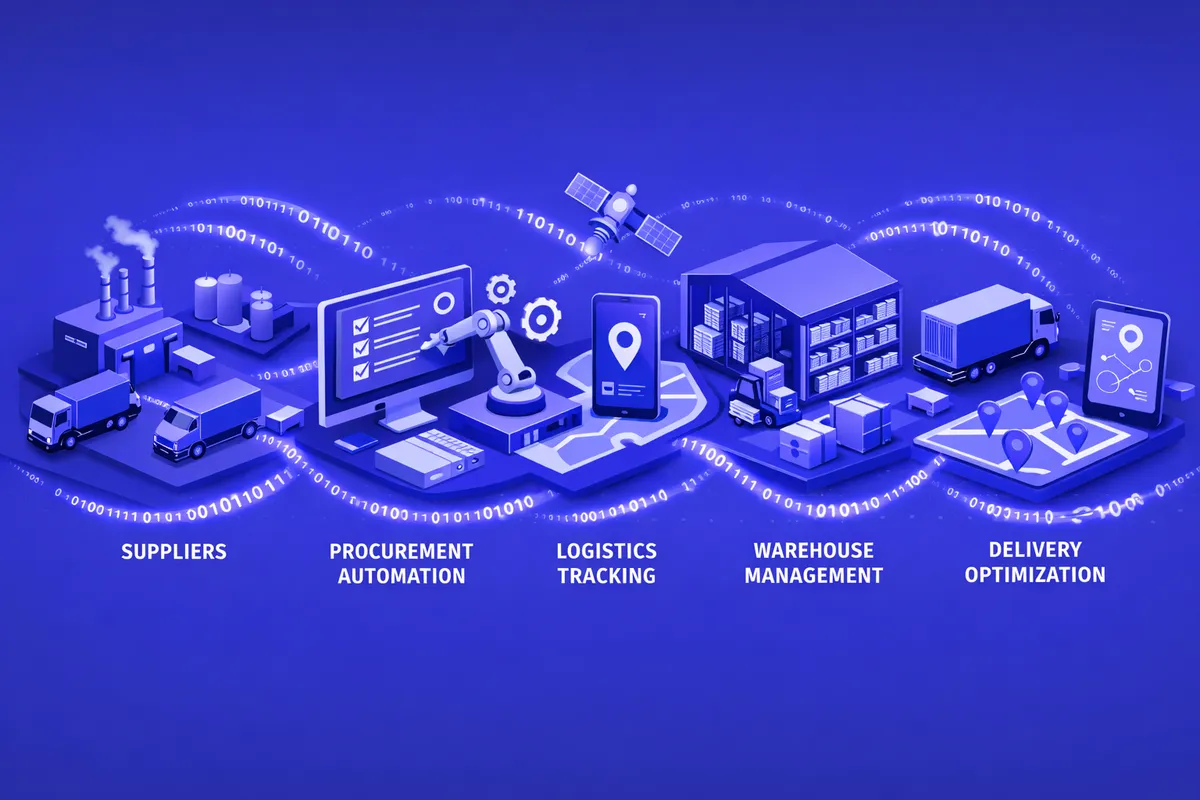
How We Build Supply Chain Automation for Douglass Park
Every Douglass Park engagement begins with a mission-aligned supply chain audit: mapping your current procurement workflows, identifying where manual steps create the most risk to consistent service delivery or organizational efficiency, and building a prioritized automation roadmap. For community food organizations, this audit specifically addresses mixed inventory management, donated product tracking, and the distribution coordination workflows that serve Douglass Park families.
Integration architecture is designed around the platforms Douglass Park organizations and businesses already use. Many nonprofit food organizations use food bank management software or adapted inventory platforms alongside QuickBooks or accounting tools. Small distributors often use industry-specific platforms or spreadsheet-based systems. Our automation layer connects your existing tools and data sources rather than replacing them.
We implement highest-impact automations first. For community food organizations, that typically means unified inventory monitoring across donated and purchased product, automated procurement triggers for consistently needed staples, and distribution scheduling tools that manage supply commitment against available inventory. For small distributors, it means automated inventory monitoring, multi-vendor purchase order management, and delivery tracking.
Industries We Serve in Douglass Park
Community Food Organizations and Food Pantries: Food pantries and community food programs near Mount Sinai Hospital managing mixed donated and purchased inventory need automation that tracks all product categories in one place, generates procurement needs for consistently required staples, monitors expiration across the full inventory, and supports distribution scheduling that matches supply to anticipated demand.
Small Food Distributors: Small distributors on Ogden Avenue and Sacramento Boulevard supplying neighborhood stores and community accounts with culturally specific and specialty food products need automated inventory monitoring, multi-vendor purchase order management, and outbound delivery tracking that keeps service commitments reliable without proportional staffing increases.
Neighborhood Bodegas and Grocers: Small grocery stores and bodegas along California Avenue and Roosevelt Road managing product catalogs that include mainstream staples and culturally specific Latin American and Caribbean products need automated reordering triggered by sales depletion, with reorder parameters calibrated to each supplier's lead time and minimum order requirements.
Community Health Clinics: Health clinics near Mount Sinai Hospital managing clinical supply, office supply, and pharmaceutical reordering across multiple vendor relationships need automated procurement workflows that keep supply levels consistent, track expiration on time-sensitive clinical supplies, and provide purchase order documentation for compliance and budgeting requirements.
Auto Shops and Neighborhood Service Businesses: Auto repair shops and neighborhood service businesses along California Avenue managing parts and supply inventory across multiple vendor programs need automation that monitors availability, triggers replenishment based on service demand, and tracks inbound shipments without manual follow-up.
Nonprofit Program and Social Service Organizations: Social service organizations and community nonprofits near North Lawndale College Prep managing program supply procurement, office supply purchasing, and vendor relationships across grant-funded budgets need automated procurement workflows that track spending by program, generate compliant purchase orders, and provide the documentation that grant reporting requires.
What to Expect Working With Us
1. Mission-Aligned Audit. For community organizations, our supply chain audit is structured around your service delivery mission, not just operational efficiency. We map how supply chain failures affect the community members you serve, not just your bottom line, and build automation priorities around reducing those failures first.
2. Integration Architecture. We design the connections between your existing platforms and the automated workflows. For nonprofit organizations using food bank management software or adapted inventory tools, we build integration with your current systems rather than requiring platform replacement.
3. Phased Implementation. Highest-impact automations go live first. For community food organizations, the first phase typically focuses on unified inventory visibility and automated procurement triggers for consistently needed staples. Subsequent phases add distribution coordination, donor inventory integration, and reporting.
4. Reporting and Accountability. Post-launch monitoring tracks procurement cycle times, fill rates, waste rates, and distribution coverage. For nonprofit organizations, reporting is designed to support grant compliance and board accountability alongside operational improvement.