How We Build RAG Systems for Douglass Park
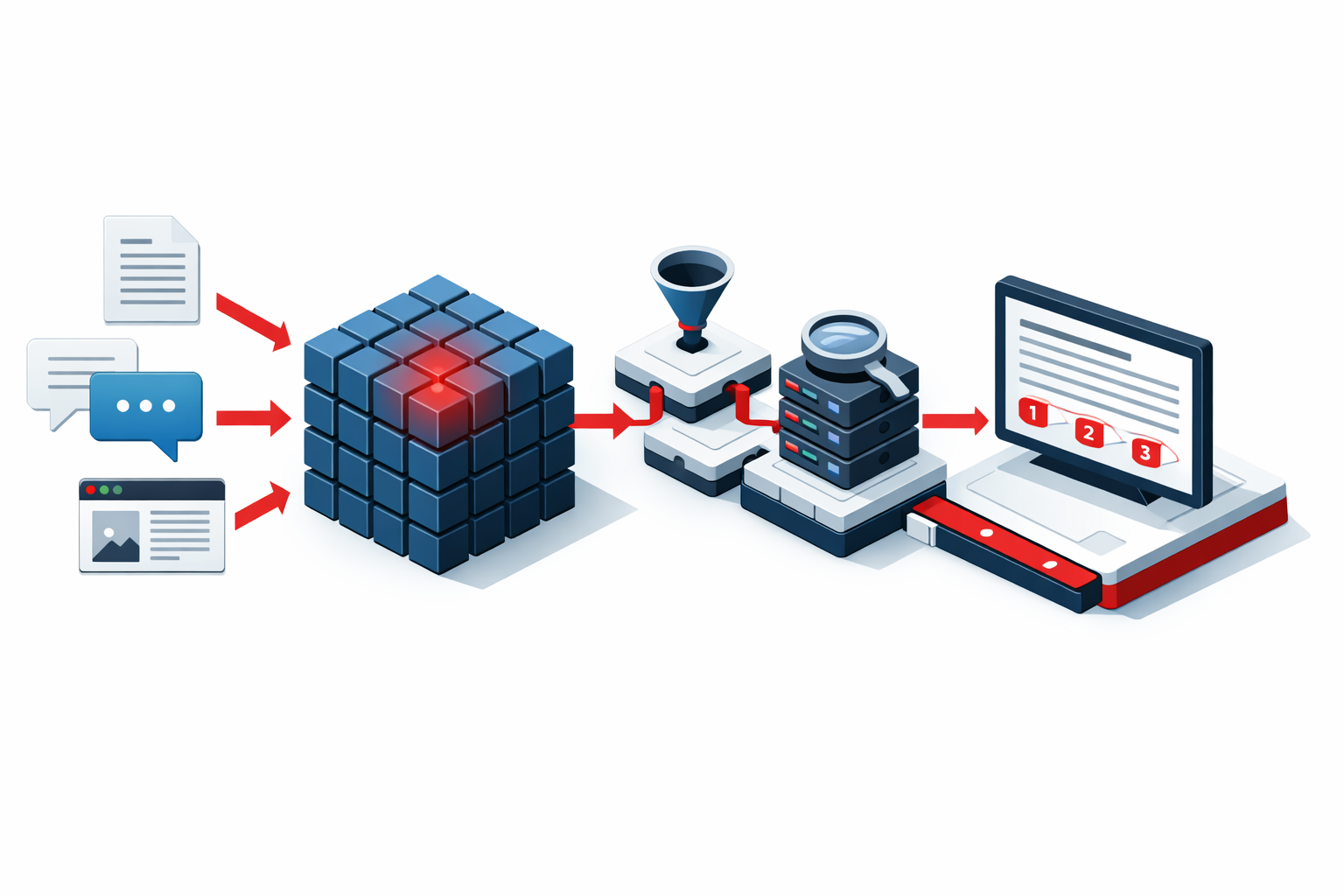
We begin with a knowledge audit that inventories every document containing organizational knowledge: clinical protocols, program policies, eligibility criteria, resource directories, staff training materials, grant history documents, funder reports, and any other documentation that encodes what your organization knows and does. We assess the quality and currency of each document, identify gaps where important knowledge is undocumented, and prioritize which documents should be ingested first.
For many Douglass Park organizations, the audit reveals that important knowledge exists but is not documented. A clinical protocol that exists in the senior nurse's practice but has never been written down. A community resource that the case manager knows is excellent but is not in the official resource directory. We help organizations prioritize documentation gaps and, where practical, assist with capturing undocumented knowledge before it is lost.
We then prepare documents for ingestion. This involves resolving inconsistencies where multiple documents say different things about the same policy, updating outdated references, adding metadata that helps the system understand document type and authority, and handling any formatting issues that would affect retrieval quality. Clean, well-organized knowledge produces better RAG system performance than raw document dumps.
The ingestion and indexing process processes your documents into the RAG knowledge base, creating vector representations that allow semantic search: finding relevant information based on meaning rather than exact keyword matches. A staff member who asks "how should I handle a patient who does not speak English and does not have insurance" finds relevant passages from your language access policy, your uninsured patient policy, and your patient advocacy resources, even if none of those documents uses the exact words in the question.
We build the question-answering interface: the tool your staff uses to query the knowledge base. For most Douglass Park organizations, this is a simple chat interface accessible through a web browser, available in both English and Spanish. We test the system extensively with questions that your staff would realistically ask and refine retrieval performance until answers are reliably accurate and complete.
Industries We Serve in Douglass Park
Community health clinics and medical practices near Roosevelt Road and California Avenue build RAG systems from clinical protocols, medication guidelines, insurance policies, patient education materials, referral directories, and staff training documentation. Clinical staff can answer protocol questions instantly without consulting binders or interrupting experienced colleagues. Bilingual retrieval serves Spanish-speaking staff and patients seeking health information in their language.
Nonprofits and social service organizations throughout Douglass Park build RAG systems from program policies, eligibility criteria, community resource directories, grant guidelines, case management procedures, and funder reporting requirements. Case managers, grant writers, and program staff access the knowledge they need instantly rather than searching through shared drives or asking colleagues who may not know.
Community development and housing organizations near 19th Street and Sacramento Boulevard build RAG systems from loan program guidelines, underwriting policies, property management procedures, compliance documentation, and community resource directories for residents they serve.
After-school programs and youth organizations near North Lawndale College Prep and throughout Douglass Park build RAG systems from curriculum documentation, student support procedures, parent communication protocols, staff training materials, and community referral resources. Program staff can answer parent questions and handle student situations accurately even when experienced colleagues are unavailable.
Family-run businesses and neighborhood enterprises on Ogden Avenue and Roosevelt Road build RAG systems from vendor information, pricing histories, operational procedures, customer policies, and accumulated business knowledge. Any staff member can access operational knowledge without requiring the owner's personal involvement in every routine decision.
Churches and faith institutions throughout Douglass Park build RAG systems from pastoral care procedures, ministry program descriptions, facility policies, community resource referrals, and accumulated institutional knowledge about the congregation and community the church serves.
What to Expect Working With Us
1. Knowledge audit and documentation gap assessment. We inventory your existing documentation, assess quality and currency, identify gaps where important knowledge is undocumented, and deliver a prioritized ingestion plan.
2. Document preparation and knowledge organization. We prepare your documents for ingestion: resolving inconsistencies, updating outdated content, adding metadata, and ensuring the knowledge base reflects current organizational policy and practice.
3. System build, ingestion, and testing. We build the RAG knowledge base and question-answering interface, ingest your prepared documents, and test retrieval performance extensively with realistic questions. We refine until retrieval accuracy meets the standard your organization requires.
4. Staff training and deployment. We train your staff on how to use the RAG system effectively, including how to formulate questions, how to evaluate answer quality, and when to supplement RAG answers with additional verification. We deploy the system and monitor performance in the first weeks of live use.
5. Ongoing maintenance and knowledge base updates. We update the knowledge base when your policies change, your resource directory is refreshed, or new documentation needs to be added. We monitor retrieval performance and refine when new question patterns expose gaps in the knowledge base.