How We Build POS Systems for Douglass Park
We start by understanding the specific workflow of your business before recommending a platform. A family restaurant on Roosevelt Road has different POS needs than a pharmacy on Ogden Avenue. A sit-down restaurant needs table management, split checks, and kitchen ticket routing. A pharmacy needs integration with dispensing systems and a clean front-end retail checkout flow. A bodega needs fast single-item checkout, cash drawer management, and inventory tracking. We assess each of these differently.
Platform selection comes from the workflow assessment, not a vendor preference. We have configured Toast, Square, Clover, Lightspeed, and several others, and we recommend based on what each platform does well for the specific business type. Toast is typically the right answer for full-service restaurants. Square handles lighter food operations and simple retail well. For businesses with specific inventory complexity, Lightspeed offers depth that simpler platforms cannot match. Every recommendation we make is based on what fits the business in front of us, not on what is easiest to configure or what a vendor is currently promoting. A bodega on Sacramento Boulevard and a sit-down taqueria on Roosevelt Road operate in different worlds, and their POS systems should reflect that.
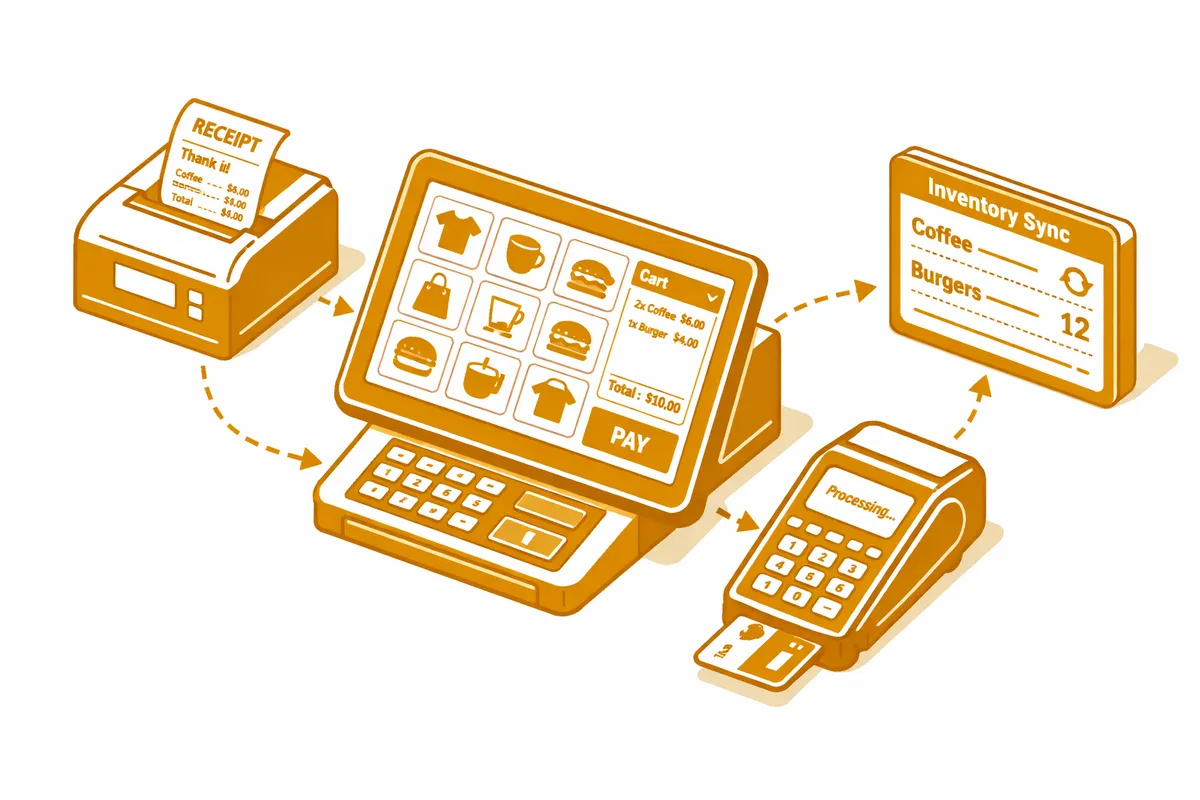
Configuration runs parallel to hardware setup. Menu builds, inventory uploads, employee permission structures, and integration with accounting software are all completed before the system goes live. We do not hand you a system that is 80 percent set up and tell you to finish the rest. The launch day is when the system is ready, not when you are left to figure out the remainder on your own.
Training covers the owner, the managers, and the front-line staff who will actually use the system every day. For a Douglass Park restaurant where some staff are more comfortable in Spanish, we configure the staff-facing interface language and provide Spanish-language training materials where they are available from the platform. We schedule training around your actual operating hours, not ours.
Industries We Serve in Douglass Park
Family restaurants and taquerias on Roosevelt Road process high daily transaction volumes with a mix of dine-in, takeout, and catering orders. A POS system that integrates all three order types into a single kitchen flow, tracks inventory by item, and produces daily sales summaries without manual work transforms the end-of-day close from a 45-minute reconciliation into a five-minute review.
Neighborhood pharmacies along Ogden Avenue manage two distinct transaction types: prescription pickup and retail purchases. A POS system configured for pharmacy retail tracks OTC inventory, supports FSA/HSA card payments, manages the front-end loyalty program, and produces sales reporting that the pharmacist can actually use to make buying decisions.
Bodegas and corner stores near California Avenue run on speed. Every second at the checkout counter matters when foot traffic is high and staff is lean. A POS system with fast item lookup, reliable cash drawer management, and end-of-day inventory reconciliation reduces shrinkage and makes closing a predictable process rather than a guessing game.
Auto parts retailers and small hardware stores on 19th Street manage inventory complexity that generic retail POS handles poorly. A system configured with SKU-level tracking, supplier cost history, and sales-rate reporting helps these businesses know which parts to stock more of and which are sitting dead in inventory.
Community event caterers and food businesses that operate out of Douglass Park for seasonal festivals and block club events need mobile POS capability that works on a tablet or phone. Square and similar platforms handle this well and allow the business to extend its POS operation outside its permanent location without buying separate hardware.
Churches and nonprofits running gift shops, book sales, or ticketed events near Sacramento Boulevard use lightweight POS setups that handle occasional transactions without the overhead of a full commercial system. A tablet-based Square setup configured for a nonprofit book sale at a community event is both practical and professional.
What to Expect Working With Us
1. Business workflow and transaction volume assessment. We review your current checkout process, estimate daily and peak transaction volumes, and identify the POS features that matter most for your specific operation. A bodega on Ogden Avenue and a sit-down restaurant on Roosevelt Road get different assessments leading to different recommendations.
2. Platform selection and contract guidance. We recommend the platform that fits your workflow and budget, explain the contract terms, and flag any long-term commitments or hardware lock-ins you should understand before signing. We have no financial relationship with POS vendors, so our recommendation reflects your interests, not ours.
3. Full configuration and menu or inventory build. We configure the platform completely: menu or product catalog, pricing, tax settings, employee access levels, kitchen routing, and integrations with accounting software. The system is ready to process real transactions on day one, not on day ten after you have finished data entry.
4. Staff training in your environment. Training happens at your location, on the hardware you will actually use, in the workflow of your actual business. If your staff is more comfortable in Spanish, we accommodate that. If your peak hours are in the evening, we schedule training when your team is available. For businesses near the California Blue Line station that see a transit-driven rush at specific times, we build your training schedule around when the staff will actually be present and focused.