How We Build No-Code Platforms for Douglass Park
The first thing we do is look at what data you are managing and how. A clinic near Mount Sinai Hospital tracking patient outreach might have that data in a notes app, a shared Google Sheet, and a paper log at the front desk, all simultaneously. Before we recommend a platform, we need to understand what information needs to move through the organization, who touches it, and what decisions it needs to support.
From that audit, we recommend the platform or combination of platforms that fits the actual workflow. Not every problem needs Airtable. Some need Notion. Some need both, connected through an automation layer. We do not sell a single platform to every client. We match the tool to the problem.
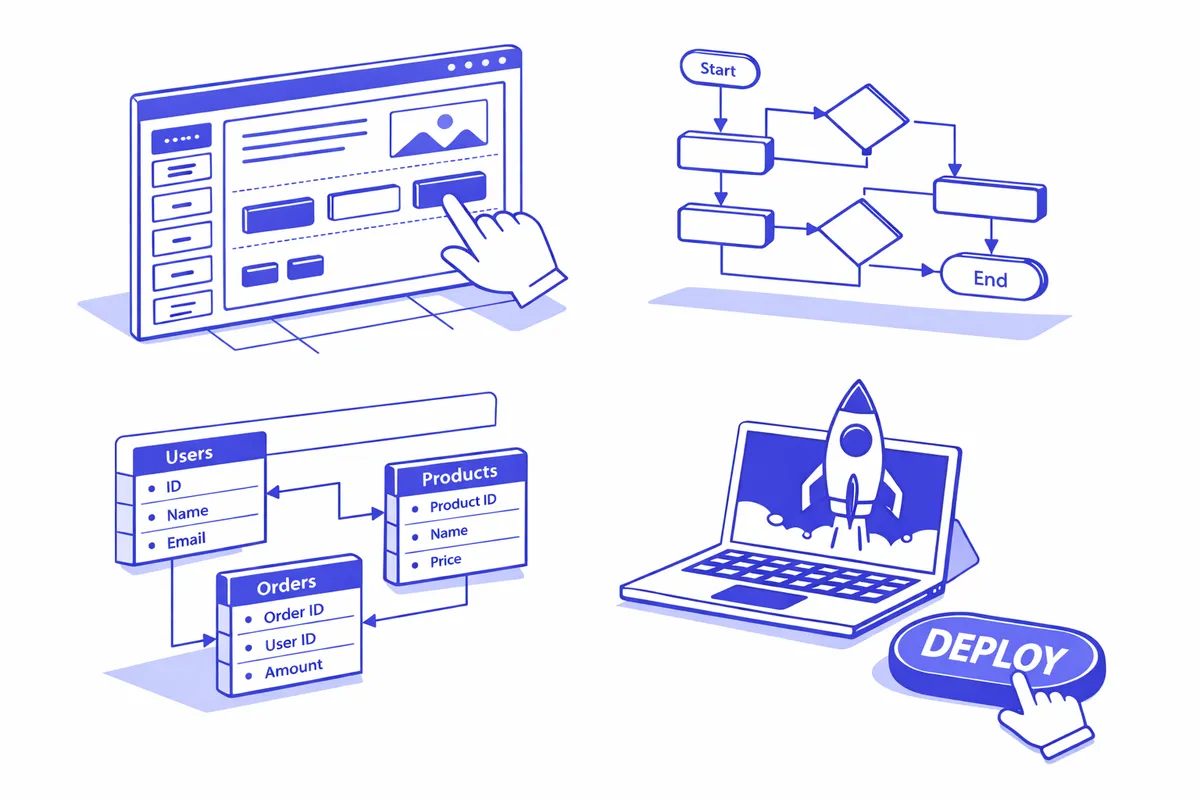
Configuration happens in layers. We start with the core data structure: the tables, fields, and relationships that reflect how your operation actually works. Then we build the views and forms that different people in your organization use to interact with that data. Then we add automations that trigger on the actions that happen most frequently. For a bodega near California Avenue, that might be as simple as a form that emails a supplier request and logs it to a tracker. For a community organization running multiple programs, it might be a full relational database with separate views for staff, volunteers, and program managers.
We train whoever will use the system before we hand it off, and we document the setup so that when someone new joins your team, they have a reference that explains how it works and why it is built the way it is.
Industries We Serve in Douglass Park
Community nonprofits and social service organizations along Sacramento Boulevard manage participant rosters, funder reports, volunteer tracking, and program calendars through no-code systems that rival what larger organizations pay enterprise software to do. A properly configured Airtable base with a connected form and automated reporting saves dozens of hours per month during grant reporting cycles.
Community health programs and clinics in the area near Mount Sinai Hospital use no-code platforms to coordinate patient outreach, track follow-up tasks, and manage staff assignments without expensive healthcare-specific software. A no-code case management system built around the actual workflow of a community health worker is often more useful than a commercial EMR add-on.
Family-run restaurants and event venues on Roosevelt Road use no-code tools to manage catering inquiries, track private event bookings, and maintain a client contact database. A restaurant that previously managed catering through email threads and handwritten notes gets a single view of every active inquiry and booking, with automated reminders before each event date.
Auto repair shops and service businesses on 19th Street use no-code platforms to manage service tickets, track parts inventory, send status notifications to customers, and maintain a service history database. A shop that can text a customer when their car is ready, from the same system that tracks the repair, closes the gap between front-office and back-of-shop operations.
Block clubs and civic organizations near California Avenue use Notion and Airtable to coordinate meeting minutes, track neighborhood issues submitted by residents, manage membership lists, and publish updates to members. These are volunteer-run organizations where administrative overhead should be minimal. No-code makes that possible.
Neighborhood pharmacies and retail operations on Ogden Avenue use no-code platforms to track vendor orders, manage staff schedules, log customer requests, and maintain an organized record of supplier contacts and pricing history. Operations that currently live in email threads and sticky notes move into structured, searchable systems.
What to Expect Working With Us
1. Data and workflow audit. We meet with the people who do the actual work and map what data they manage, where it lives, and what they need to be able to do with it. For a Douglass Park organization, this session often reveals that the same information is being tracked in three places, none of them accurate. Identifying that before building anything saves a significant amount of rework.
2. Platform recommendation and architecture design. Based on the audit, we recommend the platform and structure that fits your operation. We explain the reasoning so you understand the system you are investing in, not just the output. If the right answer is a free tier of Notion rather than a paid Airtable subscription, we tell you that.
3. Configuration, automations, and forms. We build the system: tables, views, forms, and automations. Every piece is built around your real workflow, with your actual field names and terminology, not placeholders and defaults. Automations are tested with real data scenarios before the system goes live.
4. Team training and documentation handoff. Everyone who will use the system gets a training session. We also deliver written documentation that explains the structure, the automations, and how to add or modify things after we are gone. Douglass Park organizations, especially those with volunteer leadership that turns over, need documentation that actually transfers knowledge. We write it clearly enough that a new program director joining your organization six months later can get up to speed without asking you to re-explain everything.