How We Build Employee Portals for Douglass Park
Discovery begins with a map of your current staff communication flows: what information do employees need, where does it currently live, how do staff currently access it, and where are the breakdowns? For a community organization on Ogden Avenue with frontline staff, supervisors, and administrative roles, the answer typically reveals three or four categories of information that should be centralized, six or seven processes that are currently handled manually, and two or three compliance documentation gaps that create institutional risk.
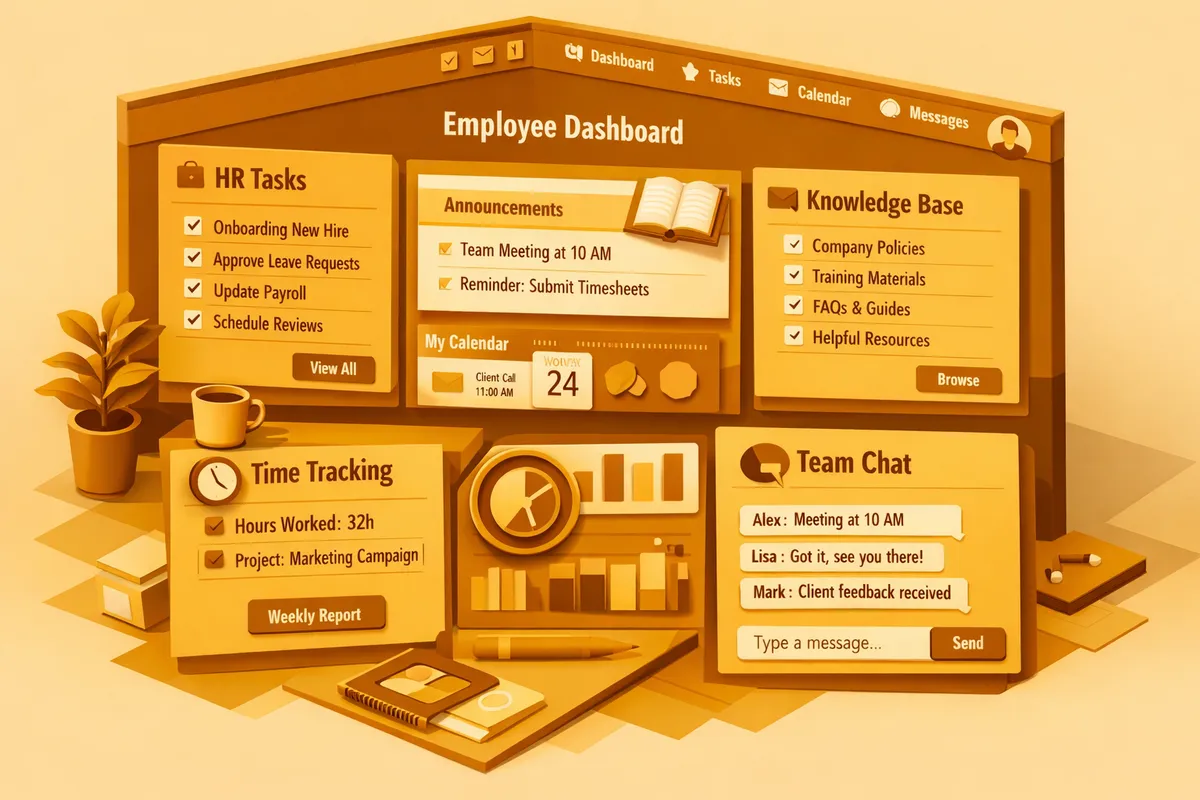
We design the portal architecture around user roles. A case manager at a nonprofit on Sacramento Boulevard sees their caseload summary, required training status, and shift schedule on their dashboard. A clinic supervisor near North Lawndale College Prep sees their team's credential status, upcoming reviews, and open schedule gaps. HR administrators see the full employee directory, compliance tracking, and onboarding queue. Each role gets a clean, task-focused view rather than access to every piece of information in the system.
Mobile-first design is not optional for Douglass Park employers. Outreach workers, home visiting staff, and community health workers are in the field, not at desks. Their primary device is a phone, often a mid-range Android on a carrier plan. The portal has to load fast, navigate cleanly with thumbs, and complete key workflows, including shift check-in, form submission, and training module completion, without requiring a desktop.
For organizations with bilingual workforces, we build the portal with full Spanish language support, validated by native speakers on your staff rather than run through machine translation and called done. Form field labels, error messages, policy documents, and training content all receive the same translation care.
Industries We Serve in Douglass Park
Community health clinics and FQHCs near Mount Sinai Hospital manage complex credentialing, HIPAA compliance training, and shift coverage across clinical and administrative staff. An employee portal for a clinic on Roosevelt Road centralizes license expiration tracking, mandatory training completion, and policy acknowledgment so compliance coordinators spend less time chasing documentation and more time on substantive work.
Social services nonprofits and case management agencies on Sacramento Boulevard and California Avenue have field staff who need access to case resources, program policies, and scheduling tools from wherever they are working. We build portals that support field work with offline-capable form submission, GPS check-in for home visit logging, and supervisor communication tools that do not require email.
Charter schools and educational programs near North Lawndale College Prep employ teachers, tutors, family navigators, and administrative staff who need coordinated access to student support resources, professional development requirements, and scheduling. An employee portal for an educational organization in Douglass Park manages those information flows without requiring a district-level IT infrastructure.
Neighborhood pharmacies and independent healthcare offices along Roosevelt Road with six to twenty employees benefit from a lightweight portal that manages scheduling, training documentation, and internal communications without the complexity of enterprise HR software. We build right-sized solutions for organizations that need the functionality without the overhead.
Churches and faith-based organizations with paid staff and active volunteer programs need coordination tools that work across both groups. A portal for a Douglass Park church on 19th Street can manage staff schedules, volunteer sign-ups, event coordination, and pastoral team communications in a single accessible environment without requiring technical expertise from the staff who maintain it.
Auto shops and service businesses on Ogden Avenue with five to fifteen employees benefit from a simple staff portal that handles scheduling, payroll document access, and training records. An owner-operator who is managing shop floor work does not need a complex HR system, but they do need a reliable way to share schedule changes, track training compliance for insurance purposes, and give employees a self-service option for basic HR requests.
What to Expect Working With Us
1. Workflow audit and role mapping. We interview staff at multiple levels of your organization to understand how information currently flows and where it breaks down. For Douglass Park organizations with frontline workers, this includes time in the field or at program sites, not just conversations with administrators. The audit produces a role map, a feature priority list, and a realistic scope for the portal build.
2. Architecture design and bilingual planning. We design the portal structure, user role permissions, and navigation with your specific team in mind. For organizations with bilingual workforces, we scope the translation work in this phase and identify which staff members can serve as language reviewers so the Spanish version is validated by people who actually work at your organization.
3. Build, integration, and testing. We build the portal, integrate it with your existing systems where applicable (scheduling software, HR platforms, document storage), and run user acceptance testing with real staff from each role group. Field testing with outreach workers or community health workers on their actual devices catches mobile issues that desktop testing misses entirely.
4. Launch, training, and staff onboarding. We train administrators and staff on the portal in sessions structured for the actual literacy and technical comfort level of your workforce. For organizations on Sacramento Boulevard or California Avenue with staff who are not highly technical, this means hands-on walkthroughs, quick reference cards in both languages, and a help channel for the first 30 days after launch.