How We Build Document Management for Douglass Park
Discovery for a Douglass Park engagement begins with an honest assessment of the current state. Small businesses and community organizations in the neighborhood typically have document storage spread across physical filing cabinets, personal email accounts, shared Google folders, and the institutional memory of long-term employees. We map all of it without judgment: what types of documents exist, how many of each, where they live, who accesses them, and what happens when they need to be found on short notice.
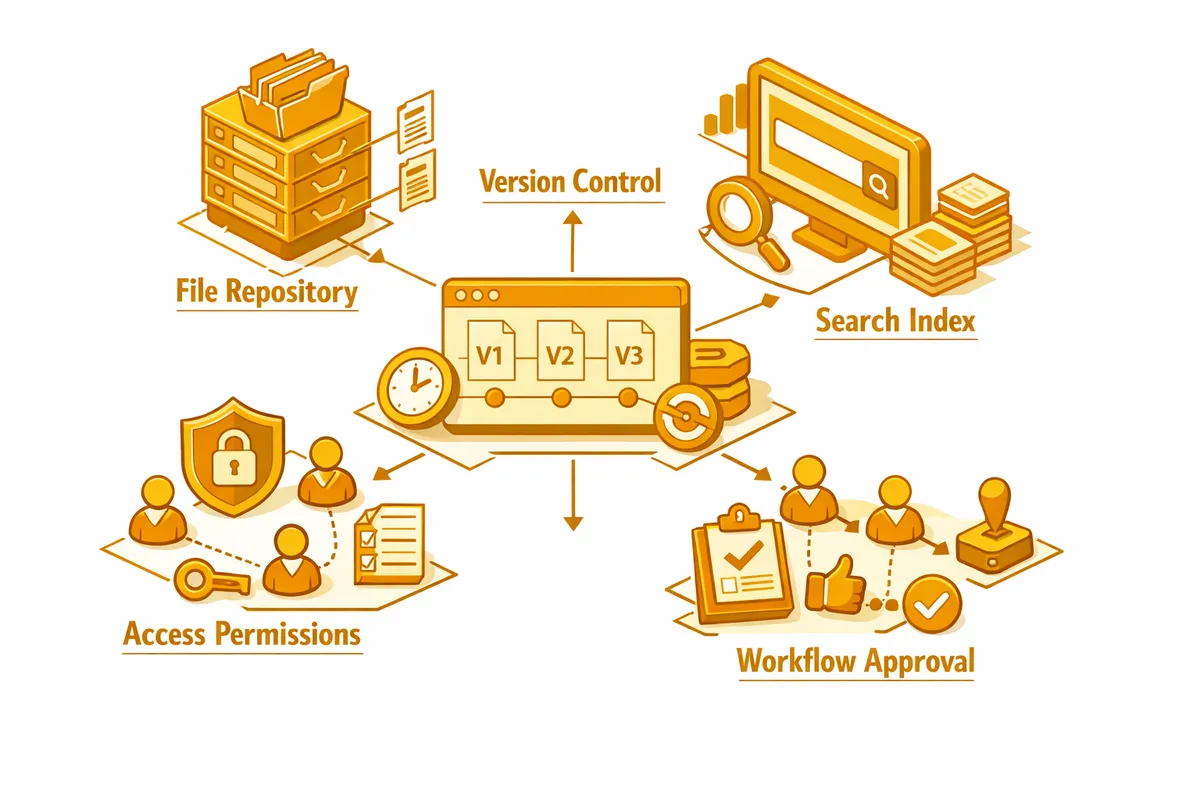
From that inventory, we design the taxonomy around your organization's actual structure. For a community health clinic near Mount Sinai Hospital, that means patient-centric organization with document types nested under each patient record, access permissions tied to clinical roles, and retention policies built into the system so that aging records are automatically flagged when their retention period is approaching. For a church or nonprofit operating on California Avenue or Sacramento Boulevard, that means program-centric organization with grant cycles, donor records, and board documentation in a structure that survives leadership transitions.
For Douglass Park's auto shops and neighborhood businesses, the taxonomy is built around the transactions that generate documents. Work orders, customer authorizations, parts invoices, and warranty records organized by vehicle and customer so that any record can be retrieved in under a minute from any device in the shop. For bodegas and family-run restaurants managing vendor relationships, the structure centers on vendor accounts and contract terms, with invoice records organized chronologically under each supplier.
Implementation is staged so that your highest-priority document types are in the new system first. For a clinic, that means patient records and staff credentials before administrative documents. For a nonprofit, that means active grant documentation before historical program records. The migration phase moves existing documents from wherever they currently live into the new structure, scanning physical documents and reorganizing digital files as we go.
Industries We Serve in Douglass Park
Community health clinics and family medical practices in the Douglass Park area, including those operating near Mount Sinai Hospital and along the neighborhood's residential corridors, need HIPAA-compliant document management with patient-centric record organization, role-based access controls, complete access audit logs, and retention policy enforcement for clinical and administrative records.
Auto repair shops and mechanic businesses along Roosevelt Road and California Avenue need vehicle-centric document management for work orders, customer authorizations, parts invoices, and service records, with retrieval capabilities that let any staff member produce documentation for any vehicle in under a minute when a customer calls or an insurance claim requires documentation.
Local bodegas and family-run restaurants serving the neighborhood's Roosevelt Road and 19th Street corridors need vendor invoice organization, supplier contract management, health permit documentation, and employee records maintained in a structure that is navigable without administrative staff and that supports permit renewals and health inspections without last-minute scrambling.
Churches, nonprofits, and community organizations throughout the neighborhood, including those operating in proximity to Douglass Park itself, need grant documentation systems, donor record management, board meeting records, and program files organized to survive leadership transitions and to support funder reporting without requiring a document archaeology project every grant cycle.
Neighborhood pharmacies and healthcare-adjacent businesses operating near California Blue Line station and throughout the community manage inventory records, regulatory documentation, controlled substance logs, and employee credentials under specific state and federal requirements that informal storage cannot support reliably.
Auto parts retailers and supply businesses supporting the neighborhood's repair shop ecosystem need vendor agreements, parts catalog documentation, and customer account records organized to support the commercial relationships that sustain the local repair economy.
What to Expect Working With Us
1. Discovery and document audit. We catalog your document types, assess current storage conditions, identify access requirements and compliance obligations, and produce a clear picture of your document environment before recommending any solution. For Douglass Park health clinics and community organizations, this includes a compliance review identifying gaps between current practices and applicable standards.
2. Taxonomy and architecture design. We design the document classification structure, access controls, and retention policies specific to your organization type. West Side community organizations and small businesses get architectures built around their actual workflows, not generic templates from enterprise software vendors.
3. Implementation and migration. We build the system and migrate existing documents into the new structure. Paper records are scanned and indexed. Digital files are reorganized and tagged. Email attachments are extracted and filed. Core implementations are typically live within eight to fourteen weeks.
4. Training and support. Post-launch training for your team, a warranty period for system issues, and optional ongoing support for policy updates, staff access changes, and taxonomy adjustments as your organization evolves.