How We Build Customer Portals for Douglass Park
Nonprofit and community organization portals require a different design frame than commercial portals. The user populations these portals serve are often less technology-confident than business professionals. The portal must work on mobile devices because many participants and donors in the Douglass Park area do not have reliable desktop computer access. Language accessibility in both English and Spanish is a standard requirement for organizations serving this community. And the portal must be simple enough that participants and donors can use it without extended training or technical support.
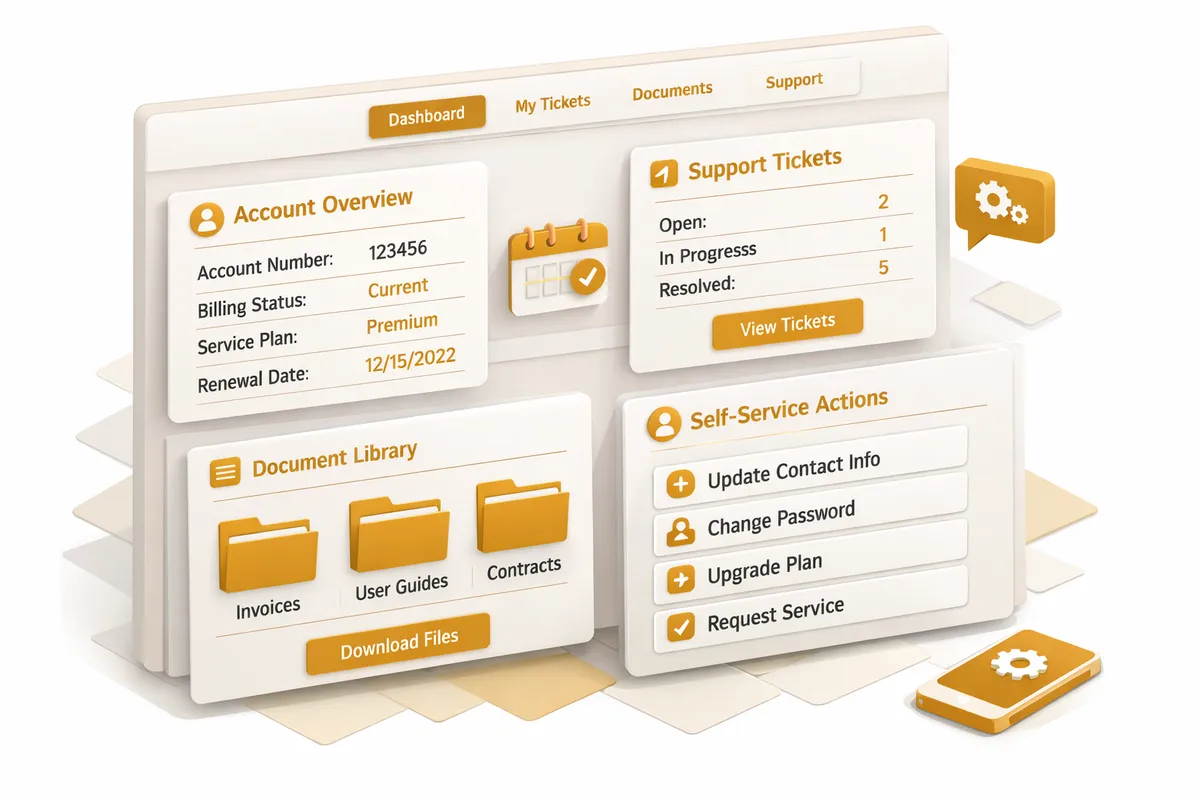
We design portals for community organizations from the user experience outward, not from the technology inward. The question we start with is not "what can this portal do" but "what does a participant in this program need to see and do, and how do we make that as simple as possible." For most program participants, the relevant actions are: check my scheduled sessions, view my attendance record, download my completion documentation, and send a message to my case manager. For donors, the relevant actions are: view my donation history, download my tax receipts, update my contact information, and see the organization's current impact reporting.
Security and privacy for community organization portals requires particular attention. Participant records at a community health clinic, workforce development program, or housing services organization often include sensitive information. We design access controls that give each participant access only to their own records, implement appropriate encryption and session security, and ensure that the portal's privacy practices meet the requirements of the specific programs the organization runs. For organizations receiving federal or state program funding, we assess whether portal data handling meets the compliance requirements of those funding streams.
Integration with the case management, donor management, and program tracking systems organizations already use is essential. A portal that requires manual data updates from an already-overloaded administrative staff is not a solution. We connect the portal to the organization's existing systems so data flows automatically.
Industries We Serve in Douglass Park
Community health clinics and health service organizations near Mount Sinai Hospital build patient portals that provide appointment management, pre-visit intake form completion in English and Spanish, secure messaging with care coordinators, lab result access, prescription refill requests, and post-visit care instructions. For health organizations serving Roosevelt Road's resident population, mobile-first portal design is essential: many patients access digital services exclusively through smartphones.
Workforce development and job training programs on 19th Street and near the California Blue Line station use participant portals that give enrolled residents access to program schedules, attendance records, assignment submission, completion documentation, and employer verification letters. A workforce program participant who can download their own completion certificate and attendance record spends less time waiting for administrative staff to produce documentation and more time using that documentation to pursue employment.
Community-based social service organizations along Ogden Avenue provide client portals for service enrollment confirmation, case plan access, referral status tracking, appointment scheduling, and communication with case managers. For residents navigating multiple service systems simultaneously, a portal that consolidates their service record with one organization reduces the confusion and dropped-ball risk that comes from managing service relationships entirely through phone and in-person contact.
Neighborhood nonprofits and advocacy organizations near Douglass Park provide donor portals for donation history, tax receipt download, annual impact reports, event registration, and volunteer sign-up. For organizations with active donor bases, a portal that gives donors self-service access to their giving history reduces the administrative load of donor record requests while improving the experience for donors who want to stay informed about the organization's work.
After-school and youth development programs near North Lawndale College Prep and along Roosevelt Road use participant portals for attendance tracking, program schedule access, parent communication, progress documentation, and program completion records. For youth programs that need to produce documentation for school systems or funders, a portal that maintains accurate, accessible participant records is also a grant compliance and reporting tool.
Faith-based community organizations near the neighborhood's churches build member portals for event registration, giving history, volunteer coordination, and ministry communication. For congregations with active community service programs, the portal can serve both the membership management and the program participant management functions within a single platform organized by the member's relationship to the organization.
What to Expect Working With Us
1. Community user experience research and mobile-first design. Before building any portal for a Douglass Park organization, we talk with a representative group of the people the portal will serve. For community organizations, this is not optional research. A portal designed without input from the actual participant or donor population will reflect assumptions that may not match the community's access patterns or comfort level with technology. The design begins from what we learn.
2. Bilingual English and Spanish interface design. We build English and Spanish language access into the portal architecture from the start, with interface text reviewed by a native Spanish speaker. For community health and social service organizations serving the Douglass Park area, Spanish-language accessibility is a community equity requirement, not an optional add-on.
3. Privacy and compliance assessment for program-funded organizations. For nonprofits receiving federal, state, or city program funding, we assess the data handling requirements of each funding stream before defining the portal's data architecture. Compliance is designed in, not added after the fact.
4. Staff training and participant onboarding support. Portal adoption in community organizations depends on staff confidence in using and promoting the tool. We provide a staff training session designed for non-technical program staff, and a simple bilingual participant onboarding guide formatted to the organization's brand that can be distributed at intake or during program orientation.