How We Build Custom ERP for Douglass Park
Discovery for a Douglass Park engagement starts with the leadership and staff who run operations day to day. For a community organization, this means structured interviews with program directors, case managers, finance staff, and executive leadership to map every workflow, every reporting requirement, and every grant or contract compliance obligation. For a family business, it means understanding how the catering operation differs from the retail operation and where the current tools create friction.
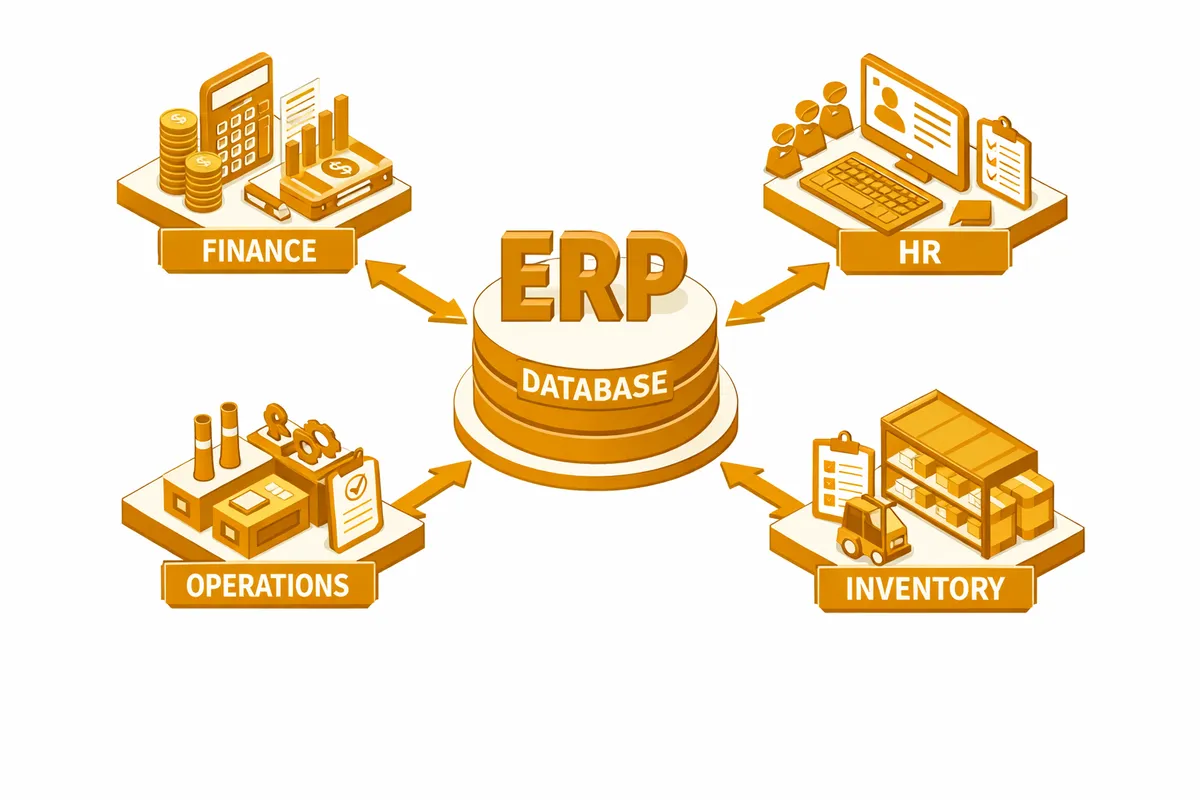
From discovery, we design a module structure that reflects the real operational model. A Douglass Park community nonprofit ERP might include program enrollment and case management, grant budget tracking against program expenditures, donor and funder relationship management, HR and volunteer management, and board-level financial reporting. A community health clinic ERP might include patient scheduling integrated with insurance billing, care coordination across providers, public health data reporting, and staff management tied to clinical scheduling.
Implementation is phased. Douglass Park organizations typically see the first working modules within fourteen to twenty weeks. Subsequent phases add capabilities without disrupting the operational foundation already built.
Industries We Serve in Douglass Park
Community nonprofits and social service organizations along Roosevelt Road and Sacramento Boulevard managing multiple programs, grants, and staff need ERP that connects program case management to grant budget tracking, produces funder-required reporting automatically, and gives leadership a real-time view of program performance and financial health.
Community health clinics near Mount Sinai Hospital and on Ogden Avenue managing patient care across multiple providers need ERP that connects patient scheduling to insurance billing, tracks care coordination across the clinical team, handles public health reporting requirements, and gives clinical and administrative leadership unified operational visibility.
Family-run restaurants and food businesses on 19th Street and California Avenue that have expanded into catering or wholesale need ERP that manages production planning, multi-channel inventory, separate billing processes for each revenue stream, and financial reporting that reflects the actual economics of a multi-channel food operation.
Auto shops and trade businesses serving the Douglass Park community need ERP that tracks parts inventory against job orders, manages technician labor and scheduling, handles customer vehicle or job history, and integrates financial reporting with the real payment cycles of insurance reimbursements and retail customers.
Community pharmacies and neighborhood health businesses on Ogden Avenue need ERP that connects inventory management to prescription filling workflows, tracks supplier purchasing cycles, and handles the billing and compliance requirements specific to community pharmacy operations.
Churches and faith-based organizations anchoring the Douglass Park community need ERP that manages congregation programs, staff and volunteer coordination, donor relationship tracking, and the financial reporting needed by church leadership without requiring a dedicated administrative staff to produce it manually.
What to Expect Working With Us
1. Discovery and scope. Two to three weeks of structured interviews with leadership and operational staff. For community organizations, this includes review of grant compliance requirements and funder reporting obligations that the ERP must support from the beginning.
2. Module design and approval. We design the module structure, data model, integration architecture, and phased delivery plan. Leadership reviews and approves the design before any development begins.
3. Phased implementation. Highest-impact modules go live first, typically within fourteen to twenty weeks. Subsequent phases add capabilities without disrupting the operational foundation already built.
4. Launch support and ongoing maintenance. Post-launch monitoring, staff training, and a warranty period for any issues. Optional maintenance retainers cover feature additions and reporting updates as the organization grows or grant requirements change.