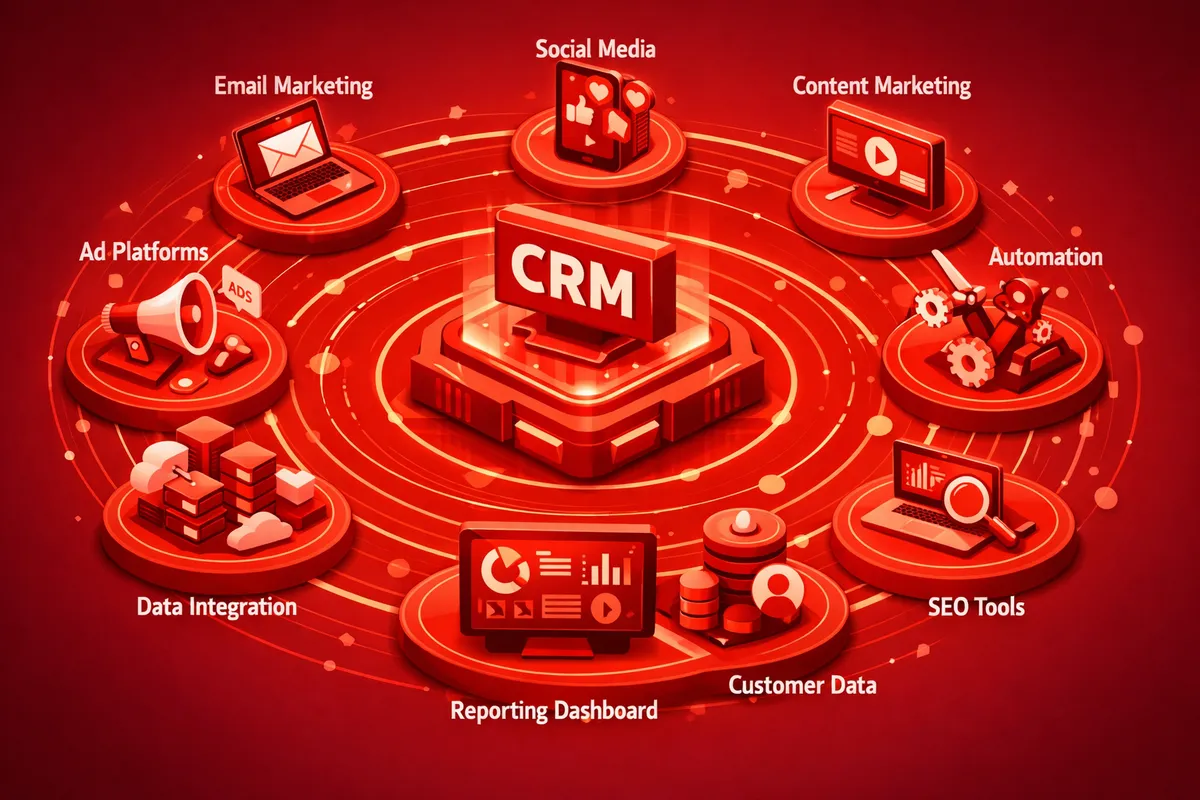
How We Build CRM and Martech for Douglass Park
We start with a relationship audit: who does this business need to stay in contact with, what actions should it be taking with those contacts, and what information does it need to track to do that well? For most Douglass Park small businesses, this audit produces a clear picture in one conversation.
From there, we match the requirements to a platform that fits. For very small operations, a simple CRM like Notion with a contact database, combined with a basic email platform like Mailchimp, may be the right answer. For a growing nonprofit or multi-location operation, we evaluate platforms like HubSpot, Zoho, or Salesforce Nonprofit depending on budget and staff capacity.
Configuration is where most consulting value is delivered. A CRM is only useful if it is set up to capture the right information automatically, prompt the right follow-up actions, and produce reports that are meaningful to the business. We configure automated follow-up sequences, import existing contact lists, and connect the CRM to the email and phone systems the business already uses.
For Douglass Park organizations where outreach happens through community channels, we integrate the CRM with the social platforms and local networks that drive real engagement. A contact who came in through a community health fair near Douglass Park should be tagged and followed up differently than one who found the business through Google.
Industries We Serve in Douglass Park
Community health clinics near Mount Sinai Hospital use CRM platforms to manage patient outreach, track follow-up care coordination, and maintain community partner relationships. We configure systems that work within healthcare communication constraints and help staff manage high contact volumes without additional administrative burden.
Nonprofits and community organizations on Sacramento Boulevard and Ogden Avenue use donor management and volunteer coordination CRMs that track giving history, communication preferences, and engagement levels. We configure segmentation and follow-up automation that helps small development teams run professional donor stewardship programs.
Auto shops on California Avenue use simple CRMs that track customer vehicle history, flag customers due for service, and send automated text reminders. The right CRM for a two-bay auto shop is not the same tool used by a dealership, and we configure accordingly.
Family restaurants on Roosevelt Road use contact lists and email platforms to build a database of regulars, promote special events, and stay top of mind between visits. We set up list-building tools, configure automated welcome sequences, and design monthly email campaigns that are easy for the owner to send without agency help.
Churches and faith-based organizations in Douglass Park manage member communication, event registration, and giving records through configured ChMS or CRM platforms. We configure these systems to handle the specific communication patterns of faith communities without requiring technical expertise from volunteer staff.
Local contractors and service businesses throughout Douglass Park track job history, follow up on open estimates, and manage referral requests through simple CRM configurations. We automate the follow-up steps that owners forget to do manually, turning more estimates into closed jobs.
What to Expect Working With Us
1. Relationship and workflow audit. We map out every type of relationship the business manages and every action it needs to take with those relationships. This document becomes the specification for the CRM configuration.
2. Platform selection. Based on the audit, we recommend two or three platforms with detailed comparison of cost, fit, and learning curve. We provide a clear recommendation rather than leaving the decision to a business owner who is not a software evaluator.
3. Configuration and data migration. We configure the selected platform, import existing contacts, set up automated sequences, and connect it to existing email and communication tools. We document every configuration decision for future reference.
4. Training and handoff. We train the staff who will use the system daily, provide written guides for common tasks, and establish a process for adding new contacts and reviewing system health. We confirm the system is working as intended before closing the engagement.