How We Build Business Process Automation for Douglass Park
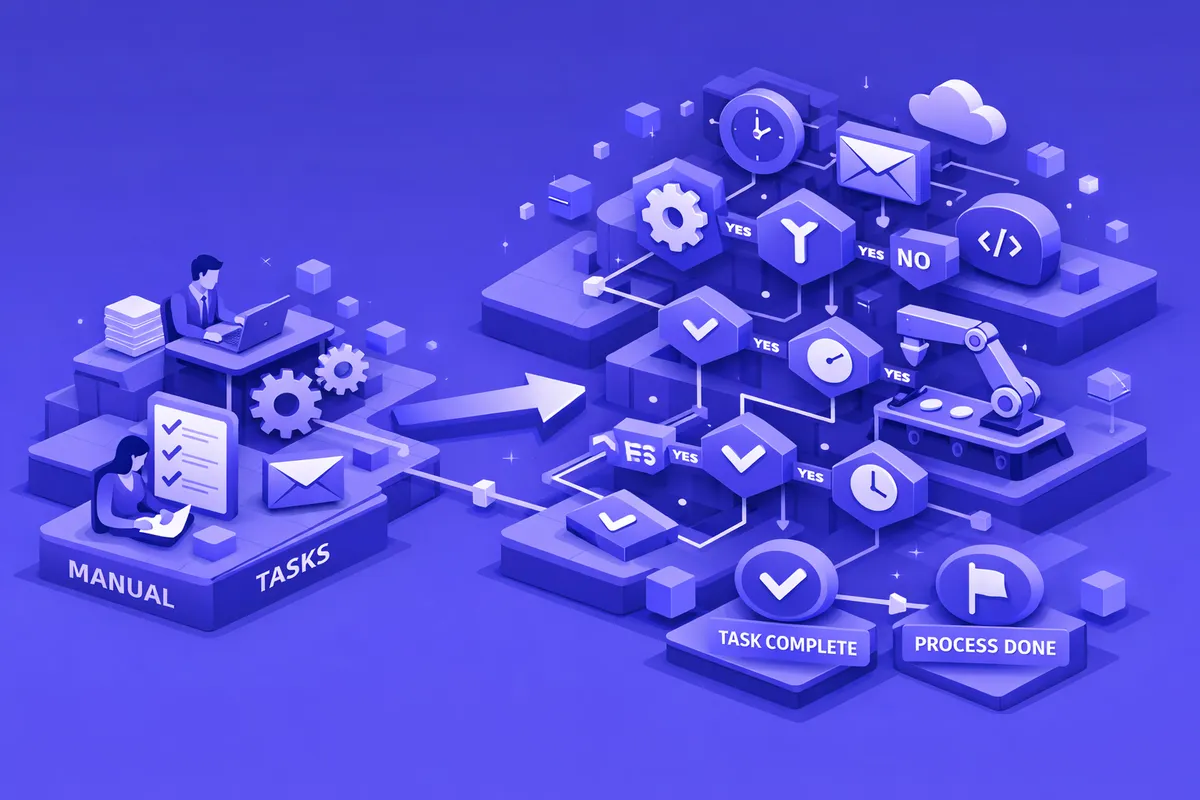
Building automation for Douglass Park businesses starts with a clear understanding of budget and scale. We do not arrive with an enterprise automation platform and a six-figure proposal. We ask what the most painful recurring administrative tasks are, what software the business already uses, and what a realistic time savings would be worth to the owner.
From that conversation, we identify one or two concrete automation opportunities that can deliver measurable time savings within a month of deployment. For a Roosevelt Road restaurant owner, that might be an automated vendor order routing workflow that sends the same standing order to suppliers every week based on inventory levels, or a reservation confirmation sequence that sends text reminders without requiring staff to call each booking individually. For a community health clinic near Mount Sinai Hospital, that might be appointment reminder automation that sends confirmation texts and asks patients to confirm attendance, reducing no-shows without phone staff involvement.
We build using tools that connect to software Douglass Park businesses already use. Google Workspace, Square, QuickBooks, and practice management software common in small healthcare settings all have the integration capabilities needed to support meaningful automation. We do not require expensive software upgrades or new platform subscriptions as a prerequisite.
Pricing is structured for small business realities. We offer scoped fixed-price engagements for single workflow automations and phased plans for businesses ready to automate multiple processes over time. The goal is that the time savings from automation pay for the automation itself within the first few months of operation.
Industries We Serve in Douglass Park
Family-run restaurants and food businesses on Roosevelt Road use business process automation to handle reservation confirmation and reminder sequences, weekly vendor order submissions, staff scheduling notifications, and end-of-day sales reporting to ownership. The owner of a restaurant on Roosevelt Road who currently spends an hour each evening on closing administrative tasks can recover that time through automation that handles the routine reporting and communication automatically.
Community health clinics and healthcare support services near Mount Sinai Hospital use business process automation to handle appointment scheduling confirmations, patient reminder sequences, insurance verification workflows, referral coordination communications, and patient intake form collection. Small clinics serving Douglass Park residents deal with insurance and prior authorization requirements that are identical in structure for every patient. Automation executes those requirements consistently without requiring staff to handle each case manually from start to finish.
Neighborhood pharmacies serving the community around Douglass Park and along California Avenue use business process automation to handle prescription refill reminder campaigns, prior authorization submission routing, insurance eligibility verification, and patient communication for pickup notifications. Pharmacies that serve patients managing chronic conditions have highly predictable refill cycles that automation tracks and communicates without manual monitoring.
Auto shops and trades businesses on Ogden Avenue use business process automation to handle appointment confirmation and reminder sequences, estimate follow-up campaigns, job completion notifications, and customer review request workflows. A two-bay auto shop whose owner currently tracks every customer interaction manually can automate customer communications while maintaining the personal relationship quality that neighborhood businesses depend on.
Churches and religious organizations with community programs in Douglass Park use business process automation to handle program enrollment confirmation, weekly schedule distribution, volunteer coordination communications, and event registration workflows. Congregations operating food pantries, after-school programs, or senior services have coordination needs that manual phone and email processes handle inconsistently. Automation provides consistency without replacing the human relationships at the center of community ministry.
Nonprofits and community organizations working in Douglass Park use business process automation to handle program intake workflows, service delivery data collection, case note routing, funder reporting preparation, and volunteer onboarding sequences. Grant reporting is frequently the automation investment with the clearest ROI for nonprofits: the data already exists but must be manually assembled from multiple sources. Automation that structures data capture from the start converts a two-week reporting exercise into a one-hour review.
What to Expect Working With Us
1. Straightforward scope conversations. We start by asking what administrative tasks consume the most time each week and what those hours are worth to the business. No jargon. No enterprise sales process. We identify one or two specific automations that address your actual pain points and present a clear price and timeline for each.
2. Build around existing software. We start with the tools you already use. If you are using Google Workspace, Square, and QuickBooks, we build automation that connects those tools without requiring migrations or new platform subscriptions. Software changes only come up if your current tools have fundamental limitations that prevent the automation from working.
3. Parallel testing so you see results before committing. Every automation runs alongside your current manual process for two to four weeks before the manual process is retired. You see both the automation output and what you would have produced manually, side by side. This catches any edge cases specific to your operation and builds confidence before the manual backup is removed.
4. Plain-language documentation and ongoing support. We document every automation in plain language that a business owner, not a software developer, can understand. We also offer monthly check-ins for the first quarter after deployment to ensure the automation is performing as expected and to address any changes in your operation that affect how the workflow runs.