How We Build Business Intelligence for Douglass Park
Discovery begins with the question: what decisions are you unable to make well right now because you do not have the right information? For a nonprofit on Sacramento Boulevard, the answer is often: we do not know which programs have the best cost-per-outcome ratio, and we do not know which staff members need support before they get to a crisis. For a business on Ogden Avenue, it might be: we do not know which product categories are growing and which are declining fast enough to adjust orders before we are overstocked.
We map the data sources that contain the information needed to answer those questions, assess the quality and reliability of that data, and design a data model that connects them coherently. For most Douglass Park organizations, this means connecting two to four existing systems through a lightweight ETL process rather than replacing those systems entirely. The clinic keeps their EHR. The nonprofit keeps their case management software. We build the layer that pulls data from each source on a regular schedule, cleans and standardizes it, and loads it into the reporting environment.
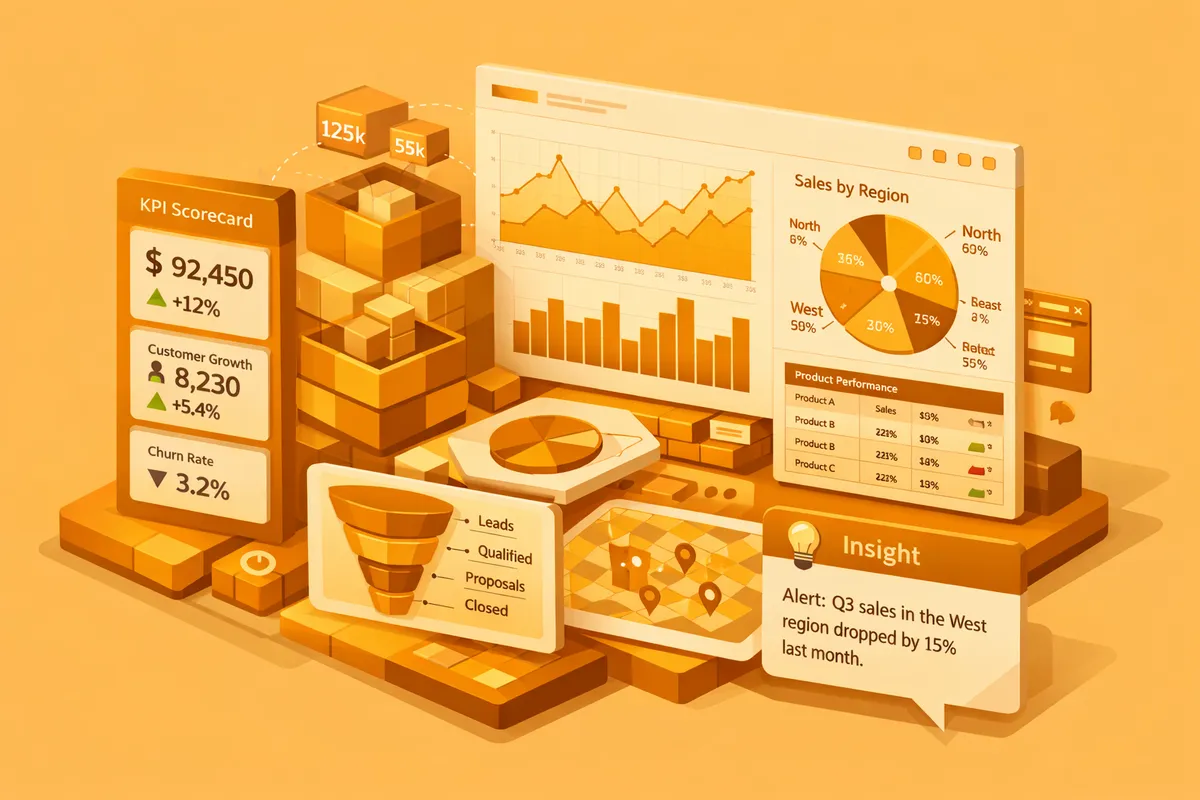
Dashboards are built around decisions, not metrics. A clinic dashboard for a provider near North Lawndale College Prep shows patient volume by program, appointment completion rates, and referral outcomes. A retail dashboard for a Roosevelt Road business shows daily revenue by category, margin by SKU, and inventory turnover rates. Every view in the dashboard answers a specific question someone in that organization actually has.
Industries We Serve in Douglass Park
Community health clinics and FQHCs near Mount Sinai Hospital operate across multiple funding streams, each with its own reporting requirements and outcome metrics. We build unified BI environments that consolidate data from EHR systems, billing platforms, and grant tracking tools into a single reporting layer, so a program director on Roosevelt Road can pull a funder report in 20 minutes instead of spending a week compiling data manually.
Nonprofit social services organizations on California Avenue and Sacramento Boulevard manage programs, staff, volunteers, donors, and grant compliance simultaneously. Business intelligence for these organizations means a board dashboard showing financial health alongside program outcomes, an operations dashboard showing staff caseloads and service delivery rates, and a development dashboard showing donor giving trends and grant pipeline status.
Family-run retail businesses along Ogden Avenue and Roosevelt Road make better inventory and pricing decisions with BI than without it. We connect POS data to reorder workflows, build margin analysis by product category, and surface demand patterns that shift by season, by neighborhood event cycle, and by the traffic that flows through the corridor between the California Blue Line station and the park.
Auto shops and service businesses that manage parts inventory, labor scheduling, and customer return rates across multiple bays have operational data that should inform their purchasing and staffing. We build service business dashboards that show revenue per bay, parts margin by supplier, and customer return rate by service type, giving shop owners the information they need to make staffing and inventory decisions confidently.
Churches and faith-based community development organizations managing multiple programs, properties, and funding sources benefit from consolidated financial and program reporting. We build dashboards that give church leadership and board members a real-time view of program capacity, financial health, and community impact without requiring a data analyst on staff.
Local bodegas and food businesses with higher transaction volumes than they can track manually benefit from BI that connects sales data to purchasing patterns, identifies slow-moving product lines before they become a cash flow problem, and surfaces the demand signals that inform weekly order decisions. A bodega on 19th Street that knows Tuesday afternoon is its highest-margin window can staff and stock accordingly.
What to Expect Working With Us
1. Decision mapping and data inventory. We spend the first engagement mapping the three to five decisions your organization needs to make better, then tracing each decision back to the data that would inform it. For Douglass Park organizations, this usually takes one or two working sessions and produces a clear picture of which data sources matter, which are reliable, and what work is needed to make them connectable.
2. Data model and ETL build. We design the data model that unifies your sources and build the extraction, transformation, and loading process that populates it on a regular schedule. For most Douglass Park organizations, this runs on a nightly batch process that pulls from operational systems without disrupting their daily use. Data quality validation runs automatically and flags anomalies before they appear in reports.
3. Dashboard build and user acceptance review. We build the initial dashboard set and review each view with the people who will use it daily. A program director on Sacramento Boulevard who will check the outcomes dashboard every Monday morning has different needs than a finance director who reviews it monthly for board reporting. We build for the actual users, then iterate based on their feedback before handoff.
4. Training, documentation, and ongoing support. BI infrastructure is only valuable if the people in your organization can use it without calling us. We provide training sessions for primary users, written documentation for every dashboard view, and a support channel for questions that come up after launch. For organizations that want ongoing refinement as their reporting needs evolve, we offer a monthly maintenance and expansion engagement.