How We Build AI Strategy Consulting for Douglass Park
Our engagement begins with discovery: structured interviews with leadership, clinical or program staff, administrative staff, and where appropriate, community members. We want to understand what the organization is trying to accomplish, where it is falling short of those goals, what the biggest operational inefficiencies are, and what would need to be true for AI to actually help. For a clinic on California Avenue, that means understanding appointment no-show patterns, documentation burden on clinical staff, patient communication gaps, and billing cycle challenges. For a nonprofit, it means understanding program delivery bottlenecks, donor cultivation gaps, and the administrative overhead that is compressing the capacity available for direct service.
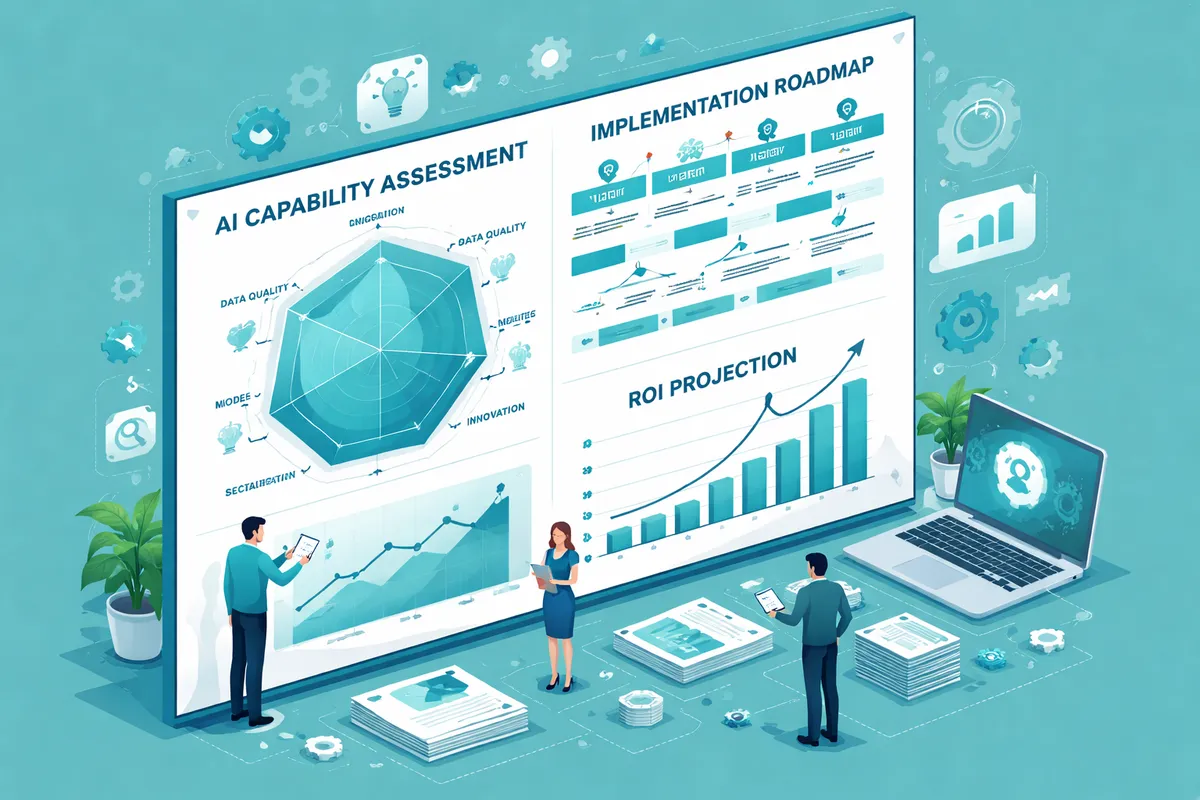
From the discovery findings, we build an organizational AI readiness assessment. Readiness includes data quality and availability, staff capacity for change, leadership alignment on AI priorities, and existing technology infrastructure. Many Douglass Park organizations discover during this assessment that their data is more fragmented than they realized, or that their staff has concerns about AI that need to be addressed before adoption can succeed. The readiness assessment shapes the roadmap as much as the opportunity analysis does.
The roadmap we develop prioritizes AI applications in three tiers. Quick wins are applications where the organization is ready, the technology is proven, and the impact is clear. These build momentum and organizational confidence. Medium-term investments are applications that require some readiness building, such as improving data infrastructure or training staff, before they can succeed. Long-term initiatives are applications that are high-value but require significant organizational change to achieve. We staff the roadmap to your actual budget and change capacity, not to an idealized version of what is possible.
Industries We Serve in Douglass Park
Community health clinics and medical practices near Roosevelt Road and California Avenue develop AI strategies that prioritize patient outcomes and clinical staff relief over administrative efficiency. We assess where AI can genuinely improve care for the predominantly Latino and Black patient population of Douglass Park and build roadmaps that start with the applications most likely to build patient trust rather than erode it.
Nonprofits and social service agencies serving Douglass Park families develop AI strategies that balance impact scale with the organization's core values around community trust, data privacy, and equitable service. We identify which AI applications will genuinely help more families reach better outcomes and which are primarily operational improvements with limited mission impact.
Community development and housing organizations near 19th Street and Sacramento Boulevard develop AI strategies for program delivery, resident communication, and impact measurement that serve Douglass Park's economic development goals. We ground strategy in the specific challenges of West Side community development.
Youth development organizations and after-school programs near North Lawndale College Prep and throughout Douglass Park develop AI strategies that improve student outcomes without compromising the mentorship and human relationships that make youth programs effective. Technology is a support for the work, not a substitute for it.
Churches and faith institutions throughout Douglass Park develop AI strategies appropriate to their community role, focusing on member communication, administrative efficiency, and outreach without technologies that conflict with community trust and the pastoral nature of their work.
Family businesses and neighborhood commercial establishments on Ogden Avenue and Roosevelt Road develop practical AI strategies that address their specific operational challenges, from customer communication automation to inventory and scheduling, with implementation timelines and costs calibrated to small business realities.
What to Expect Working With Us
1. Discovery and assessment. We conduct structured interviews across your organization, review relevant data and systems, and deliver an organizational AI readiness assessment that identifies both the opportunities and the constraints your specific situation presents.
2. Opportunity prioritization and roadmap development. We develop a prioritized AI roadmap that identifies quick wins, medium-term investments, and long-term initiatives. We explain the reasoning behind each prioritization decision and calibrate the roadmap to your actual budget and change capacity.
3. Implementation planning. For each initiative on the roadmap, we develop detailed implementation plans: resources required, realistic timeline, organizational changes needed, and success metrics that will tell you whether the AI application is actually delivering value.
4. Governance framework and executive coaching. We help you establish an AI governance structure so decisions are made thoughtfully, equity implications are assessed, and accountability is clear. We provide ongoing coaching to your leadership team as you navigate implementation.
5. Progress review and roadmap refinement. We check in quarterly to review progress against the roadmap, assess what is working, and adjust priorities as your organization's context evolves.