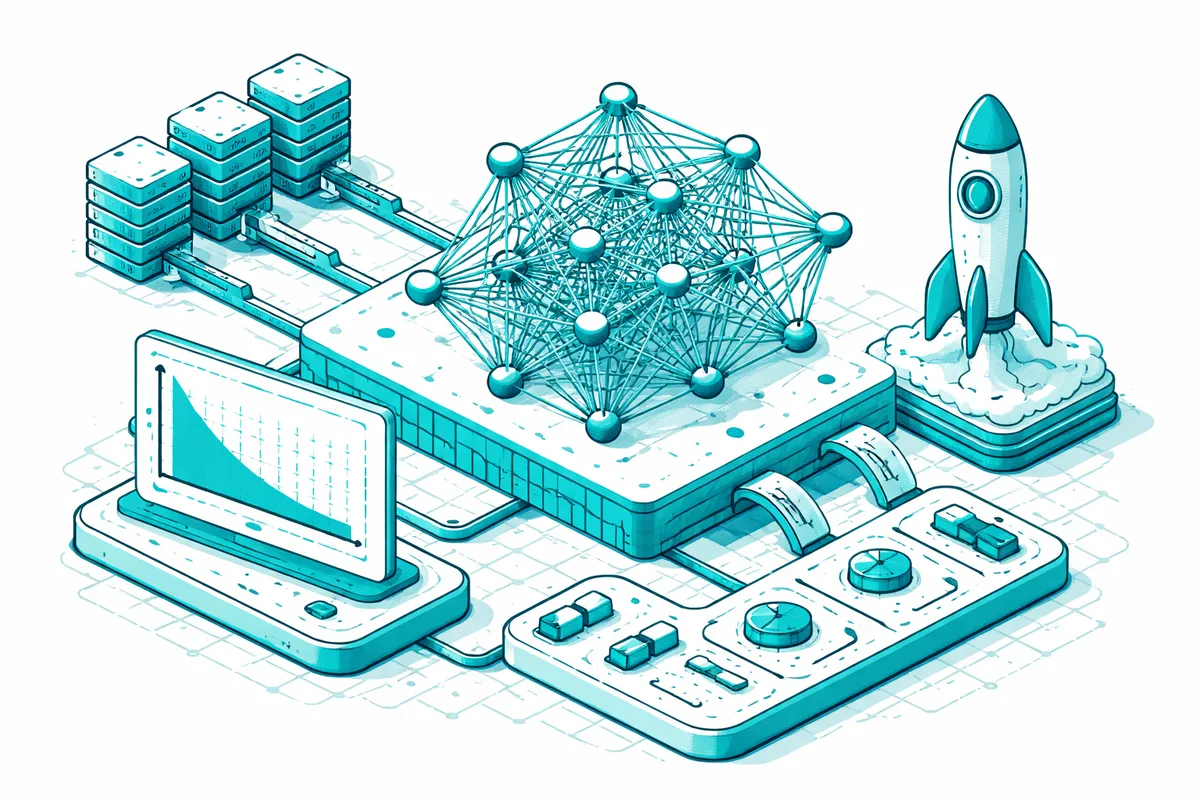
How We Build AI Model Training for Douglass Park
We build training programs for Douglass Park organizations starting with a data audit that identifies what organizational data exists, what form it is in, and what compliance requirements govern its use for training. For healthcare organizations near Mount Sinai Hospital, this includes an assessment of whether patient data can be used for training under HIPAA, and whether de-identification is required before training data is prepared.
Bilingual training data preparation is the primary technical differentiator for Douglass Park model training. We build training datasets that represent the full range of Spanish and English communication that the organization's AI model will encounter, including the mixed-language patterns that bilingual clients and patients use naturally. A model trained on this data handles real-world community interactions more accurately than a model trained on clean monolingual data.
For community health applications near California Avenue and Ogden Avenue, we focus training on the specific task categories where custom performance matters most: intake document processing, appointment-related communication, service eligibility inquiry, and the clinical terminology that characterizes the patient population's questions. We measure training performance on held-out data that reflects the actual distribution of interactions the model will handle.
For smaller Douglass Park organizations that cannot accumulate sufficient proprietary training data, we use transfer learning approaches that start from existing multilingual models and fine-tune on the organization's specific domain, requiring smaller volumes of training data while producing meaningful performance improvement over the base model.
Industries We Serve in Douglass Park
Community health clinics near Mount Sinai Hospital benefit from AI models trained on their specific intake documents, patient inquiry patterns, and clinical communication context. A trained model that handles Spanish-language patient inquiries accurately, recognizes the community-specific health concerns of the Douglass Park patient population, and routes complex clinical questions to appropriate staff performs significantly better than a general-purpose model deployed without domain training.
Social service organizations and nonprofits throughout the Douglass Park residential area use custom-trained models to handle program eligibility inquiries, service navigation assistance, and the FAQ-type questions that consume front desk and phone staff time. A model trained on the organization's actual program descriptions, eligibility criteria, and common client questions provides accurate program information without requiring staff for routine inquiries.
Community health workers and patient navigators serving the Douglass Park and adjacent communities use AI tools to assist with documentation, resource identification, and follow-up tracking. Custom training on the specific resources, programs, and referral pathways relevant to the Douglass Park community improves the accuracy of resource recommendations and reduces the time workers spend searching for accurate information.
Mental health and behavioral health organizations near Ogden Avenue and throughout the West Side use custom-trained models for documentation assistance, where training on the specific assessment instruments, clinical terminology, and documentation requirements of the organization improves documentation efficiency without sacrificing accuracy.
Family businesses and retail operations on Roosevelt Road and Ogden Avenue use smaller-scale custom training to build product-specific and service-specific AI tools: inventory inquiry handling, order status responses, and FAQ automation trained on the specific products and policies of the individual business rather than generic retail responses.
Educational and youth service organizations in Douglass Park use custom training to build AI tools that handle enrollment inquiries, schedule information, and program FAQ responses in the specific language and context of the organization's programming. Training on real family inquiries produces more accurate and useful responses than generic educational AI tools.
What to Expect Working With Us
1. Data audit and training feasibility assessment. We review your organization's available data, assess compliance requirements for its use in model training, and determine what training approach, full fine-tuning versus parameter-efficient fine-tuning versus retrieval augmentation, is appropriate given the data volume and the target performance improvement.
2. Training data preparation in Spanish and English. We prepare bilingual training datasets that reflect the full range of language your AI model will encounter in the Douglass Park community context. For healthcare organizations, we implement de-identification and compliance review before training data is finalized.
3. Model training and evaluation. We conduct training runs and evaluate model performance against the specific tasks the model will handle in your organization. Evaluation includes separate performance measurement for Spanish-language and English-language inputs to ensure that bilingual performance is genuinely equivalent rather than nominally claimed.
4. Deployment and ongoing improvement. We deploy trained models into your operational environment and establish monitoring for performance degradation and edge cases. For Douglass Park organizations, ongoing improvement includes collecting new training examples from production interactions to maintain model accuracy as community language patterns evolve.