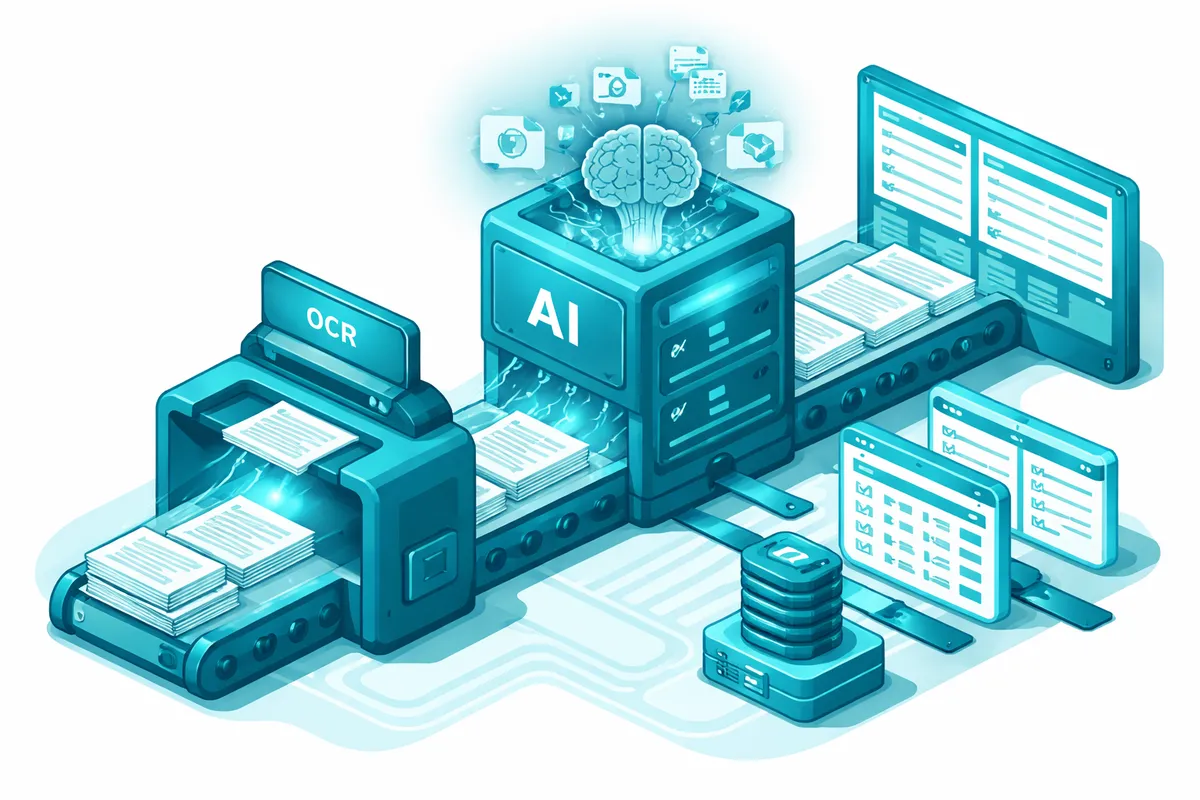
How We Build AI Document Processing for Douglass Park
We build document processing systems for Douglass Park organizations starting with a document inventory that identifies the specific document types, in both languages, that the organization processes most frequently. For a clinic near California Avenue, that inventory typically includes Spanish and English intake forms, insurance verification documents, referral letters, and clinical summary documents. For a nonprofit on Roosevelt Road, it might include grant applications, program attendance records, client intake forms, and funder reports. The inventory is the diagnostic step that reveals which document types drive the most manual processing burden and which offer the fastest return from automation.
Bilingual OCR and document extraction is calibrated to the specific documents each Douglass Park organization processes. We train document processing models on the actual forms the organization uses rather than generic document templates. A Spanish-language intake form from a specific clinic has a specific structure, with specific field labels, specific layout conventions, and specific variations introduced by patients who fill out sections in their own way. A document processing system that has learned from hundreds of examples of that specific form performs significantly better than a generic Spanish-language OCR model that has never seen it.
HIPAA-compliant document processing infrastructure is required for any Douglass Park organization handling patient documents. We configure document processing systems on HIPAA-eligible platforms, establish business associate agreements with document processing vendors, and implement the access controls and audit logging that protected health information requires. For organizations near Mount Sinai Hospital that are adding document processing to an existing technology stack, HIPAA review of the full processing chain, including how documents are transmitted between systems, is as important as compliance review of any individual tool.
For organizations that interact with the California Blue Line commuter corridor, document processing also covers the digital intake forms that web-based customers submit, routing them automatically to the correct processing queue based on language, document type, and service category. A healthcare organization whose online forms arrive in a general email inbox and require manual sorting before processing is losing the efficiency benefit of digital intake. Automated routing eliminates that sorting step and reduces the time between form submission and staff review.
Industries We Serve in Douglass Park
Community health clinics near Mount Sinai Hospital process significant volumes of paper and digital intake documents in Spanish and English. AI document processing that accurately extracts patient information from Spanish-language forms, validates insurance details, and routes completed records to the EHR system reduces manual data entry and the errors it introduces. For clinics serving a predominantly Spanish-speaking patient population, Spanish-language document processing is not optional.
Social service organizations throughout the Douglass Park residential area process client intake forms, program applications, eligibility documentation, and case management records. Document processing automation that extracts relevant information and routes it to the appropriate case manager or program coordinator reduces the administrative time between client intake and service delivery.
Community health workers and outreach organizations working throughout the Douglass Park, Lawndale, and Pilsen communities assist residents with completing housing, healthcare, and benefits applications. AI document processing tools that can assist with form completion, verify that required fields are completed, and flag documents for review before submission improve the accuracy of applications and reduce the back-and-forth that incomplete submissions create.
Family businesses and retail operations on Roosevelt Road and Ogden Avenue process supplier invoices, customer receipts, and tax documents in Spanish and English. Document processing automation that extracts invoice data for accounting systems reduces the manual bookkeeping burden for owner-operators who currently enter invoice details by hand.
Nonprofits reporting to government funders face quarterly and annual reporting requirements that require aggregating data from multiple program records. Document processing automation that extracts relevant program data from case records and compiles it into reporting formats saves the program staff time that currently goes to manual report preparation before grant deadlines.
Legal aid and tenant advocacy organizations serving the Douglass Park residential community process lease documents, court filings, and housing authority correspondence in both languages. Document processing that extracts key terms, deadlines, and required response information from these documents ensures that critical details are not missed in the administrative processing of high-volume casework.
What to Expect Working With Us
1. Document inventory and bilingual capability assessment. We catalog the document types your organization processes, in both Spanish and English, and assess the current processing approach, whether manual data entry, export-import, or partial automation. For healthcare organizations near Mount Sinai Hospital, this includes a HIPAA compliance review of current document handling.
2. Document processing system configuration. We configure and train document processing tools on your specific document types, calibrated for Spanish and English accuracy. For organizations with unique form structures, we build training datasets from actual documents rather than relying on generic model performance.
3. Integration with downstream systems. We connect document processing outputs to the systems that receive extracted data: EHR for patient documents, case management platforms for social service intakes, accounting systems for invoices. The goal is a processing flow where a document enters and relevant data appears in the right system without manual transcription.
4. Staff training and quality review. We train your team to monitor document processing output quality, handle exceptions that require human review, and correct errors that automated processing misses. For Douglass Park organizations with bilingual workforces, training is delivered in both languages.