How We Build AI Data Pipelines for Douglass Park
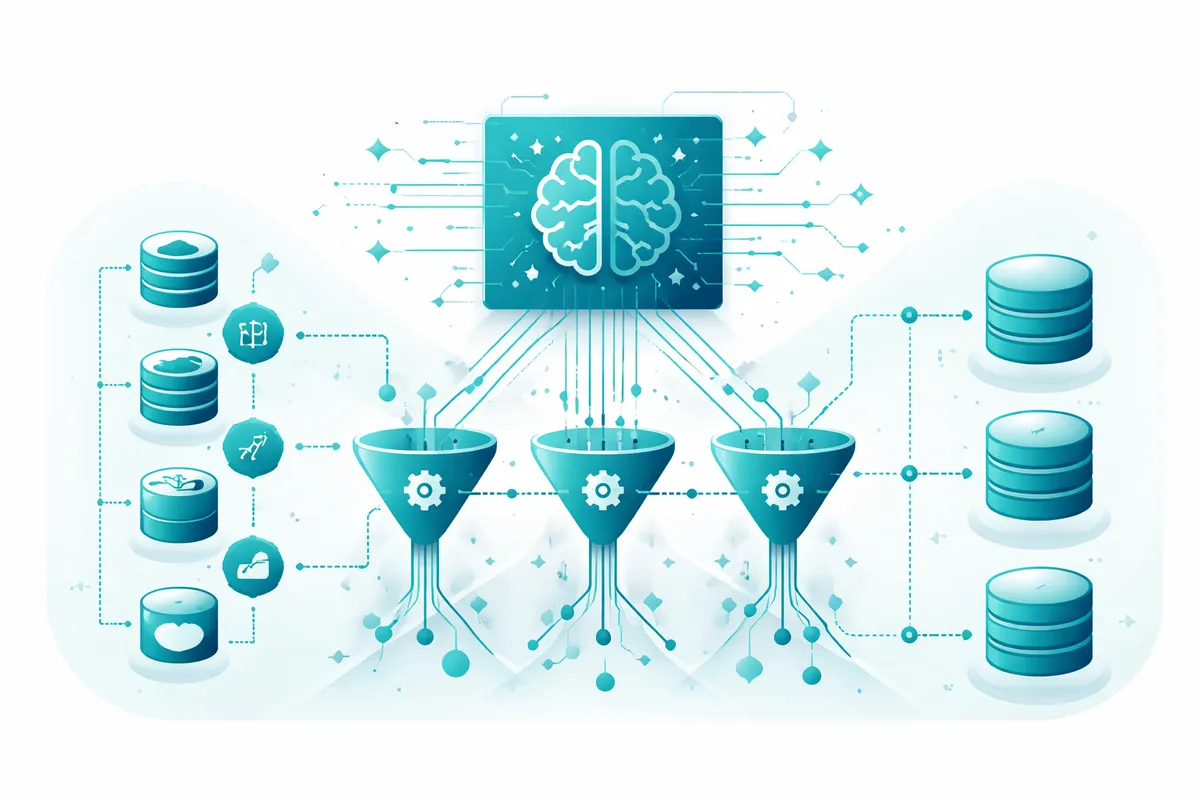
We design data pipeline architecture for Douglass Park organizations starting with a current-state mapping that identifies where data originates, where it needs to go, and what manual steps currently fill the gaps between systems. For community health organizations near Mount Sinai Hospital, this mapping typically reveals three to five integration points where manual data entry or export-import cycles are consuming staff time that could be automated. The mapping is a diagnostic tool, not a planning document. We use it to identify which manual steps cost the most staff time and which systems are architecturally incompatible in ways that require new infrastructure rather than configuration adjustments.
Language preference is a required field in every data model we design for Douglass Park organizations. Whether the system is a healthcare CRM, a case management platform, or a community program registration tool, language preference captured at intake must flow automatically to every downstream communication trigger. This is not optional configuration. It is the baseline standard for serving a bilingual community without creating staff-dependent workarounds. When language preference is a required field rather than an optional one, staff capture it consistently. When it is optional, it is captured inconsistently, and downstream communications default to English for everyone, including Spanish-speaking patients and clients.
For healthcare-adjacent organizations, pipeline design accounts for HIPAA data handling requirements from the start. We select integration tools that support business associate agreements, configure data flows to minimize protected health information exposure at each step, and document the pipeline architecture in a way that satisfies compliance review. Healthcare organizations that discover a HIPAA compliance gap in an existing pipeline after it has been running for two years face remediation costs that exceed what a compliant initial design would have required.
For nonprofits throughout the Douglass Park residential area, pipeline design addresses the reporting requirements that grant funders impose. Automated pipelines that aggregate program data for funder reports eliminate the end-of-quarter manual compilation that currently consumes program staff time. A nonprofit whose program data flows automatically into a funder report template spends reporting week reviewing and submitting rather than compiling, which is a meaningful operational difference for small organizations with thin administrative capacity.
Industries We Serve in Douglass Park
Community health clinics and healthcare organizations near Mount Sinai Hospital benefit from data pipelines that connect EHR systems to patient communication platforms, billing clearinghouses, and reporting tools. A clinic that automates appointment reminders based on EHR data, in the patient's recorded language preference, reduces no-show rates without adding administrative staff. We build healthcare data pipelines that account for HIPAA requirements throughout.
Social service nonprofits and community organizations throughout the Douglass Park area operate grant-funded programs with reporting requirements that currently require manual data compilation. Automated pipelines that collect program participation data, track outcome metrics, and generate funder reports reduce the administrative burden that program staff currently absorb at reporting deadlines.
Community development and housing organizations serving the Douglass Park and adjacent Lawndale residential base use data pipelines to connect application intake systems to eligibility verification tools, case management platforms, and assistance disbursement systems. Automated eligibility flags and intake routing reduce the manual review that currently creates bottlenecks in housing assistance processing.
Education and youth service organizations operating near Kelvyn Park or throughout the Douglass Park residential area use pipelines to connect registration systems to communication platforms, volunteer management tools, and program outcome tracking. Automated enrollment confirmation, schedule reminders, and program completion tracking reduce the staff time spent on administrative follow-up for programs that run on community participation.
Retail and service businesses near the California Blue Line at 19th Street and along Roosevelt Road use simpler pipeline architectures that connect point-of-sale data to customer communication platforms and inventory management systems. A food business that automatically triggers a loyalty reward communication when a customer reaches a purchase threshold, in the customer's preferred language, runs a more effective loyalty program than one relying on manual tracking.
Mental health and behavioral health providers serving the Douglass Park community use pipelines that connect scheduling systems to reminder platforms, documentation tools, and outcomes tracking systems, with careful attention to the confidentiality requirements that govern behavioral health data beyond standard HIPAA protections.
What to Expect Working With Us
1. Current-state data mapping. We document where your organization's data currently originates, how it moves between systems, and where manual steps are filling integration gaps. For organizations near Mount Sinai Hospital, this includes a HIPAA data flow analysis that identifies compliance gaps alongside operational inefficiencies.
2. Pipeline architecture design. We design the integration architecture that automates the manual steps identified in the mapping, with language preference handling built in from the start. For Douglass Park nonprofits with multiple program areas, we design modular pipelines that can be built incrementally rather than requiring a full-system overhaul.
3. Implementation and testing. We build and test the data pipelines with your actual data, in your systems, with validation steps that confirm the right records flow to the right destinations. For healthcare organizations, testing includes HIPAA compliance validation before go-live.
4. Documentation and staff training. We document the pipeline architecture in terms your team can understand and maintain, and we train staff on monitoring for pipeline errors and handling edge cases. For Douglass Park organizations where staff turnover is a reality, documentation that a new team member can follow independently is essential.