How We Build Accounting Automation for Douglass Park
Douglass Park's business community needs practical automation, not enterprise software sold at enterprise prices. We build to the scale and technical capacity of the organizations we serve. If your bookkeeper uses QuickBooks and email, the automation interfaces at that level. If your nonprofit uses a cloud accounting platform your foundation requires, we build to that platform.
We begin every engagement with a direct conversation about what is causing the most pain. For a community clinic near Mount Sinai Hospital, that is almost always insurance reconciliation. For a nonprofit running programs tied to North Lawndale College Prep or organizations in the Garfield Park Conservatory corridor, it is grant tracking. For a restaurant, it is daily reconciliation. We identify the single process that takes the most time and start there.
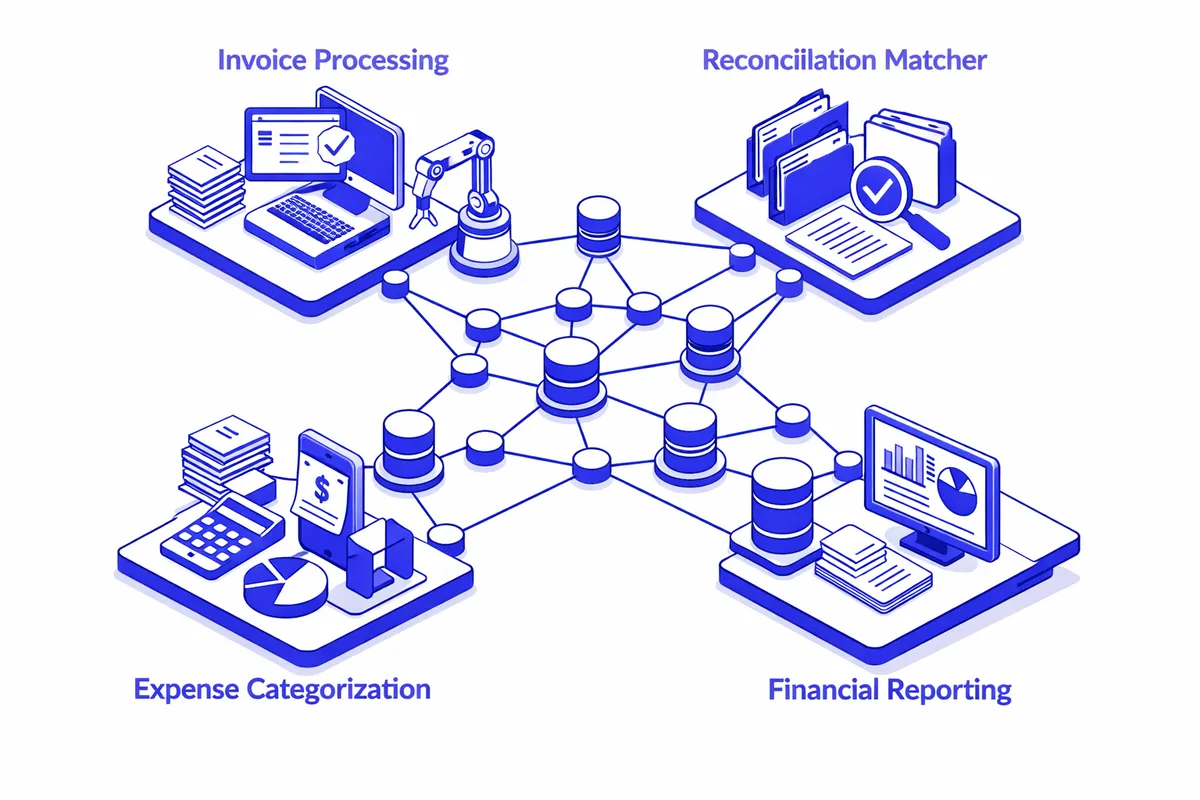
The build is straightforward: we map the current process step by step, identify which steps follow a rule and which require judgment, and automate the rule-based steps. For insurance reconciliation, that means parsing remittance files automatically and matching against encounter records. For grant tracking, that means tagging expenses to the correct grant fund automatically based on the expense category and vendor. For daily revenue reconciliation, that means connecting the POS system to the accounting platform and running the match automatically.
Testing happens against historical data before anything touches live records. We run the automation against three months of transactions, compare outputs against what your books actually show, and do not go live until the match rate confirms the logic is correct. For community organizations operating on tight budgets, the cost of an automated error is real; we take the testing phase seriously.
Industries We Serve in Douglass Park
Community health clinics near Mount Sinai Hospital on California Avenue use accounting automation to handle insurance reimbursement reconciliation, patient balance posting, and ERA/EOB processing. Health clinics that serve Medicaid-dependent populations manage high claim volumes with complex remittance logic; automation handles the volume and routes the exceptions, underpayments and denials, to the billing staff who need to act on them, rather than requiring staff to process every transaction manually.
Nonprofits and community organizations throughout the Douglass Park area use accounting automation for grant fund tracking, expense allocation, and period-end reporting. Organizations that receive funding from multiple sources simultaneously need the accounting to reflect which grant paid for which expense; automation applies the correct fund tag at the point of transaction rather than requiring retroactive allocation at reporting time.
Family-run restaurants and food businesses along Ogden Avenue and Roosevelt Road automate daily revenue reconciliation, vendor invoice processing, and payroll journal entries. Restaurant operators who are also the primary production staff cannot afford to spend significant administrative time on accounting; automation reduces the bookkeeping burden to a brief daily review of the exception report.
Auto service shops and small contractors near the California Blue Line station use accounting automation to manage job costing, parts inventory tracking, and customer billing. Auto shops with multiple bays and active jobs simultaneously benefit from automated job cost allocation that tracks expenses to the correct job in real time rather than during month-end cleanup.
Local pharmacies and neighborhood retail on Sacramento Boulevard and adjacent commercial streets use accounting automation to handle vendor invoice reconciliation, daily sales posting, and inventory cost tracking. Neighborhood pharmacies manage a high volume of small transactions with insurance billing complexity; automation reduces the manual processing burden while maintaining the audit trail that pharmacy operations require.
Churches and faith-based organizations that anchor Douglass Park's social infrastructure use accounting automation for donation tracking, event revenue reconciliation, and designated fund accounting. Many Douglass Park churches manage multiple restricted funds simultaneously: building funds, mission funds, and operational funds that require separate tracking. Automation maintains that separation without requiring manual fund allocation on every transaction.
What to Expect Working With Us
1. Start with your biggest pain point. We do not scope comprehensive accounting overhauls for organizations with limited administrative capacity. We identify the single most time-consuming manual process and build the automation for that first. You start saving time within weeks, not months.
2. Build at your technical level. We design every automation to interface with tools your team already knows. If your bookkeeper uses a specific accounting platform, we build to that platform. If your grant reporting goes to a foundation that requires a specific format, we build to that format. You do not need new software or new technical skills.
3. Test before you trust. Every automation runs against historical data and produces outputs we compare against your existing records before it touches current transactions. Community organizations cannot afford to discover an automation error at year-end audit; we find and fix it during testing.
4. Leave your team equipped to maintain it. Every workflow we build is documented in plain language and trained to whoever runs your accounting. The goal is an automation your team can own and extend, not a system that requires ongoing external support for basic operation.