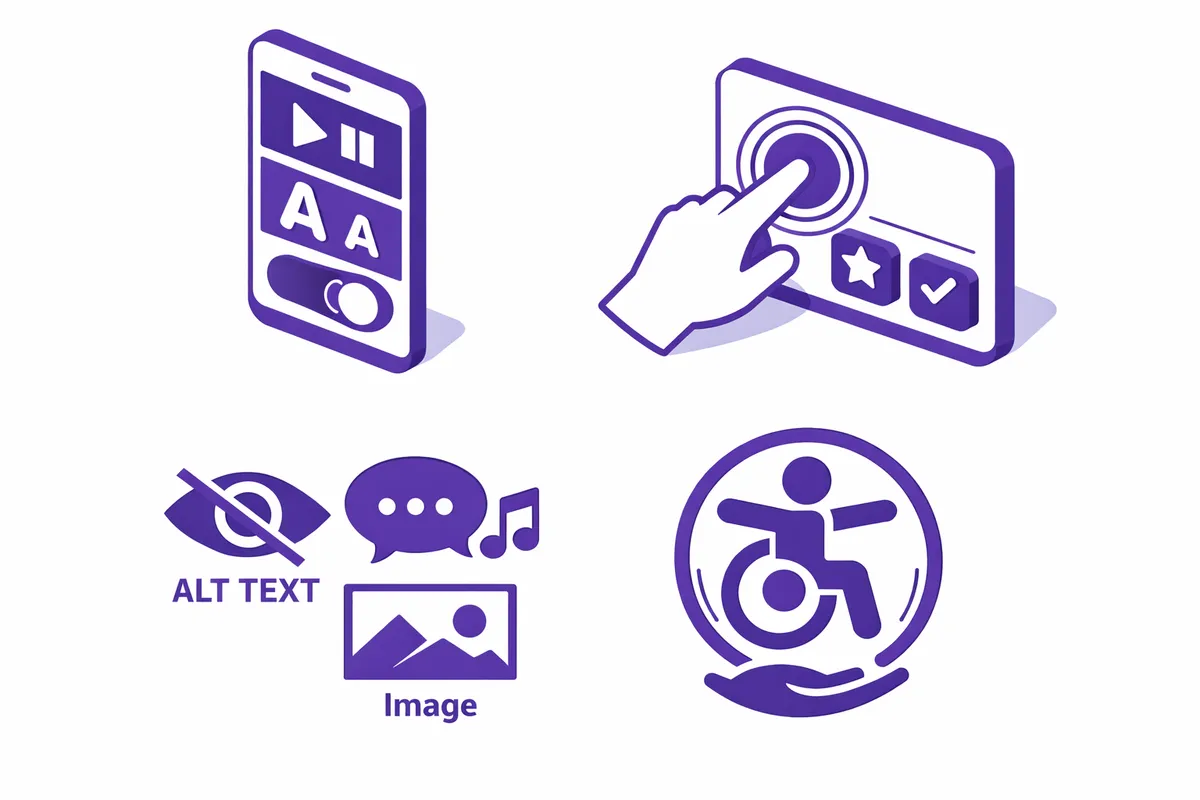
How We Build Accessible Design for Douglass Park
We start by auditing every digital property you currently operate against both WCAG 2.2 AA standards and the practical usage patterns of Douglass Park's audience. That means testing on the devices your community actually uses, including lower-end Android phones and older browsers, not just the latest Safari on a MacBook. We run automated accessibility scans and follow them with manual keyboard navigation testing and screen reader walkthroughs using NVDA and VoiceOver, because automated tools catch only about 30% of real accessibility barriers.
For organizations near Mount Sinai Hospital or North Lawndale College Prep, we pay close attention to how digital tools integrate with in-person service flows. If staff at a clinic on Roosevelt Road are directing patients to fill out intake forms online, those forms have to work without JavaScript errors, complete without timing out, and submit cleanly on spotty Wi-Fi. We design around those real conditions.
Our builds use semantic HTML as the structural foundation, never div-soup layouts that require screen readers to guess at hierarchy. ARIA labels, focus management, skip navigation links, and logical heading order are part of every build from the first commit, not retrofitted before launch. Color choices go through contrast ratio testing for both normal and large text. Every form field has a visible label. Error messages tell users what went wrong and how to fix it, not just that something failed.
Bilingual content receives the same structural treatment. Spanish-language pages are not translations bolted onto an English architecture. They are built with the same accessible structure, the same keyboard navigation logic, and the same mobile performance targets as the primary language version.
Industries We Serve in Douglass Park
Community health clinics and social service agencies near Mount Sinai Hospital depend on digital tools that their patients can actually use. We build accessible patient intake forms, resource directories, and appointment booking flows that work across language barriers and on low-cost mobile devices, so a family on Sacramento Boulevard can schedule a visit without needing in-person staff assistance for every step.
Churches and faith-based nonprofits on 19th Street and along Ogden Avenue maintain websites that serve aging congregations as well as newer members. Accessible design here means larger default type sizes, simplified navigation, and audio alternatives for video content, built to reach the full range of people who rely on these institutions for community information and event schedules.
Neighborhood pharmacies and independent medical offices along Roosevelt Road provide essential services to residents who may be navigating chronic illness or managing care for elderly family members. An accessible pharmacy website means accessible prescription refill requests, clear medication information, and contact pages that work with voice navigation tools.
Local bodegas and family-run restaurants serve customers who often find them through mobile search while walking between the California Blue Line station and their destination. Accessible design for these businesses means fast-loading mobile pages, readable menus without PDFs that fail on screen readers, and contact information that resolves cleanly with a single tap.
Auto shops and service businesses along Ogden Avenue field service inquiries from customers who may be dealing with transportation emergencies. Clear, accessible service pages with readable pricing, accessible contact forms, and working phone links prevent those customers from bouncing to a competitor whose website simply works better.
Neighborhood nonprofit organizations and block clubs that coordinate community programming in and around Douglass Park need event listings, volunteer sign-up forms, and resource pages that comply with accessibility standards, particularly when they receive city or foundation funding that carries compliance requirements. We build those pages to pass audit, not just to pass it on paper.
What to Expect Working With Us
1. Accessibility audit and gap report. We assess every digital property you operate against WCAG 2.2 AA, test on real devices representative of your audience, and deliver a prioritized list of barriers sorted by severity and fix complexity. For most Douglass Park organizations, this surfaces 15 to 30 distinct issues, ranging from quick color contrast fixes to structural navigation problems that need a rebuild.
2. Remediation and rebuild plan. We separate quick wins from structural work and schedule accordingly. A church website with a broken form hierarchy gets the form fixed this week. A clinic portal with fundamental ARIA architecture problems gets a phased redesign plan with clear milestones. We write the work in plain language so you understand what we are doing and why.
3. Bilingual accessibility integration. For Douglass Park organizations serving Spanish-speaking residents, we align accessibility work with language structure. This means building Spanish content with the same semantic rigor as English content, validating both language versions independently, and testing bilingual toggle interactions for keyboard and screen reader compatibility.
4. Ongoing compliance monitoring. Accessibility is not a one-time fix. Content changes break things. We provide monthly automated scans, a quarterly manual audit, and a reporting dashboard so you always know your current compliance status. When your team adds new content, we provide editing guidelines that keep the site accessible without requiring a developer for every update.