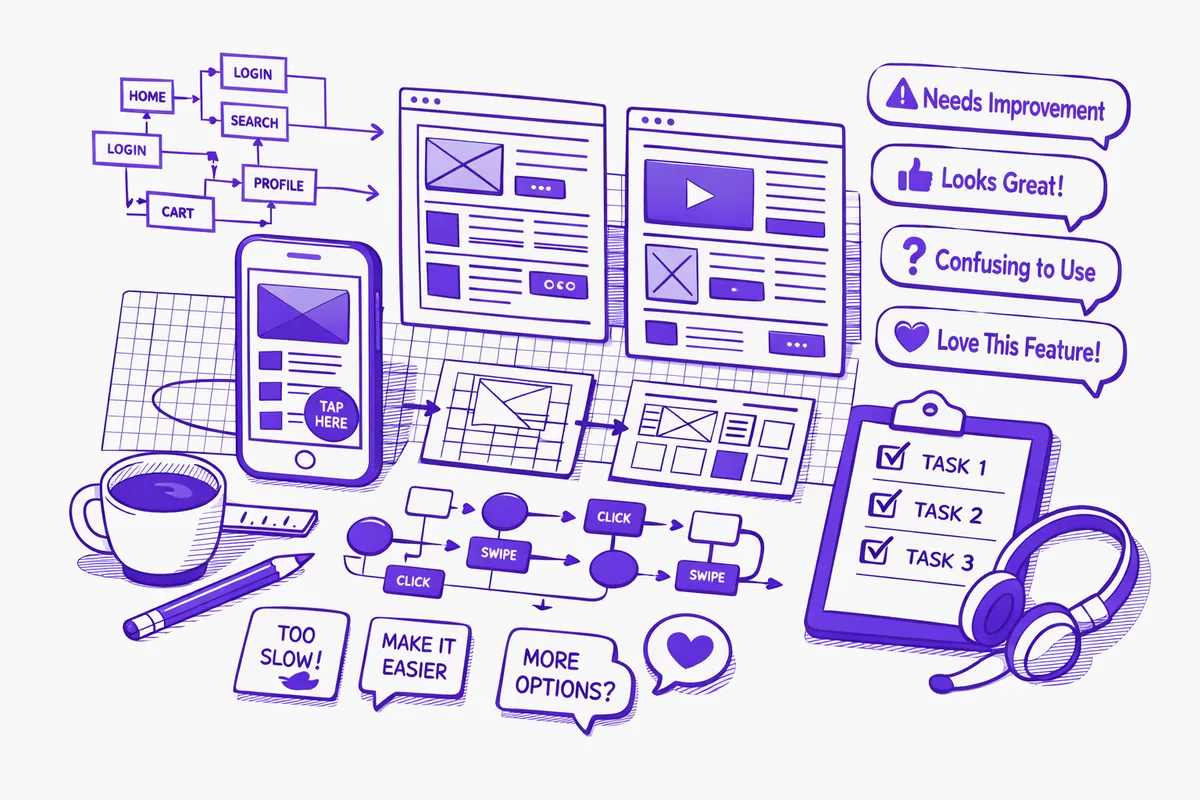
How We Build UI/UX Design for Chinatown
The defining design requirement for Chinatown products is bilingual architecture. Products serving Chinatown's business community need Chinese and English content treated as equally important throughout the information architecture, not Chinese as a translated afterthought layered on top of an English-first structure. We design the content hierarchy, navigation, and component system to support both languages from the beginning, which affects decisions about text density, button sizing, label length, and information grouping that have to be made before high-fidelity design begins.
Research for Chinatown products is conducted through the neighborhood's community networks: businesses along Wentworth Avenue, institutions connected to Pui Tak Center, the networks around Chinatown Square, and community organizations throughout the 22nd Place corridor. We recruit test participants who include older Chinatown residents using Chinese-language interfaces as their primary digital experience, and younger community members who navigate fluidly between languages and expect both to be available. The gap between these two user populations is where most Chinatown products fail, by designing for one and leaving the other behind.
Mobile performance is a priority for Chinatown product design. Chinatown's restaurant and retail businesses handle their busiest periods when the Chinatown Gate is most visible and foot traffic is highest, and staff managing digital orders or reservations during service are doing so on phones in loud, fast environments. Interface designs for these contexts prioritize speed, large touch targets, and immediate information visibility. The design should work for a restaurant host managing Saturday reservations while greeting guests at the door.
Industries We Serve in Chinatown
Family restaurants and food businesses along Wentworth Avenue and Cermak Road are the commercial identity of Chinatown. Reservation interfaces, online ordering flows, catering request forms, and customer loyalty tools designed for the actual operations of family-run restaurants, including the bilingual menu presentation and booking confirmation experience that serves both longtime regulars and first-time visitors arriving from outside the neighborhood.
Herbal medicine shops and acupuncture clinics serve patient populations who approach wellness with specific cultural frameworks. Product browsing and ordering interfaces for herbal formulations, consultation scheduling flows, and patient communication tools designed to communicate expertise and cultural fluency rather than borrowing aesthetic conventions from mainstream healthcare platforms that were not designed for this community.
Import and wholesale businesses on Princeton Avenue and throughout the Chinatown commercial corridor manage catalog complexity that generic e-commerce platforms handle poorly. Product catalog design for import businesses needs to serve wholesale buyers reviewing large orders and individual customers browsing unfamiliar product categories, with bilingual product descriptions and clear enough photography and labeling to bridge the gap between what a product is and what a buyer not yet familiar with it can understand.
Accountants and professional services firms serving immigrant entrepreneurs throughout Chinatown's community manage complex client relationships across language barriers. Client portal design, document upload flows, communication interfaces, and reporting dashboards built for the immigrant business owner who needs professional services clearly explained, with bilingual content and navigation that reduces the cognitive load of managing professional relationships in a second language.
Community institutions and cultural organizations connected to landmarks like Pui Tak Center and the Chinese American Museum of Chicago serve community members across generations. Programming portals, membership tools, donation flows, and event registration interfaces designed for the range of Chinatown's community: older residents who navigate in Chinese and need clear, uncrowded layouts, and younger members who expect the fluency of a modern digital product.
Bakeries and specialty food retail with both walk-in and online presence are building ordering and gift delivery tools that need to communicate the quality of products that Chinatown's bakery tradition represents. Product presentation, gift box configuration, and delivery scheduling interfaces designed to translate the in-store experience of a Chinatown bakery into a digital interaction that earns the same trust.
What to Expect Working With Us
1. Discovery and bilingual requirements scoping. We begin every Chinatown engagement by establishing the bilingual requirements in detail: which users need Chinese navigation, what language should be the default for different contexts, how content should be organized when translation length differs between English and Chinese text. These decisions affect every subsequent design choice and need to be made explicitly before information architecture begins.
2. Information architecture and wireframing. Structure designed for the bilingual context: navigation that works in both languages, content hierarchy that serves both reading directions and text densities, and component architecture that accommodates the length variation between English and Chinese labels without breaking the layout. Wireframes for Chinatown products are reviewed by stakeholders fluent in both languages before high-fidelity design begins.
3. High-fidelity design and interactive prototype. Figma designs with complete bilingual states, interactive prototype that allows stakeholders and test participants to experience both language modes of the product. Design system documentation includes bilingual component specifications for the engineering team.
4. Usability testing with Chinatown community participants. Testing sessions with participants from Chinatown's business and residential community, including older residents who navigate primarily in Chinese and younger community members who use both. Findings are incorporated before development handoff. We remain involved during implementation to ensure bilingual rendering and design intent are maintained.