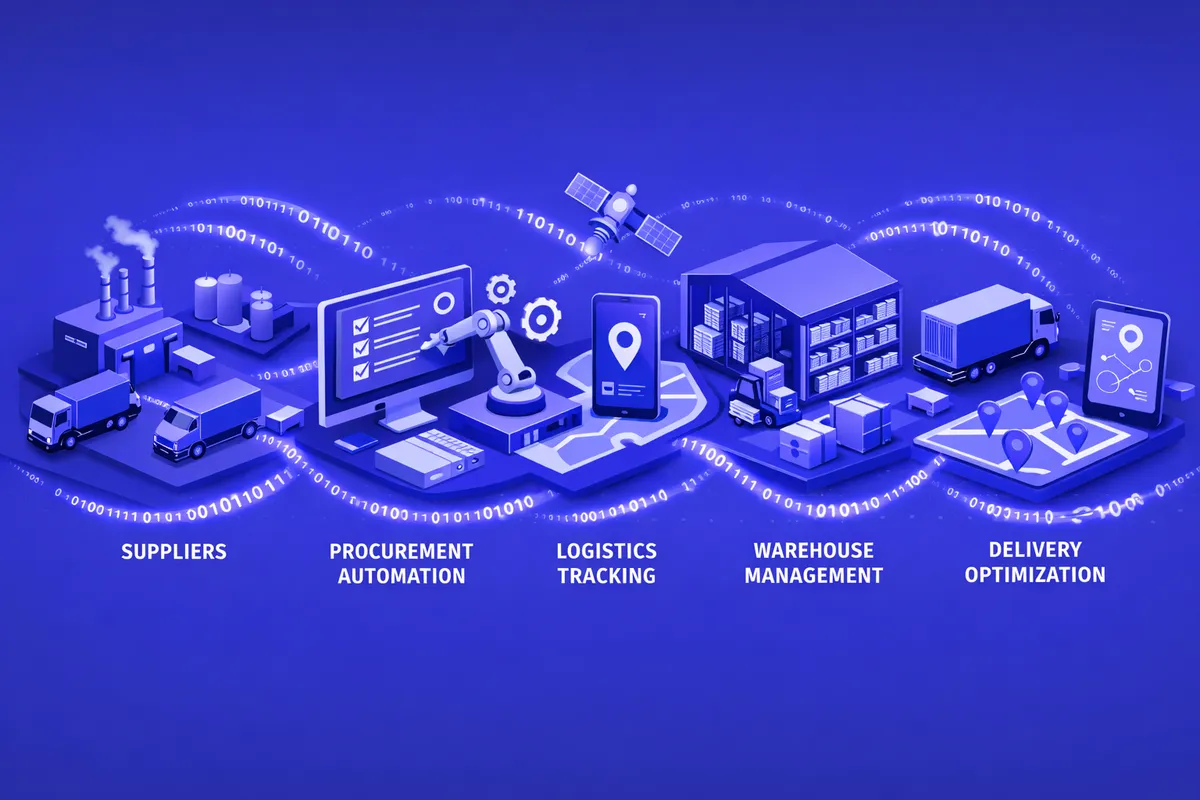
How We Build Supply Chain Automation for Chinatown
Supply chain automation for Chinatown businesses starts with a full inventory of vendor relationships, which for most operators we conduct through a combination of reviewing existing purchasing records and direct conversation with the business owner or purchasing manager. For family businesses near Wentworth Avenue where purchasing records exist primarily as paper invoices, we begin by digitizing and categorizing that history before any automation is layered on top.
From the vendor inventory, we map order frequency, lead times, reorder thresholds, and current approval processes for each category of procurement. A Chinatown restaurant distinguishes between daily produce orders, weekly protein orders, and monthly dry goods replenishment cycles. Each category has a different automation design: daily orders may flow through par-level monitoring connected to POS inventory data, weekly orders through automated purchase order generation based on usage rates, and monthly orders through calendar-triggered review workflows.
For import-dependent businesses, where lead times can span weeks and orders require advance planning, we build demand forecasting into the purchase order workflow so that orders are initiated at the right time based on projected consumption, not when someone notices the shelf is getting low. For specialty goods with seasonal demand patterns, such as items that sell heavily during the Lunar New Year corridor on Cermak Road, we build seasonal multipliers into the reorder logic.
We integrate the automation with your existing accounting system so that purchase orders generate expected expense records automatically and vendor invoices are matched against purchase orders before routing for payment. For Chinatown businesses where invoice review is currently done manually by the owner or a family member, this change frees that time for decisions that require judgment rather than clerical matching.
Industries We Serve in Chinatown
Full-service Chinese restaurants along Wentworth Avenue manage procurement across protein, produce, dry goods, and beverage categories where freshness requirements and portion-level cost control directly affect margin. Automated par-level monitoring connected to daily sales data generates purchase orders for time-sensitive items before the shortage becomes visible in the kitchen, not after.
Herbal medicine and specialty health product shops near Pui Tak Center coordinate procurement of imported goods with long lead times, variable availability, and complex inventory classification. Automated purchase order timing based on projected consumption and vendor lead time keeps shelves stocked without over-ordering goods that tie up working capital for months.
Import and wholesale operations serving Chinatown retailers coordinate receiving schedules, customs documentation tracking, and inventory distribution across multiple customer accounts. Automated receiving workflows that match inbound shipments against purchase orders and update inventory records eliminate the manual reconciliation that currently requires someone to compare paper manifests against spreadsheet records after every delivery.
Bakeries and prepared food retailers around Chinatown Square manage procurement of raw ingredients with daily production schedules where an unexpected shortage affects the next morning's product availability. Automated reorder alerts triggered at specific inventory thresholds, calibrated to production volume, give purchasing enough lead time to respond before the shortage affects production.
Accountants and professional services firms serving the Chinatown small business community on Archer Avenue maintain their own procurement for office supplies, technology, printing, and professional development, but their most significant supply chain impact is in the advisory work they do for client businesses. Procurement automation knowledge builds client advisory capacity, not just internal efficiency.
Acupuncture clinics and traditional medicine practices near the Chinese American Museum of Chicago manage procurement of treatment supplies, herbs, and professional materials from specialized vendors with limited substitution options. Automated vendor performance tracking surfaces delivery reliability and invoice accuracy data that practitioners need for vendor conversations without requiring manual record-keeping.
What to Expect Working With Us
1. Vendor and record inventory. We spend the first two weeks cataloging your vendor relationships, order history, and current procurement processes. For Chinatown businesses with paper-based purchasing records, we include a digitization step. This inventory produces a clear picture of where automation delivers the most value and a vendor performance baseline for measuring progress after implementation.
2. Automation design for your categories. We design automation workflows for each procurement category based on order frequency, lead time, and import complexity. Restaurant categories get different automation designs than import operations. We document the logic and get your sign-off before building anything.
3. Phased build with priority on highest-volume items. We build automations in order of business impact, starting with the procurement categories that consume the most management time or carry the most stockout risk. For most Chinatown restaurants, that means fresh ingredient ordering automation first, followed by dry goods and specialty items.
4. Vendor performance monitoring and reporting. After go-live, we configure the monitoring dashboard that shows delivery performance, invoice accuracy, and order fulfillment rates by vendor. You have the data for vendor conversations without building the report manually each time you need it.