How We Build RAG Systems for Chinatown
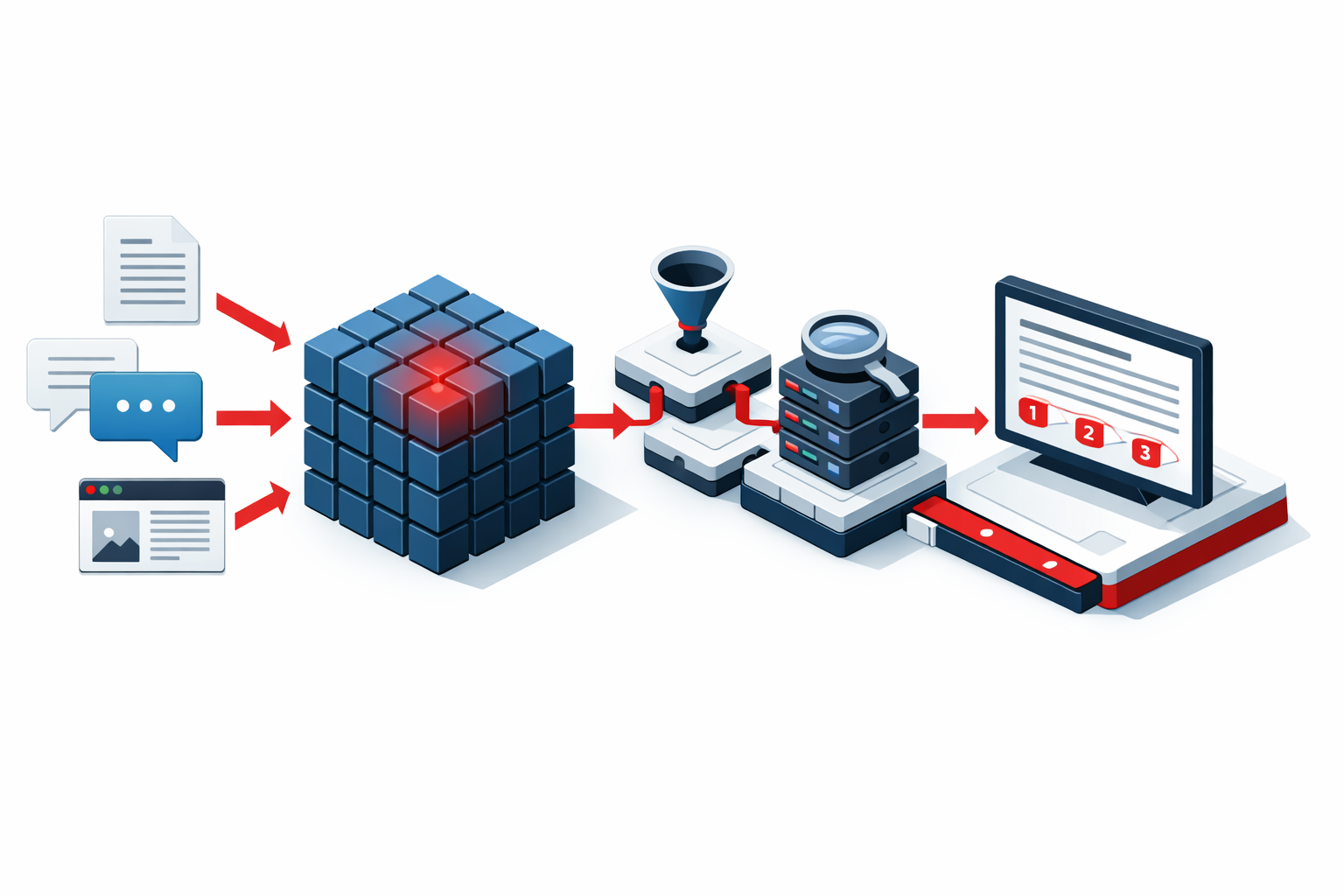
RAG system development for Chinatown businesses involves three interconnected components: the knowledge base that stores your business-specific information, the retrieval layer that finds relevant information when a question is asked, and the generation layer that produces natural language answers from what was retrieved.
Knowledge base construction for Chinatown businesses requires handling bilingual documents accurately. A herbal shop's product reference library may include both Chinese-language classical texts and English-language clinical studies. A restaurant's operational knowledge base includes menus in both Chinese and English, supplier agreements that may be in Chinese, and operational procedures documented by staff in their primary language. We build knowledge bases that index both Chinese and English content correctly, enabling retrieval that finds relevant information regardless of which language it was recorded in.
The retrieval layer is configured for your specific question types. A customer-facing restaurant chatbot needs retrieval calibrated for the conversational questions diners ask: menu items, hours, reservations, dietary accommodations. A practitioner-facing knowledge system at a traditional medicine clinic needs retrieval calibrated for clinical queries: herb properties, treatment contraindications, dosing guidance. We configure retrieval specifically for the queries your RAG system will actually handle.
The generation layer produces answers in the appropriate language for each query. A Mandarin question receives a Mandarin answer drawn from retrieved content. An English question receives an English answer. For Chinatown businesses serving bilingual audiences, this cross-language capability is essential: the RAG system serves both language communities from a single knowledge base without requiring separate systems for each language.
Industries We Serve in Chinatown
Chinese restaurants and food businesses along Wentworth Avenue build RAG systems for customer-facing chatbots that accurately answer menu questions, dietary accommodation inquiries, reservation requests, and event booking questions by retrieving from the restaurant's actual current menu and policies rather than generating answers from general knowledge about Chinese restaurants.
Herbal medicine shops and traditional wellness retailers build RAG systems that allow customers to ask questions about specific herbs and remedies and receive accurate answers drawn from the shop's curated knowledge base of traditional medicine reference materials. Customers who ask about herb interactions, recommended dosages, or seasonal wellness protocols receive information grounded in accurate traditional medicine knowledge rather than AI-generated approximations.
Import-export businesses throughout the Chinatown area build RAG systems for internal knowledge management: product specification retrieval, supplier term lookup, trade compliance reference, and the accumulated institutional knowledge about specific products and supplier relationships that currently exists only in experienced staff members' memories and scattered document archives.
Acupuncture clinics and traditional medicine providers near Chinatown Gate build RAG systems for clinical knowledge management, allowing practitioners to query their accumulated reference materials about treatment protocols, herb combinations, and patient management approaches, and for patient-facing information systems that answer treatment explanation questions accurately from practice-specific educational materials.
Accountants and professional service firms serving the Chinatown business community build RAG systems over their policy libraries, regulatory reference materials, and accumulated client-specific knowledge, enabling faster and more accurate answers to client questions by retrieving from authoritative sources rather than relying on practitioner recall.
Cultural organizations and community institutions near the Pui Tak Center and Chinese American Museum of Chicago build RAG systems for community information access: program information, historical records, and the organizational knowledge that community members and visitors ask about, delivered accurately and bilingually from the organization's actual documentation.
What to Expect Working With Us
1. Knowledge base scoping and document preparation. We work with you to identify which documents and knowledge sources should be included in your RAG knowledge base, assess their language and format characteristics, and prepare them for accurate indexing. For Chinatown businesses with Chinese-language documents, this includes OCR and extraction work for any documents that exist only in non-searchable formats, with specific attention to Chinese character accuracy.
2. Retrieval system configuration. We configure the retrieval layer for your specific query types, tuning the system to find the most relevant content for the questions your users actually ask. For bilingual RAG systems serving Chinatown businesses, retrieval is configured to find relevant content in both Mandarin and English regardless of which language the question is asked in.
3. Generation layer tuning and accuracy testing. We tune the generation layer to produce answers in the appropriate language and register for your application, and we test system accuracy against a comprehensive set of real questions drawn from your business context. Testing specifically includes questions where the correct answer is in a Chinese-language document and the query is in English, and vice versa, to validate cross-language retrieval performance.
4. Deployment and knowledge base maintenance. We deploy the RAG system through the interface appropriate to your use case: chatbot, internal query interface, or API integration with your existing tools. We provide knowledge base maintenance processes so that new documents are added correctly and outdated information is updated, keeping the system accurate as your business evolves.