How We Build Progressive Web Apps for Chinatown
Architecture decisions for a Chinatown PWA start with the language context. Before we write a line of code, we determine whether the app serves a bilingual audience that needs full content in both languages, a primarily Chinese-speaking audience where English is secondary, or a primarily English-speaking visitor audience where Chinese-language content is supplementary. That decision shapes the navigation model and content management workflow, and it is one the business owner makes, not one we impose.
For restaurant PWAs, the core functionality covers menu display with item photography, online ordering or reservation integration, current hours and location, push notification opt-in for promotions and Lunar New Year specials, and offline caching so the menu loads without a live network connection. We build to load in under two seconds on a 4G connection because visitors making real-time dining decisions on Wentworth Avenue do not wait.
For herbal shops and health practices near the Pui Tak Center, the core set differs: appointment scheduling with practitioner calendar integration, prescription record access for returning patients, product catalog with availability indicators, and push notifications for appointment reminders. Privacy considerations for health information shape how data is stored and cached offline, and we build those requirements into the foundation rather than retrofitting them.
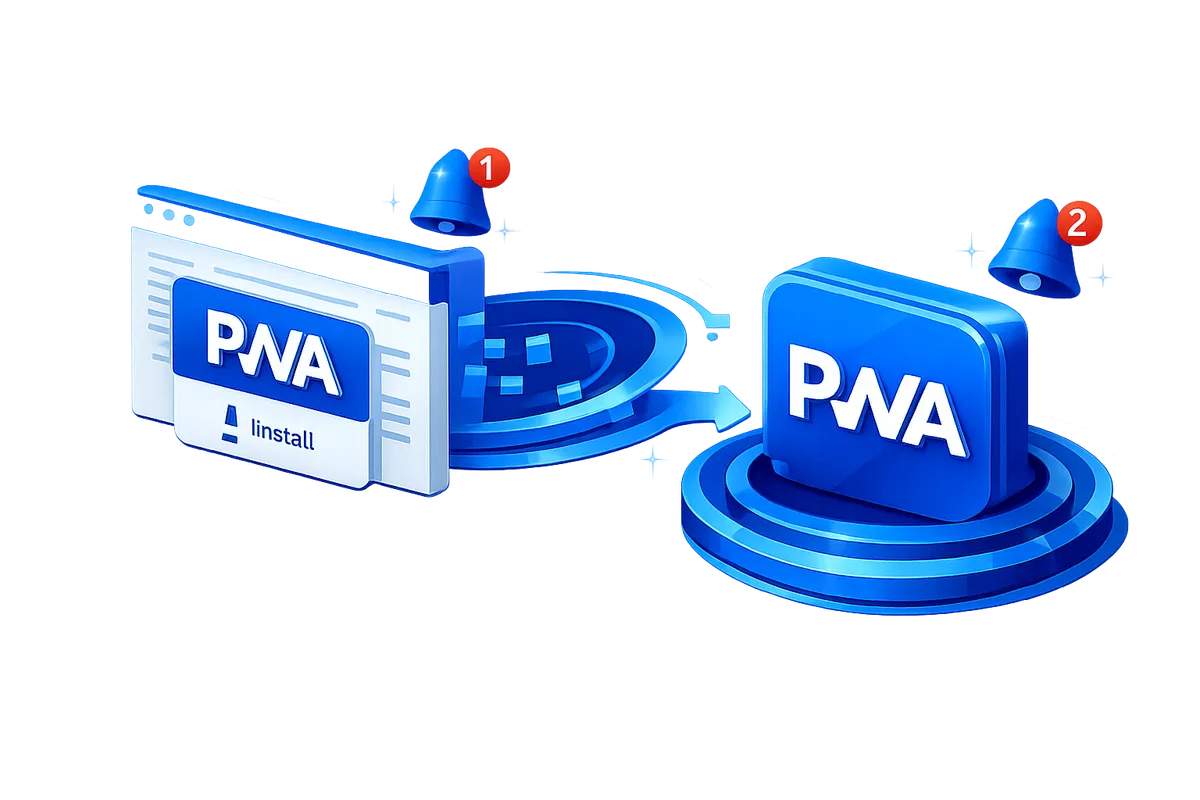
Installation prompts are configured for the mobile browsers Chinatown's customer base uses most. Show the "add to home screen" prompt too early and visitors dismiss it before they have any reason to install. Trigger it after a second visit or after completing an order and conversion rates improve significantly.
Industries We Serve in Chinatown
Chinese restaurants with online ordering along Wentworth Avenue need PWAs that put the full ordering experience on a customer's phone without the friction of a third-party delivery app taking margin on every order. A direct-order PWA installed on a regular customer's home screen generates repeat orders at zero commission cost per transaction, which for a restaurant operating on thin margins is a meaningful difference over the course of a year.
Herbal medicine practitioners and traditional health clinics near the Pui Tak Center can replace the phone tag and paper appointment cards that currently manage their scheduling with a PWA that lets patients book, receive reminders, and access their treatment notes. For practitioners serving an older patient population that is comfortable with smartphones but not with downloading unfamiliar apps, the PWA installation path (one tap from the browser, no app store) is the right approach.
Import and specialty food retailers in Chinatown Square serving professional kitchen accounts benefit from a wholesale catalog PWA that lets restaurant buyers browse inventory, check availability, and submit purchase orders from their phone between service periods. A line cook who can order specialty ingredients from a Chinatown importer during a break rather than calling during business hours is more likely to maintain that supplier relationship.
Bakeries and seasonal food businesses on Archer Avenue can use PWAs to manage advance orders for Lunar New Year specialties, mooncakes, and other seasonal items that require pre-ordering. A customer who installs the bakery's PWA receives a push notification when Lunar New Year pre-orders open, arrives early in the ordering window, and does not sell out of their preferred items. That notification-to-pre-order conversion is one of the clearest ROI demonstrations for PWA push capabilities.
Cultural organizations and community institutions connected to the Chinese American Museum of Chicago can use PWAs to deliver event schedules, neighborhood information, and cultural resources to visitors who want a local guide without the cost of a native app. A visitor guide PWA that loads quickly at the Chinatown Gate and works offline near Ping Tom Memorial Park serves a concrete practical need.
Acupuncture clinics and integrated health practices on Princeton Avenue can convert more website visitors to booked appointments through PWAs that reduce the steps between initial interest and a confirmed booking. A prospective patient who finds a clinic through Google at 9 PM can book an appointment, receive a confirmation, and add it to their calendar through the PWA without waiting for business hours or navigating a complicated desktop booking form on their phone screen.
What to Expect Working With Us
1. Audience and use case definition. The first conversation is about who uses this app and what they need to accomplish in thirty seconds or less. For a Wentworth Avenue restaurant, that is likely menu browsing and ordering. For an herbal shop, it is appointment booking and product availability. We document the primary use case before any design work begins and build the entire experience around completing that use case with the fewest possible steps.
2. Bilingual architecture and content build. We configure language handling at the application level, not as a translation toggle added after the fact. Chinese and English content live in the same structure, switch cleanly, and neither is a degraded version of the other. For businesses with bilingual staff, we set up a content management workflow that lets them update both language versions without technical assistance.
3. Performance optimization and offline configuration. We build service worker caching that serves critical content (menu, hours, contact information) from cache when the network is unavailable or congested. This matters most at the Chinatown Summer Fair and during Lunar New Year weekend when cellular networks are stressed. We test offline performance explicitly before launch.
4. Installation prompt tuning and push notification setup. We configure the install prompt to appear at the moment of highest user intent rather than on first page load. Push notifications use category-based opt-in so customers receive order updates without every promotional message, which produces better long-term engagement than blast notification strategies.