How We Build Legacy System Integration for Chinatown
The first step is documentation. We sit down with the business owner and walk through every piece of software in the operation: what it does, who uses it, how data moves through it, and where the manual handoffs are. For an established restaurant on 22nd Place, this typically reveals two or three critical integration points: between the POS and online ordering, between the POS and accounting, and sometimes between accounting and the payroll service. Each connection that is currently manual is a candidate for automation.
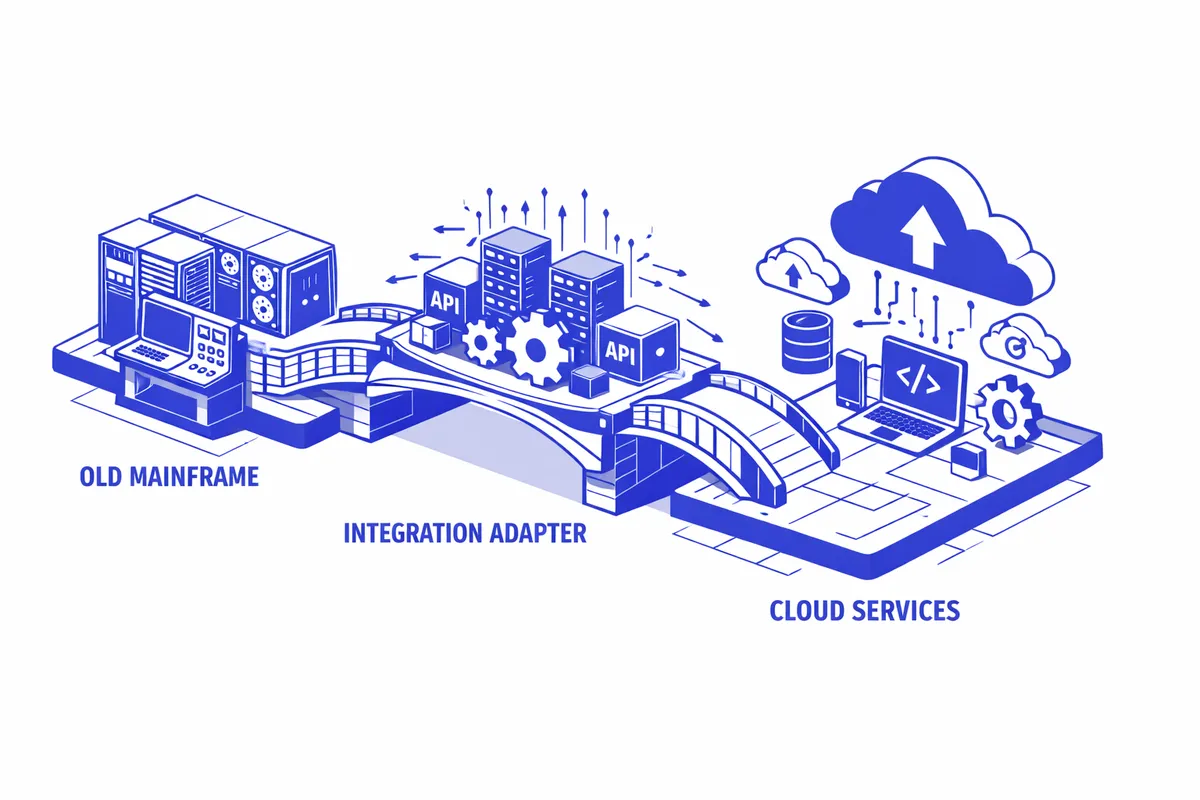
We then audit the technical specifications of the legacy systems involved. Some older systems have export capabilities or API access that the business has never used. Others require a middleware layer to bridge between their data format and the format that modern systems expect. We write that bridge rather than forcing a platform change.
For Chinese-language systems or software configured with Chinese character sets, we ensure that data passes through integration layers without corruption. This is a failure point in generic integration approaches that assume ASCII or standard Latin character encoding. We test character encoding at every layer before any integration goes into production.
Rollout is phased. We connect one system pair at a time, verify data integrity, and let operations run on the integrated connection for two weeks before adding the next layer. No Chinatown business should face a situation where three systems that previously worked independently all break at once because integration was rushed. We build incrementally and document every connection we create so the business is never dependent on us to understand its own infrastructure.
Industries We Serve in Chinatown
Chinese restaurants with legacy POS systems along Wentworth Avenue need their existing order management platforms to feed data into delivery aggregators, reservation systems, and accounting software without duplicate entry. We connect legacy POS platforms to modern front-end tools through integration layers that preserve the back-of-house workflow staff already know, eliminating the manual reconciliation that currently happens at the end of every shift.
Herbal medicine and traditional health practitioners near the Pui Tak Center often run patient scheduling, inventory, and billing in completely separate systems. Connecting those three creates the ability to check ingredient stock when scheduling appointments, generate invoices that pull from treatment records, and track patient history in a way that currently requires cross-referencing multiple binders or databases. The integration does not change how practitioners document care; it connects those records to the operational systems around them.
Import and wholesale businesses in Chinatown Square managing customs documentation, purchase orders, and inventory across aging platforms face monthly reconciliation work that integration can eliminate. We connect legacy accounting systems to current inventory platforms through data pipelines that update automatically when orders are received, so landed cost and stock levels are current without the manual entry that currently introduces errors at every step.
Bakeries and specialty food retailers on Archer Avenue running older retail software that cannot connect to e-commerce platforms are leaving online sales on the table. We build integrations that let legacy retail POS systems feed inventory data to online storefronts so products listed online reflect actual stock levels, and online orders flow back into the same sales records as in-store purchases.
Accountants and financial service firms serving Chinatown's immigrant business community often maintain client records in legacy software that predates cloud accounting by a decade. We build integrations that let those firms pull client data into modern reporting tools for tax season and compliance work without abandoning the recordkeeping systems their clients have used for years.
Banquet facilities and event operations near the Chinese American Museum of Chicago coordinate reservations, catering orders, and invoicing across systems that were never designed to talk to each other. The integration that connects event bookings to catering inventory to billing eliminates the phone call chain that currently happens between the reservation desk and the kitchen every time a booking is confirmed or modified.
What to Expect Working With Us
1. System audit and integration map. We document every software system in your business, identify the manual handoffs between them, and build a priority-ranked integration map. The priority ranking is based on where manual work is costing the most time or creating the most errors, not on what is technically easiest to connect. For a Chinatown restaurant with three disconnected systems, this process takes two to three days and produces a clear view of what we will connect and in what order.
2. Middleware development and character encoding verification. We build the integration layer that connects your systems, with explicit testing for Chinese character handling at every data transfer point. We do not assume that data will pass through cleanly. We verify it. A restaurant whose legacy POS uses Chinese menu item names needs those names to appear correctly in every downstream system, not as garbled characters that require manual correction.
3. Phased rollout with parallel operation. Each integration connection goes live alongside the existing manual process for two weeks before we retire the manual step. If something in the integration behaves unexpectedly during that window, the manual backup is still in place. We do not cut over to integrated systems during high-volume periods like Lunar New Year or the Chinatown Summer Fair. We plan launch timing around your operations calendar.
4. Documentation and staff handoff. After every integration is live and verified, we produce plain-language documentation of what connects to what, what to do if a specific connection fails, and how to contact us for support. The business should understand its own systems. No integration we build should be a black box that only we can maintain.