How We Build Inventory Management for Chinatown
Discovery starts on-site. Before designing any system, we spend time in the actual storage and operations environment, learning how items are categorized, what naming conventions staff already use, which suppliers require phone orders versus digital portals, and where manual errors most frequently occur. For a restaurant kitchen on 22nd Place, the bottleneck might be tracking prep waste from high-volume ingredients. For an herbal shop near the Pui Tak Center, it might be managing the difference between retail and bulk packaging of the same ingredient.
We build with bilingual labeling as a baseline requirement for Chinatown, not an add-on. Staff who do their work primarily in Cantonese or Mandarin should be able to use the inventory system in the language they think in. Item names, supplier notes, and stock alerts are configured in both English and Chinese characters from initial setup, not retrofitted after.
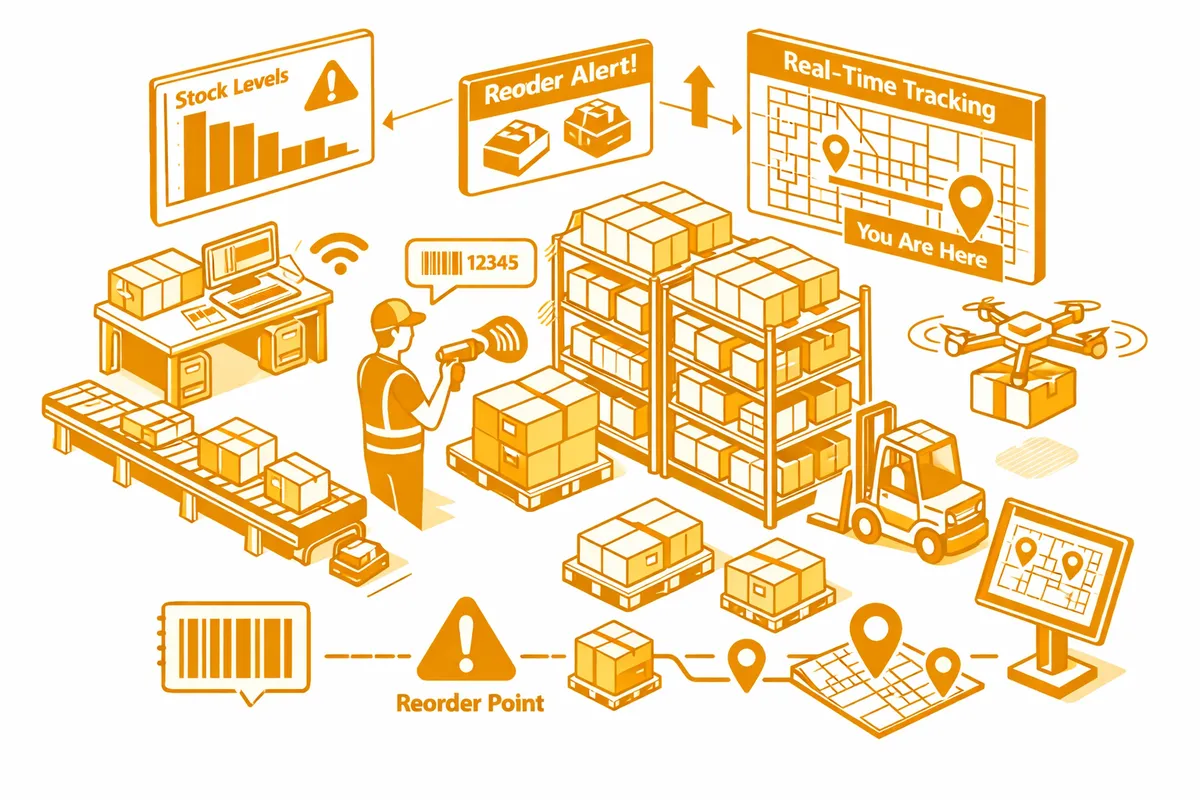
The system connects to your point of sale or sales tracking so inventory decrements automatically as orders process. No manual count updates after service. No end-of-day reconciliation that no one has time to complete accurately. Reorder alerts trigger at custom thresholds for each item category, accounting for the difference between a standard reorder cycle and the advance procurement window required for specialty items sourced outside the United States.
After launch, we review the system quarterly to adjust reorder thresholds based on actual consumption data and flag items where demand patterns have shifted. A dim sum house that added a new menu section six months ago has different consumption rates now than it did at system launch.
Industries We Serve in Chinatown
Full-service Chinese restaurants and banquet halls along Wentworth Avenue manage ingredient complexity that standard restaurant inventory tools handle poorly. Regional Chinese cuisine uses proteins, produce, and pantry items that do not map cleanly onto the preset categories in generic restaurant software. We configure inventory systems around how these kitchens actually organize their purchasing, with proper tracking for fresh, dried, and frozen categories and automatic flagging when high-velocity banquet ingredients approach reorder thresholds.
Traditional herbal medicine shops near the Pui Tak Center carry inventory where accuracy is both a business necessity and a safety requirement. The difference between two similar dried herbs in a prescription mix is not a categorization error, it is a patient safety issue. We build inventory systems for herbal shops that track by weight, flag low stock on prescription-critical items before they run out, and maintain supplier records for specialty ingredients sourced from regional Chinese markets in other cities.
Import and specialty food retailers in Chinatown Square manage inventory across international supply chains with variable lead times and customs processes. The spreadsheet that worked for 200 SKUs fails at 1,000. We build systems that track landed cost per item, project reorder timing based on standard customs delays, and generate purchase orders in the formats their overseas suppliers expect.
Bakeries and pastry shops along Archer Avenue face seasonal demand swings that require forward inventory planning rather than reactive restocking. Mooncake season requires specific fillings and molds that cannot be sourced locally on short notice. Lunar New Year demands specialty ingredients weeks before the holiday itself. We build seasonal demand templates into the inventory system so procurement planning starts early enough to avoid the scramble.
Acupuncture and integrated health clinics on Princeton Avenue manage inventory across both clinical supply and retail supplement categories, each with different regulatory requirements and supplier relationships. A clinic that sells retail herbal products alongside clinical services needs inventory tracking that separates the two categories for accounting and compliance while giving practitioners a unified view of what is in stock.
Restaurants serving banquets and private events near the Chinese American Museum of Chicago face the specific challenge of planning large-quantity ingredient procurement against an event calendar rather than regular weekly patterns. We configure inventory modules that let event bookings automatically generate ingredient requirement estimates, so procurement planning for a 200-person banquet starts the moment the reservation is confirmed, not the week before service.
What to Expect Working With Us
1. On-site operations review. We visit your location, walk your storage and ordering process, and document every supplier relationship, ordering cadence, and manual workaround that currently substitutes for a real system. For most Chinatown businesses, this reveals three to five high-priority pain points: the stockouts that happen every Lunar New Year, the over-buy pattern on slow-moving specialty items, the supplier that requires a phone call and a fax that no one wants to make. We fix those first.
2. Bilingual system configuration. Every item, category, supplier, and alert in your inventory system gets configured in both English and the Chinese dialect your staff uses operationally. This is not an afterthought. It determines whether staff actually use the system or work around it. We get the naming conventions right before launch, not after.
3. POS integration and staff training. We connect the inventory system to your existing point of sale or sales tracking so deductions happen automatically. Staff training covers exactly what the system needs from them daily, which in most cases is very little once the initial configuration is right. We run training in the language staff prefer so nothing gets lost in translation.
4. Seasonal calibration and quarterly reviews. After the first Lunar New Year cycle through the system, we review what the data showed versus what actually happened in procurement and adjust reorder thresholds accordingly. The system learns your actual seasonal patterns rather than relying on generic industry averages that do not apply to a specialty Chinese restaurant or herbal shop on Wentworth Avenue.