How We Build ERP Integration for Chinatown
ERP integration in Chinatown starts with an honest assessment of what systems are already in place and which of them are worth keeping. Many Chinatown businesses have invested in specific tools that their staff knows well: a QuickBooks installation that has been running for a decade, a POS system the kitchen team trusts, a supplier portal that the import side of the business depends on. ERP integration should leverage those investments, not require abandoning them.
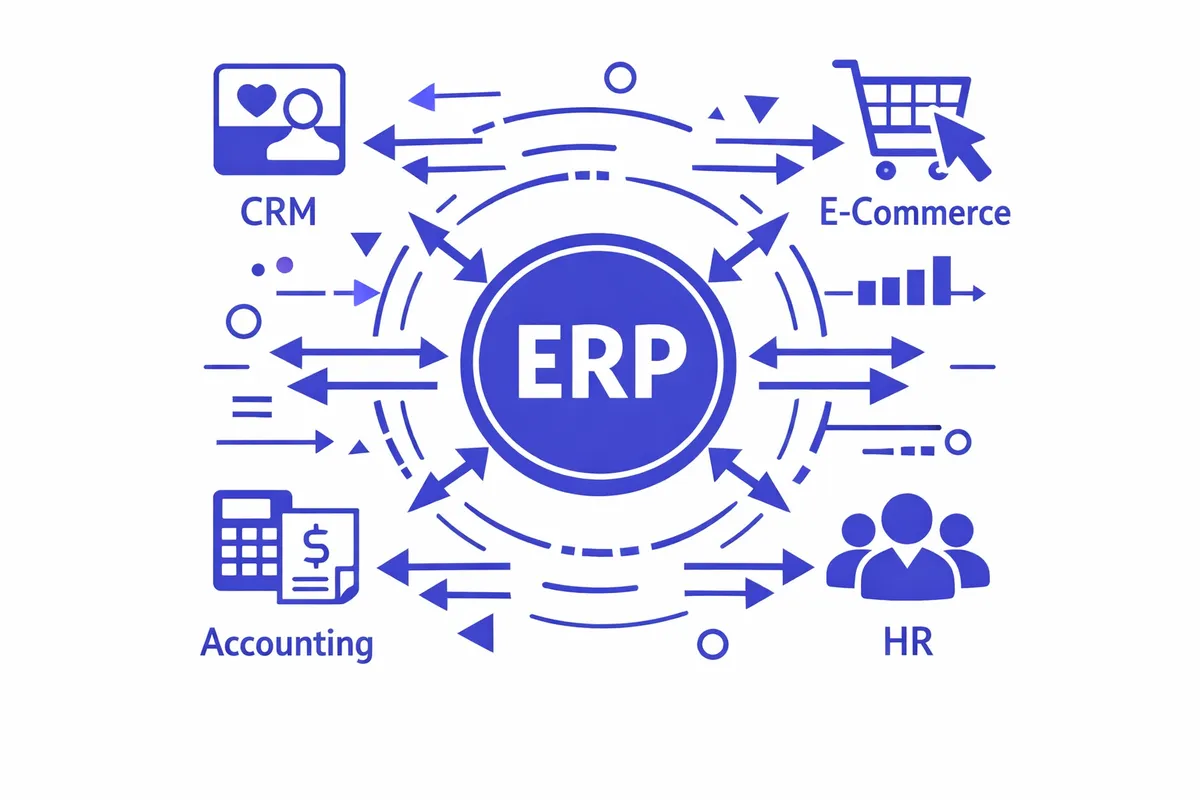
We map the data flows between your existing systems: what information originates where, which systems need it next, and what the current manual step looks like when data crosses a system boundary. For a Chinatown restaurant, that map typically shows three or four manual re-entry points per day. For an import business, it shows a dozen per shipment cycle. Each manual boundary is a candidate for integration.
The integration architecture we build uses APIs and event-driven connections where they are available, file-based sync where they are not, and custom middleware where the systems have no standard integration capability. For businesses with Chinese-language supplier documentation, we build the document handling layer to parse and route that content accurately rather than requiring a manual translation step before data entry. Every integration is tested against real transaction scenarios, including the high-volume periods that stress-test the system most.
Industries We Serve in Chinatown
Full-service restaurants and banquet operations on Wentworth Avenue manage the classic restaurant ERP problem: inventory, purchasing, labor, and sales data living in separate systems that should inform each other continuously. ERP integration for a Chinatown restaurant connects POS sales data to inventory depletion, triggers purchase order drafts when ingredient stock hits reorder thresholds, and feeds both into the general ledger without manual export and import cycles. Banquet operations add event costing: the system knows what was served, what it cost to prepare, and what the margin was on each event.
Import and export businesses on Archer Avenue are the highest-complexity ERP integration candidates in the neighborhood. The operational scope from purchase order to customer delivery spans multiple systems and multiple organizations. We build integration layers that connect supplier portals, customs documentation systems, warehouse management, inventory, CRM, and accounting into a coherent operational flow. The result is a business that can scale order volume without a proportional increase in administrative headcount.
Herbal medicine distributors and wholesale suppliers near Chinatown Square manage catalog data, lot tracking, supplier provenance documentation, and wholesale customer order management. ERP integration connects the product catalog to the ordering system, the ordering system to inventory, inventory to purchasing, and purchasing to accounts payable. For distributors subject to FDA or state product provenance requirements, the integration layer also handles the documentation chain.
Bakeries and food manufacturers on Cermak Road that have scaled beyond purely retail into wholesale or custom production benefit from ERP integration that connects production planning to ingredient inventory, inventory to purchasing, and purchasing to accounts payable. When a wholesale order comes in, the system checks ingredient availability, reserves the necessary stock, and flags purchasing for any items that need replenishment before the production date.
Chinese American import goods retailers with both physical and online sales channels need inventory that reconciles across both without double-counting or overselling. ERP integration that connects the physical POS to the e-commerce platform ensures that a sale in either channel immediately updates the available inventory visible to the other. For retailers near Chinatown Square with limited storage capacity, this prevents the customer service problem of selling an item online that was already sold in the store an hour before.
Accountants serving Chinatown's trade-oriented businesses often discover that their clients' accounting accuracy is limited by the quality of the data coming into the accounting system. When inventory data does not flow cleanly to the general ledger, financial statements require manual reconciliation before they are useful. ERP integration that makes the accounting system a downstream consumer of accurate operational data rather than a manual entry destination improves reporting accuracy and reduces the accountant's reconciliation time per client.
What to Expect Working With Us
1. Systems inventory and data flow mapping. We document every software system your business uses and every data type each one produces. The map shows where data originates, where it needs to go, and what the current process looks like when it crosses a system boundary. For Chinatown import businesses with Chinese-language supplier systems and English-language domestic systems, the map explicitly identifies language boundary transitions and the handling required at each.
2. Integration architecture design. We design the connection layer between your systems: which integrations use direct API connections, which use scheduled file synchronization, and which require custom middleware because no standard integration path exists. The architecture document specifies every data field that moves between systems, every transformation applied to it in transit, and every error handling procedure for integration failures.
3. Development and testing against real data. Integration development uses sanitized copies of your real operational data to test against realistic scenarios. For Chinatown businesses, that means testing the integration under Lunar New Year volume conditions, not just average transaction loads. We identify and resolve bottlenecks before they appear in production.
4. Staged rollout and validation. Integration rollout happens in phases aligned to your operational calendar. We avoid cutting over critical integrations during Chinatown's peak commercial periods. Each integration phase runs in parallel with the existing manual process until validation confirms the automated output matches expected results. Manual processes are retired only after that validation.