How We Build Employee Portals for Chinatown
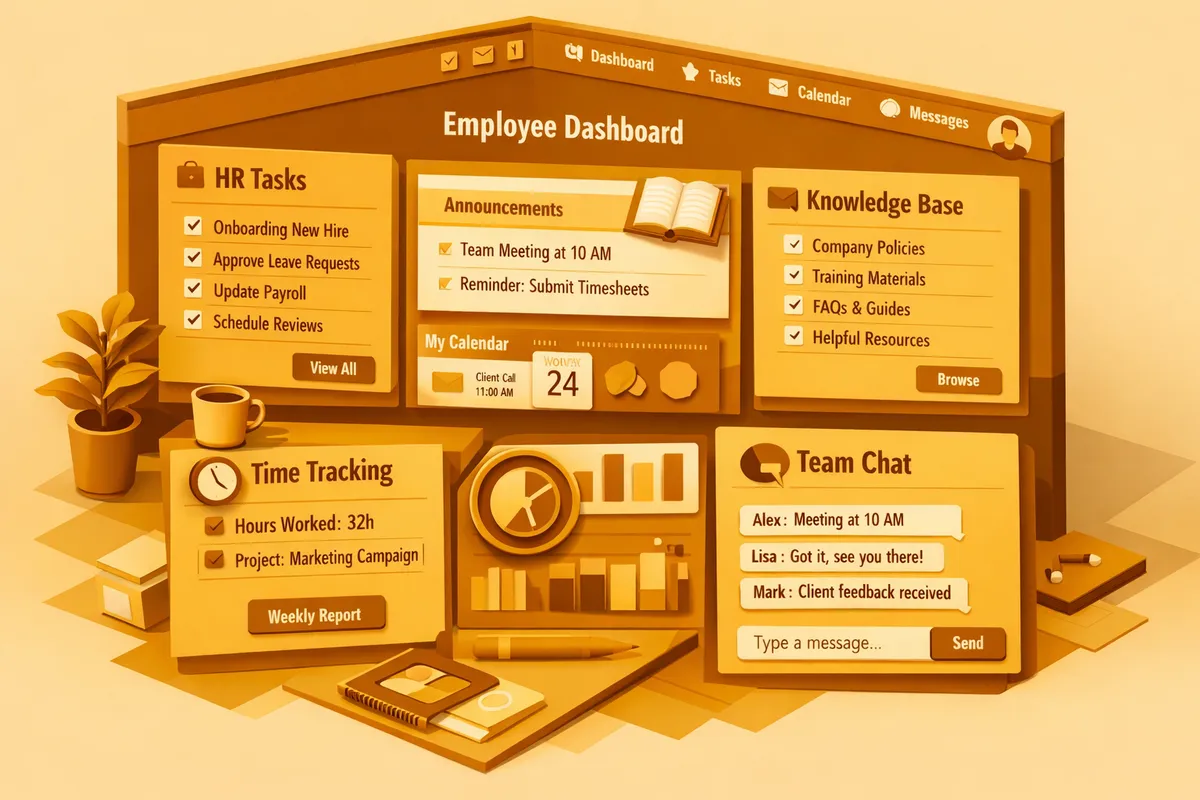
Portal design for Chinatown businesses starts with a staff profile audit. We document every employment type in your workforce: family members with ownership interests, full-time hourly employees, part-time workers, seasonal staff hired for Lunar New Year and the Chinatown Summer Fair, and any independent contractors providing regular services. Each category has different portal access requirements, different document management needs, and different communication preferences.
The bilingual architecture is designed at the data model level, not added as a translation layer afterward. This means employee records store name, address, and document fields in formats that correctly handle Chinese characters. Portal interfaces present in both languages. Automated notifications go out in each employee's preferred language. Onboarding workflows present documents in both English and Chinese where bilingual versions are available.
Integration with your existing payroll, POS, and scheduling systems reduces duplicate data entry and keeps the portal's information accurate. When a shift is added in the scheduling system, the portal reflects it. When payroll processes, the portal updates leave balances. We build these integrations specifically to your systems rather than assuming a standard integration target, because the POS and payroll tools common in Chinatown's restaurant and retail sectors are not always the same ones that appear in a generic HR portal's integration library.
Industries We Serve in Chinatown
Chinese restaurants and banquet halls on Wentworth Avenue employ layered staffing structures: family ownership, long-term full-time staff, and a pool of part-time workers whose availability shifts seasonally. An employee portal for this setting manages scheduling with role-based views, tracks training certifications for food safety compliance, processes time-off requests with manager approval workflows, and stores employment documents in a bilingual interface that all staff can navigate regardless of English proficiency.
Herbal medicine shops and acupuncture clinics near Chinatown Square employ practitioners whose certifications require regular renewal and documentation. A portal for this context tracks certification status, sends renewal reminders automatically, stores copies of licenses and training certificates, and flags the practice administrator when any certification lapses. The compliance documentation that currently lives in a filing drawer behind the counter becomes instantly accessible and always current.
Import and export businesses along Archer Avenue often split their workforce between warehouse and logistics staff, administrative employees, and occasionally remote contractors overseas. An employee portal accommodates that dispersed structure: scheduling and time tracking for on-site staff, document management for remote contractors, and communication tools that reach the full team without relying on manager-by-manager phone trees.
Bakeries and food retailers on Cermak Road deal with the classic small-business staffing challenge: a small permanent team supplemented by seasonal help during peak periods. A portal that manages the onboarding workflow for seasonal hires, tracks their training completion, and offboards them cleanly when the season ends reduces the administrative overhead of that cycle significantly. The same onboarding packet goes to every seasonal hire, every time, without someone manually assembling documents.
Accountants and professional services firms serving Chinatown's business community use employee portals to manage billable time tracking, client file access permissions, continuing education compliance, and internal policy acknowledgments. For a small accounting practice, having accurate records of who acknowledged which policy update and when provides important documentation if an employment question ever arises.
Community organizations near the Pui Tak Center manage a workforce that often includes paid staff, stipended program workers, and volunteers who need different levels of system access and communication. An employee portal for this context tracks all three categories, manages the documentation requirements distinct to each, and produces the workforce reporting that grant funders and auditors require.
What to Expect Working With Us
1. Workforce audit and access design. We document every role type in your organization, the data each role needs access to, and the communication preferences of your workforce. For Chinatown businesses with bilingual staff, this is where we establish the language preference defaults and the bilingual content requirements for every portal section and notification type.
2. Bilingual portal build and document configuration. We build the portal with equal-first bilingual operation, configure onboarding workflows for every employment type, and set up the document management structure with your specific compliance requirements. Food handling certifications, OSHA training records, and I-9 documentation are common requirements for Chinatown's restaurant, food retail, and health services sectors, and the portal is configured to track all of them.
3. Payroll and scheduling integration. We connect the portal to your existing payroll processor and scheduling tool so data flows between systems rather than requiring duplicate entry. For businesses that manage seasonal staffing peaks around Lunar New Year and the Chinatown Summer Fair, we build the scheduling capacity planning tools that help managers anticipate and fill staffing needs before they become gaps.
4. Staff launch and adoption support. Portal launch includes a brief orientation for staff in both languages. We produce video walkthroughs and reference guides in English and Chinese so workers can return to them without asking a manager. Adoption metrics are tracked for the first 60 days, and we address any workflow friction points before they calcify into habits of bypassing the system.