How We Build Customer Portals for Chinatown
Bilingual portal architecture for Chinatown businesses requires more than automated translation layered over an English interface. We design the portal from the start with both languages as first-class experiences. The Chinese interface is not a translation of the English interface. It is written natively for a Chinese-speaking business audience, using the vocabulary and register appropriate for professional B2B communication. Simplified Chinese is the default for clients whose background is mainland China. Traditional Chinese is available for clients whose background is Taiwan, Hong Kong, or older diaspora communities. We determine the appropriate default in consultation with the business.
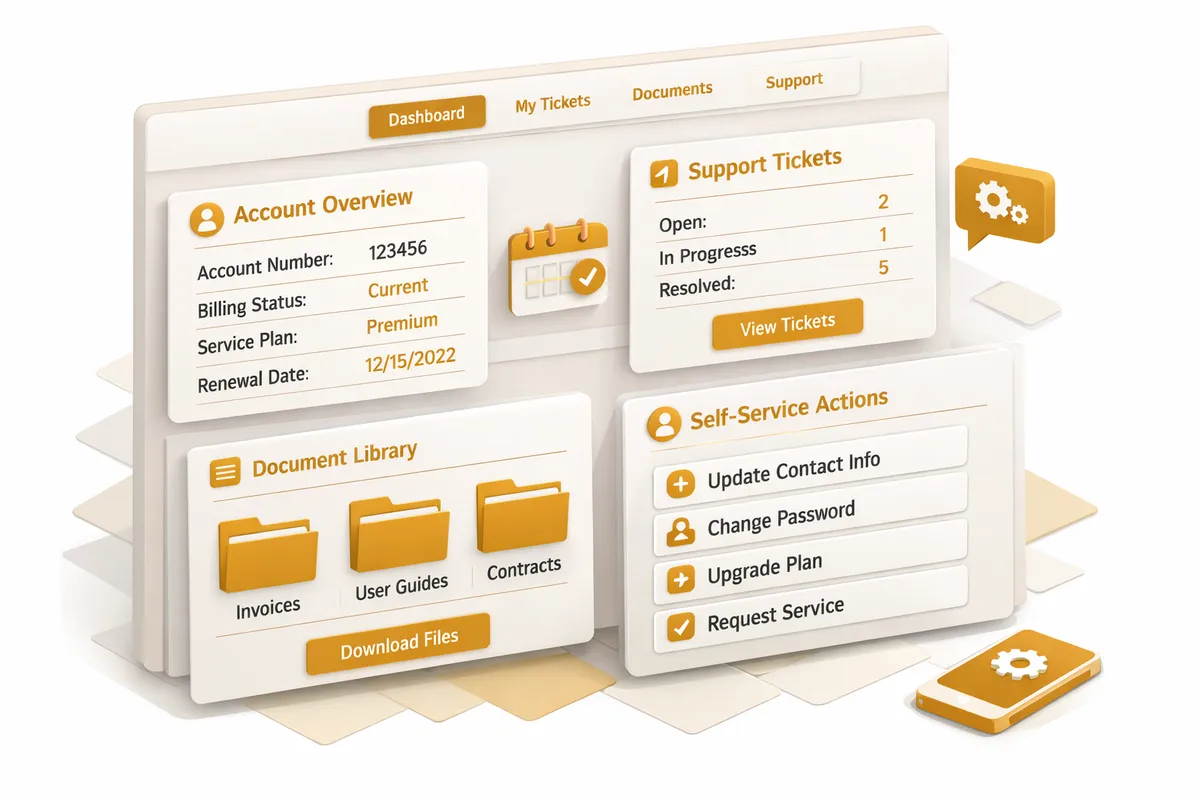
For wholesale and import/export businesses near Chinatown Square and along Cermak Road, the portal's core functions typically include order status and history, invoice access and download in either language, payment record access, delivery scheduling, and service request submission. For professional service firms near Ping Tom Memorial Park, functions extend to appointment scheduling, document access, case or matter status, and secure messaging in either language.
We integrate with the accounting, order management, and service platforms that Chinatown businesses already use. For wholesale businesses, this means connecting the portal to inventory and order management systems so buyers see real-time order status. For professional service firms, this means connecting to practice or case management systems so clients see current matter status without calling the office.
The businesses near the Chinatown Gate and along Archer Avenue that serve cross-cultural B2B relationships can also benefit from portal features that handle multi-party access. A restaurant account might have the owner, the purchasing manager, and the head chef all needing access to order history and delivery scheduling, each with appropriate permissions scoped to their role in the purchasing relationship.
Industries We Serve in Chinatown
Restaurant supply and food wholesale businesses on Wentworth Avenue and near 22nd Place build portals that give restaurant accounts access to order history, current order status and delivery tracking, invoice download in English and Chinese, payment history, and reorder tools for frequently purchased items. For wholesale relationships spanning multiple restaurant locations under one account, the portal consolidates all locations' order history in one view while preserving location-level filtering for the restaurant's internal purchasing management.
Herbal medicine and specialty import businesses near Chinatown Square use portals to give wholesale buyers access to product availability, order status, certificates of origin and quality documentation in English and Chinese, and payment records. Import businesses managing documentation requirements for customs clearance benefit from a portal that provides organized access to the full documentation set associated with each shipment.
Accountants and tax professionals serving Chinatown's business community along Archer Avenue use client portals to provide bilingual document sharing, tax document delivery, estimated payment schedules, and engagement status updates. For an accounting firm whose clients include both Chinese-primary and English-primary business owners, a bilingual portal allows the same firm to serve the full community with a single professional infrastructure.
Acupuncture and traditional medicine clinics near the Pui Tak Center and along Princeton Avenue use patient portals that provide bilingual appointment scheduling, pre-visit intake forms in English and Chinese, treatment plan documentation, and follow-up care instructions. For practices that serve both Chinese-speaking community members and non-Chinese patients seeking traditional medicine care, the bilingual portal serves both populations without a separate workflow for each.
Import/export and logistics businesses near Archer Avenue and the Chinatown rail yards build portals for shipper and buyer access to shipment status, customs documentation, freight invoice access, and delivery confirmation. International trade relationships often involve counterparties in China who prefer Mandarin documentation, and domestic buyers who require English records. A portal that provides the same shipment record in both languages eliminates the documentation reconciliation that otherwise requires manual translation.
Bakeries and retail food businesses with wholesale relationships serving restaurants and cafes across the city use portals to give wholesale accounts access to order placement, order history, seasonal menu availability notices, and invoice management. For Chinatown bakeries that supply Chinese New Year pastries and mooncakes to accounts across the greater Chicago area, a portal that handles the elevated order volume during the Lunar New Year season without proportional increases in staff communication time is an operational asset.
What to Expect Working With Us
1. Bilingual architecture planning and language register review. Before any build begins, we plan the full bilingual architecture and review the Chinese-language content with a professional Chinese business copywriter to ensure the register is appropriate for B2B communication with Chinatown's business community. Simplified and Traditional character support are specified in the planning phase.
2. Integration with existing order management and accounting systems. We assess the specific systems your business uses and design the integration layer that keeps portal data current in both languages automatically. Order data, invoice data, and account history flow from your existing systems to the portal without manual data entry.
3. User access design for multi-party business accounts. For wholesale accounts where multiple people at the same restaurant or business need portal access, we design the access model that gives each user appropriate permissions without requiring separate accounts for each contact.
4. Community-calibrated launch with existing clients. We pilot the portal with a small group of your existing clients who represent the language diversity of your full customer base. This ensures the bilingual experience works for both Chinese-primary and English-primary users before full rollout.