How We Build Custom ERP for Chinatown
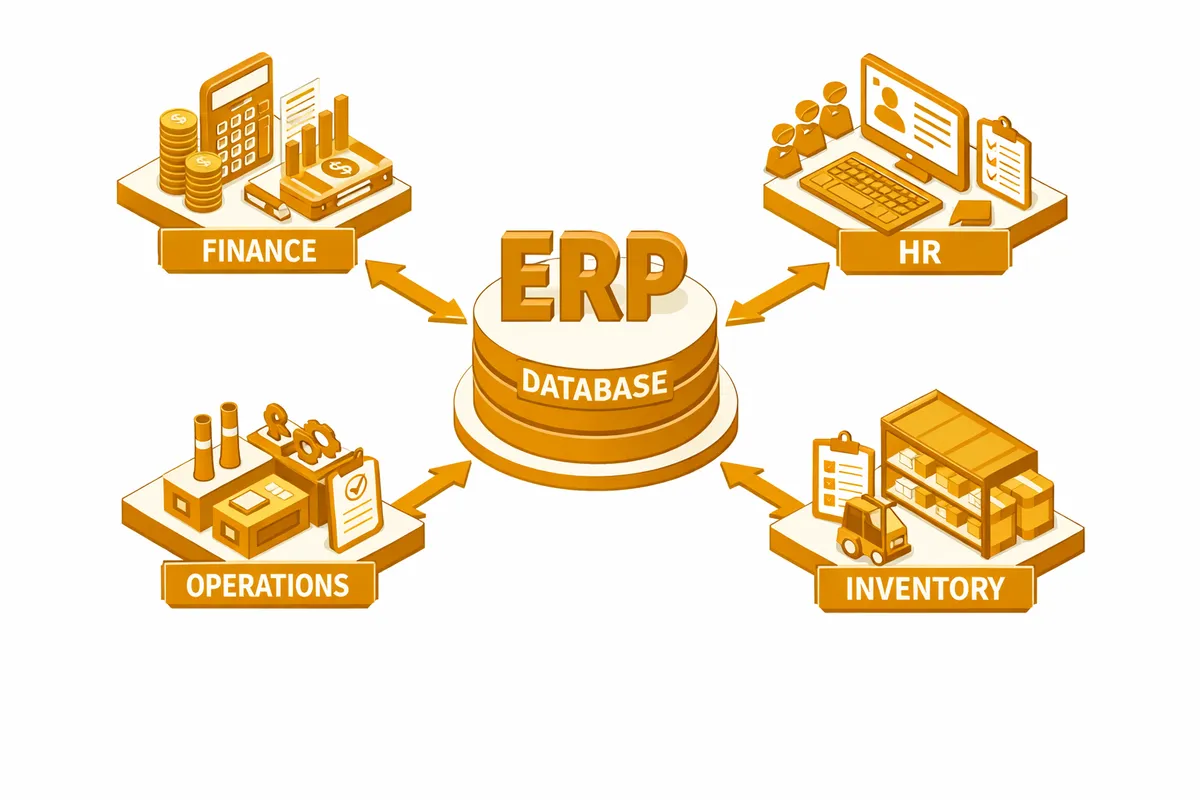
Discovery for a Chinatown ERP engagement covers the full operational scope of the business: supplier relationships and purchasing workflows, inventory management and warehousing, staffing and labor management, customer and distributor relationships, and financial reporting. For family businesses, discovery also explores how ownership decisions are made and how the ERP can surface the right information to the right family members without creating unnecessary complexity.
For a restaurant group with locations near Chinatown Gate and the Chinese American Museum of Chicago, the module architecture might include consolidated purchasing and vendor management, multi-location inventory with waste tracking, staff scheduling and payroll integration, and management-level financial reporting by location and across the group. For an import and distribution business, the architecture would center on purchase order management, customs and landed cost tracking, warehouse inventory, customer relationship management, and accounts receivable.
We build multilingual interfaces where your operations require them. For businesses where floor staff, kitchen workers, or warehouse personnel primarily work in Mandarin or Cantonese, we design the relevant interfaces to support the language they work in while the management layer produces English-language reports for financial and compliance purposes.
Implementation is phased. Your highest-priority operational area goes live first, giving your team working software within twelve to eighteen weeks while subsequent phases expand the platform's scope.
Industries We Serve in Chinatown
Family restaurant groups operating multiple dining rooms along Wentworth Avenue and 22nd Place manage purchasing, labor, and financial performance across locations that current restaurant management software cannot consolidate effectively. A custom ERP delivers the group-level visibility these multi-location operations need.
Import and wholesale businesses sourcing from international suppliers and distributing to restaurants and retailers across Chicago need ERP that covers the full cycle from purchase order through customs clearance, warehousing, and customer invoicing. Standard accounting software handles only the final step.
Herbal medicine shops and specialty retail expanding from Chinatown storefronts to regional distribution manage product sourcing, inventory, customer accounts, and regulatory documentation in systems that do not connect. A custom ERP integrates these into one operational platform.
Accountants and professional service firms serving Chinatown's immigrant business community manage multilingual client relationships, compliance documentation, and regulatory filings for businesses with complex international and immigration-related financial situations. A purpose-built practice ERP handles these requirements.
Acupuncture and alternative medicine clinics near Ping Tom Memorial Park that have grown beyond a single practitioner need ERP that covers patient scheduling, treatment records, billing, supplier management for herbs and supplies, and practitioner management.
Chinatown Square market vendors and food manufacturers supplying restaurants and retailers across the region need ERP covering production planning, raw material purchasing, inventory management, and customer order fulfillment. These are manufacturing and distribution operations that require more than retail POS or basic accounting.
What to Expect Working With Us
1. Discovery and workflow mapping. Two to three weeks of structured sessions covering every operational workflow: purchasing, inventory, staffing, customer management, and financial reporting. For family businesses, we also map how decisions are made and what information each stakeholder needs.
2. Module design and architecture. We design the module structure, data model, and phased delivery plan. For Chinatown businesses with multilingual requirements, we specify the language and interface design in this phase. You review and approve before development begins.
3. Phased delivery. Your most critical operational module goes live first, within twelve to eighteen weeks. Each subsequent phase adds capability without disrupting operations already running on the platform.
4. Launch and ongoing support. Post-launch monitoring, operational validation, and a warranty period for issues found during the first months of use. Maintenance retainers available for feature additions as your business evolves.