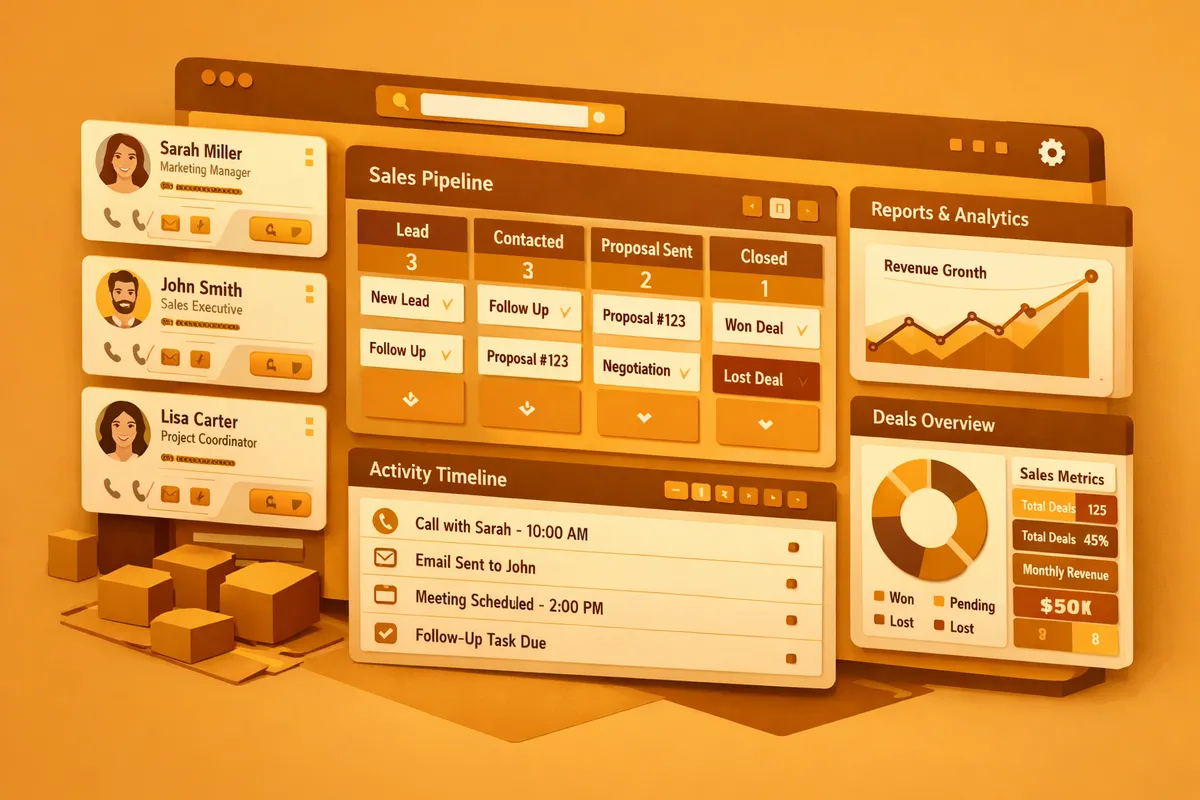
How We Build Custom CRM for Chinatown
The design conversation starts with your customer data. We look at what you currently know about your customers and where that knowledge lives: paper reservation books, loyalty app records, supplier contact spreadsheets, email lists from newsletter sign-ups, or simply the memory of the person who has worked the counter for twenty years. All of it is source material for the CRM data model.
For bilingual businesses, the CRM architecture has to accommodate customer records in both English and Chinese, communication preferences by language, and staff workflows that may run in either language depending on who is handling a given interaction. We build the record structure and communication templates to support both rather than defaulting to English and treating Chinese as an add-on. For a restaurant on Wentworth Avenue that takes reservations in Mandarin and Cantonese as well as English, that distinction matters.
The integration layer connects your CRM to the systems where customer interactions actually happen: your POS for purchase history, your reservation platform for visit records, your email system for communication tracking, and your website for online order and inquiry history. Each touch point adds to the customer record automatically rather than requiring manual entry. By the time you need to make a business decision about a particular customer or customer segment, the record already contains the history you need.
Industries We Serve in Chinatown
Chinese restaurants along Wentworth Avenue and 22nd Place use custom CRM to track reservation history, preferred seating, dietary restrictions, and celebration dates for their regulars. A CRM built for this context enables targeted outreach before Lunar New Year, anniversary dinner reminders, and follow-up after large party bookings. The relationship intelligence that was previously in one host's memory becomes institutional knowledge that serves the customer whether that host is working or not.
Herbal medicine shops and practitioners near Chinatown Square manage a customer base where relationship continuity is clinically important. Patient formula history, response patterns, and purchase timing inform what recommendations a practitioner makes at the next visit. CRM built for this industry tracks health-related customer history with appropriate privacy controls and surfaces it at the point of service without requiring staff to manually search through paper records.
Import and export businesses on Archer Avenue maintain relationships with both domestic wholesale customers and international suppliers. These are two distinct relationship types with different communication cadences, different information requirements, and different risk profiles. A custom CRM structures these separately, tracks outstanding quotes and orders on the customer side, tracks supplier performance and lead time history on the supplier side, and gives the owner a unified view of both without conflating them.
Bakeries and specialty retailers on Cermak Road accumulate high-value repeat customer relationships through custom orders. The client who orders a wedding cake, then a baby shower cake, then a child's birthday cake each year is worth tracking deliberately. CRM built for a custom bakery captures order history, flavor preferences, design notes, and annual calendar triggers so your outreach to that customer arrives before they start searching for someone else.
Accountants serving Chinatown's business community manage client relationships that involve entity structures, ownership histories, and multi-year filing patterns that require institutional record-keeping. A custom CRM for an accounting practice in this corridor tracks not just contact information but the full client profile: entity type, fiscal year, key dates, owner relationships, and service history. That context is available to any staff member handling a client interaction, not just the original account manager.
Community organizations near the Pui Tak Center maintain relationships with donors, program participants, volunteers, and community partners who all require different communication and engagement strategies. A custom CRM for nonprofit and community organizations in Chinatown manages these constituency groups distinctly, tracks engagement history with program-specific context, and supports the kind of stewardship that keeps donors coming back year after year.
What to Expect Working With Us
1. Customer data archaeology. Before we design anything, we inventory what customer data already exists and where it lives. For Chinatown businesses with long operating histories, there is often more information available than owners realize: years of reservation records, loyalty program exports, email list history, and POS transaction data that can form the foundation of the initial CRM population. We extract, normalize, and import what is recoverable so the CRM starts with history rather than blank records.
2. Bilingual data model design. The record structure we design for your CRM accommodates the bilingual dimension of Chinatown business operations from the beginning. Customer name fields, communication preference settings, address formatting, and note fields are all configured to handle both English and Chinese input correctly. Staff workflows are mapped to accommodate whichever language is used in a given interaction.
3. Seasonal campaign configuration. Chinatown's calendar has defined moments where customer outreach should happen. We configure CRM automation rules for Lunar New Year reactivation sequences, Chinatown Summer Fair new-customer capture flows, and anniversary or celebration date triggers. These run automatically when the conditions are met without requiring someone to manually assemble a list and send an email campaign.
4. Staff training and adoption plan. A CRM that staff does not use is a CRM that fails. We build the training around your actual staff workflows and the specific customer scenarios your team encounters. For businesses with multilingual staff, training materials are provided in the language each team member works in. We check in at 30 and 60 days post-launch to address adoption gaps before they become entrenched habits.