How We Build Business Process Automation for Chinatown
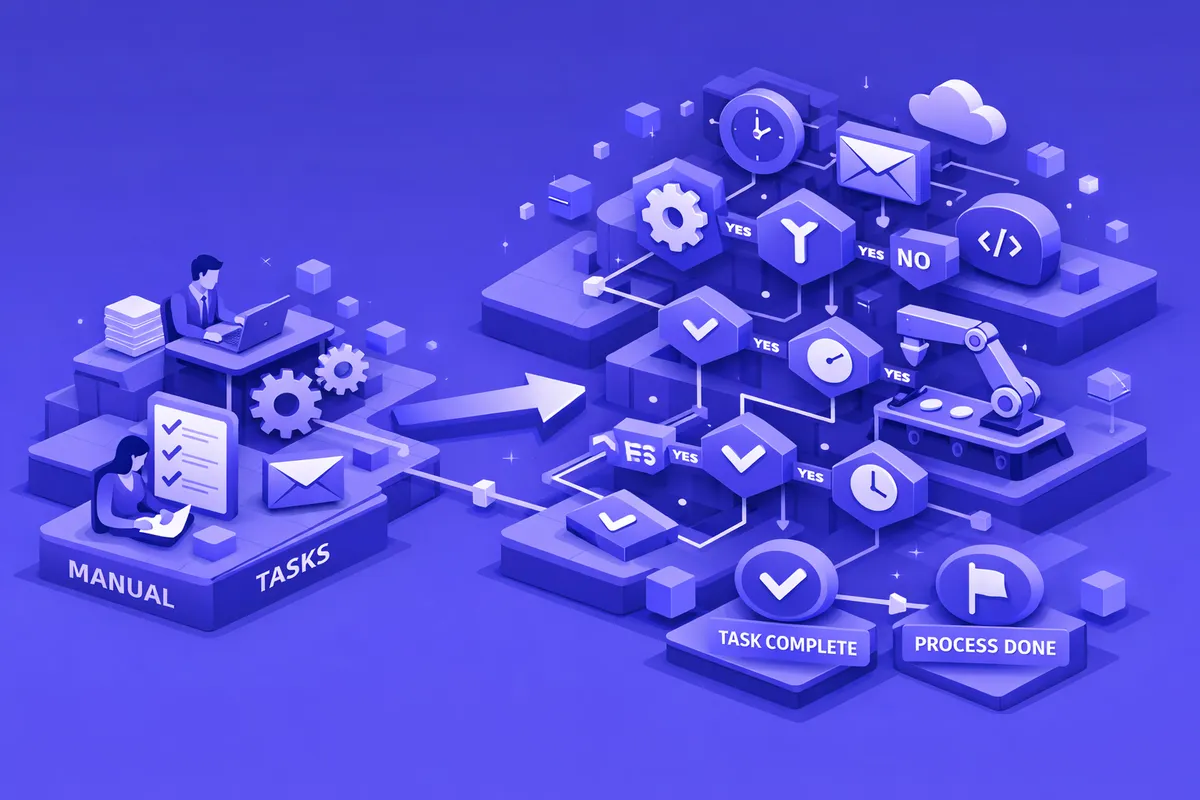
Process discovery in Chinatown often starts with a conversation at the counter. We spend time inside your operation observing the actual work before recommending anything. A two-hour observation of a busy Wentworth Avenue restaurant's post-service close reveals more about where manual work is concentrated than any questionnaire. We document each process step, note where handoffs happen between people or systems, and identify which steps could be replaced by automated triggers without losing the judgment they currently require.
From that documentation, we design the automation architecture. We are not recommending new software platforms unless your current tools are genuinely inadequate. The goal is connecting what you already use: your POS system, your inventory spreadsheet, your reservation platform, your supplier communication channels. Automation layers can sit on top of existing tools through integrations and webhooks, routing information between systems that currently require a human in the middle.
Implementation happens in phases tied to impact. We automate the highest-friction processes first, which for most Chinatown businesses means supplier order management, customer communication sequences, and end-of-day reporting. Lower-priority automations follow after the first phase is stable and you have seen the time savings materialize. For import businesses near Archer Avenue with more complex cross-border operational flows, the architecture takes longer to design but the per-transaction efficiency gain is proportionally larger.
Industries We Serve in Chinatown
Chinese restaurants and banquet halls on Wentworth Avenue carry automation potential across supplier ordering, staff scheduling communications, reservation confirmation sequences, and event booking workflows. Banquet halls specifically gain from automated deposit tracking, contract generation, and vendor coordination, where a single event can involve six or more external parties who currently require separate manual follow-up.
Herbal medicine shops near Chinatown Square manage inventory replenishment cycles that are tied to both supplier lead times from domestic distributors and, for some products, international import schedules. Automated reorder triggers, supplier notification workflows, and stock alert systems reduce the risk of running out of high-turnover items during peak seasons without requiring someone to manually check shelves against a spreadsheet every week.
Import and export businesses along Archer Avenue handle documentation-heavy processes at every stage: purchase orders, customs declarations, freight confirmations, delivery receipts, and customer invoices. Automating the handoff between these document types, routing each one to the right person for review and the right system for record-keeping, reduces processing time per shipment from days to hours and eliminates the manual chasing that consumes administrative time.
Bakeries and food retailers on Cermak Road benefit from automated custom order workflows: intake forms that capture specifications, confirmation emails, production queue entries, and pickup reminder sequences. Without automation, a busy Saturday at the Chinatown Gate vicinity means those custom orders are tracked on paper and confirmed by whoever answers the phone. With it, the process runs the same way every time regardless of who is working.
Acupuncture clinics and health practitioners serving the residential blocks behind Princeton Avenue run appointment-heavy practices where no-show rates and last-minute cancellations create revenue gaps. Automated reminder sequences, cancellation and rescheduling workflows, and waitlist management reduce those gaps without requiring front desk staff to manually call every patient the day before their appointment.
Accountants serving Chinatown's immigrant business community handle document collection from clients that is often slow, inconsistent, and dependent on personal follow-up. Automated document request workflows, secure upload reminders, and status tracking reduce the time between engagement start and first deliverable. Clients get clearer communication about what is needed and when; the accountant gets documents without chasing.
What to Expect Working With Us
1. Process observation and mapping. We learn your operation from the inside out, not from a description you give us in a conference room. For Chinatown businesses, that means understanding the bilingual dimensions of customer and supplier communication, the seasonal rhythms around Lunar New Year and the Summer Fair, and the informal processes that exist alongside formal ones. The process map we produce is specific enough to build automation from and clear enough that your team recognizes their own work in it.
2. Automation design with your tools. We design the automation stack around what you already use. Integration connections are built to your specific systems, not to a standard template. For import businesses with Chinese-language supplier documentation, we configure the document handling layer to process those materials accurately. For restaurants with bilingual customer communication needs, automated messages go out in the right language based on the customer's preference.
3. Phased implementation with live testing. Each automation phase goes through a testing period in parallel with your existing manual process before it fully replaces it. You see both the automated output and the manual output side by side and confirm they match before the manual step is removed. This catches configuration errors before they cause operational problems, not after.
4. Ongoing adjustment and expansion. Businesses evolve. The workflow you have in January looks different after the Lunar New Year rush reshapes your understanding of what actually bottlenecks. We build in a 90-day review to identify what changed, what the automation handled well, and what new processes have emerged that are candidates for the next phase. Automation is not a one-time project. It is an ongoing operational investment.