How We Build Business Intelligence for Chinatown
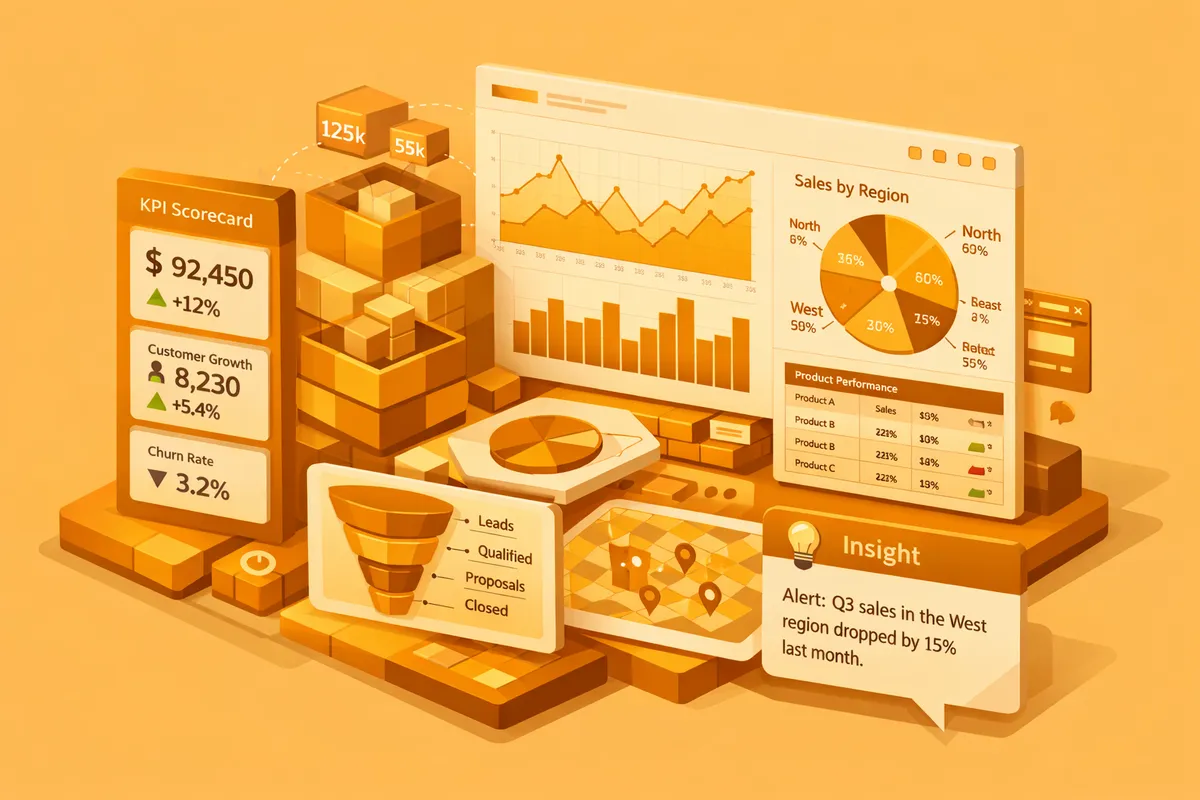
Building BI for Chinatown begins with the specific operational reality of each business. A family restaurant on Wentworth Avenue runs differently from an import business on Archer Avenue. The decisions that matter, the data that exists, and the cadence of reporting that fits the operator's schedule are all different. We do not use a template; we build from the specific decision context of the specific business.
Discovery begins with a conversation with the owner or manager about the questions they are currently unable to answer with the data they have. For a bakery near the Chinatown Gate, the question might be: which products drive the most profitable customer relationships and which ones create kitchen complexity for thin return? For an acupuncture clinic near Ping Tom Memorial Park, the question might be: which appointment types generate the highest revenue per hour and which practitioners drive the strongest patient retention?
Data source mapping for Chinatown businesses often reveals a mix of modern POS systems, legacy accounting software, and manual tracking spreadsheets. We connect whatever exists, assess data quality, and build the transformation pipeline that produces clean, consistent metrics. For businesses where data collection practices are informal, we design lightweight collection habits before layering analytics on top.
Bilingual accessibility matters for Chinatown BI deployments. When the dashboard is used by both English-speaking and Mandarin- or Cantonese-speaking team members, we design labels, metric names, and report formats with that in mind. The point of a dashboard is that the right person reads it and acts on it; language should not be a barrier.
Industries We Serve in Chinatown
Chinese restaurants along Wentworth Avenue use BI to track revenue by menu category and daypart, food cost percentage by dish, table turn rate, and labor cost against covers served. For a restaurant running both a dine-in operation and a takeout business, BI shows the true margin of each channel and informs staffing and menu decisions with precision that a monthly P&L cannot provide.
Herbal medicine shops and acupuncture clinics near Chinatown Square track patient visit frequency, treatment category revenue, product retail performance, and practitioner utilization. For a clinic managing multiple practitioners with different specializations, BI surfaces which treatment modalities are growing and which practitioners are driving patient retention, supporting staffing and scheduling decisions with data.
Import and export businesses operating between Chinatown and overseas suppliers track purchase order volume by product category, customer revenue concentration, gross margin by category, and inventory turn rates. When an importer can see that two product categories account for eighty percent of margin and three customers represent concentration risk, those are immediately actionable insights that a manual monthly report surfaces too late.
Bakeries and food manufacturers near the Chinatown Gate and along Cermak Road track production volume by SKU, ingredient cost per unit, wholesale versus retail channel margin, and order frequency by customer. For a Chinatown bakery supplying both walk-in retail customers and restaurant wholesale accounts, BI clarifies which channel is growing and which is more profitable per unit sold.
Accountants serving immigrant businesses throughout Chinatown use BI for practice management: billable hour tracking, revenue per engagement type, client retention cohorts, seasonal workload distribution, and referral source performance. During tax season, a dashboard showing which client files are complete versus outstanding helps a small CPA firm manage the January-to-April crunch without losing clients to late filings.
Retail and specialty goods shops around Chinatown Square track inventory turnover, revenue by product category, margin by vendor, and customer purchase frequency. For a specialty retailer carrying both imported goods and locally sourced products, BI shows which inventory categories deserve more shelf space and which ones are tying up capital at low turn rates.
What to Expect Working With Us
1. Owner conversation about the key operational questions. We begin by sitting with the business owner and working through the two or three decisions that most directly affect the profitability and growth of the operation. For a Chinatown restaurant, this might be menu composition and staffing. For an import business, it might be customer and product mix. Those decisions define what we build.
2. Data source audit and connection plan. We map every system that holds relevant data, assess data quality and consistency, and design the pipeline that connects source systems to the analytics layer. For businesses where data collection is informal, we design lightweight collection practices before building dashboards. A BI system built on inconsistent data produces consistently wrong conclusions.
3. Dashboard builds with operator review at each stage. We build working dashboards and review them with the business owner before adding complexity. We test every dashboard against one question: can the operator read this in five minutes and know what to do next? If the answer is no, the dashboard needs redesign before delivery.
4. Training with the team who will use the dashboards daily. We train the operator and relevant team members to read the dashboards, interpret the metrics, and update or add views as the business evolves. The goal is operational self-sufficiency, not ongoing dependence on external support. Your Chinatown business should own its analytical infrastructure the way it owns its recipes and supplier relationships.