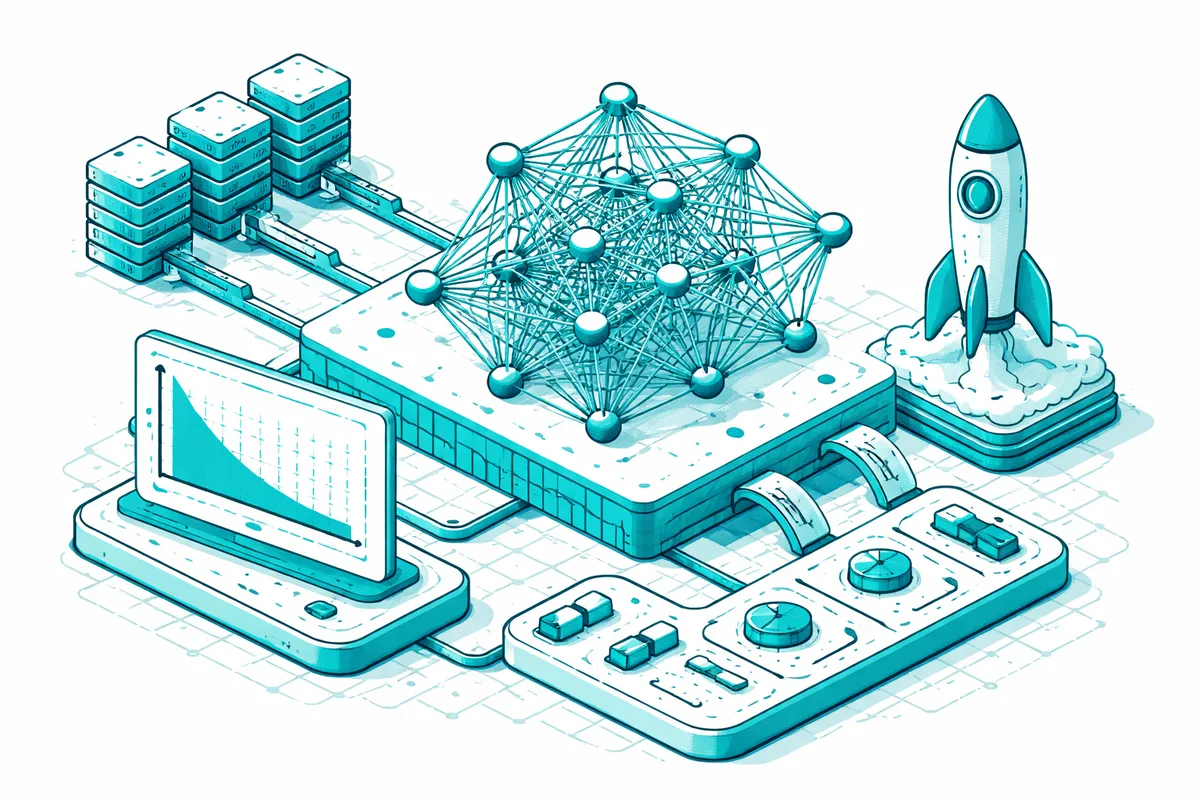
How We Build AI Model Training for Chinatown
Custom AI model training for Chinatown businesses begins with a domain assessment: identifying the specific knowledge domains where general-purpose AI fails for the business, the data available to train a more accurate system, and the use cases where improved performance would produce meaningful business value. Not every Chinatown business needs custom AI training; the investment is justified when the domain is specific enough that general-purpose systems consistently fail in ways that affect business operations or customer experience.
Data collection and preparation is the most critical phase. Chinatown businesses operating for decades often have rich data in formats requiring preparation before use in training: menus in both English and Chinese that need to be structured, patient records that need to be appropriately anonymized before inclusion in training data, supplier catalogs that exist in formats from multiple countries and need normalization. We work with businesses to prepare this data for training while respecting the privacy and confidentiality obligations that apply to different data categories.
The training approach we use depends on the use case and the available data. For menu description generation and classification tasks, fine-tuning a base language model on domain-specific examples produces strong results relatively quickly. For TCM-specific language tasks, more extensive training on TCM literature, clinical notes, and terminology databases is required. For import product classification, a combination of supervised classification training and knowledge base augmentation typically produces the most reliable results.
Bilingual training is an integrated element of our Chinatown AI training work rather than an add-on. Models trained separately on English data and Chinese data typically perform less well on mixed-language inputs than models trained on genuinely bilingual data that reflects the code-switching reality of communication in a Chinese American business context. We prepare training data reflecting the actual bilingual character of Chinatown business communication.
Industries We Serve in Chinatown
Herbal medicine and traditional health practices on Princeton Avenue benefit from AI model training that produces systems capable of accurately processing TCM clinical terminology, classifying patient conditions using TCM diagnostic categories, generating treatment protocol documentation in traditional terminology, and communicating with patients in both the clinical Chinese they expect from a TCM practitioner and the English that reaches new patients unfamiliar with the tradition.
Restaurants and food businesses on Wentworth Avenue and Cermak Road benefit from AI model training that produces systems capable of generating culturally accurate menu descriptions in both English and Chinese, classifying customer feedback by the specific dimensions of food and service quality that matter in a Chinese restaurant context, and personalizing communication in ways that reflect the distinct cultural frames of the restaurant's different audience segments.
Import retailers and specialty food businesses at Chinatown Square and along Archer Avenue benefit from AI model training that produces systems capable of accurately classifying the wide range of products in their catalogs using Chinese product categories, processing supplier documentation in Chinese, and generating product descriptions that communicate the authenticity and provenance of specialty imports to both Chinese American and broader food-curious audiences.
Cultural institutions and community organizations at the Pui Tak Center and the Chinese American Museum of Chicago benefit from AI model training that produces systems capable of processing the bilingual documentation of Chinese American history, generating culturally accurate communication that serves both the Chinese American community and the broader public audience, and classifying community programming in ways reflecting the cultural significance of events rather than generic activity categories.
Bakeries and specialty food producers in Chinatown Square and along 22nd Place benefit from AI model training for product description generation that accurately communicates the cultural significance and preparation tradition of specific items, and customer feedback classification that identifies quality issues in the specific dimensions of texture, flavor balance, and cultural authenticity that matter for traditional Chinese baked goods and pastries.
Service businesses and professional practices serving Chinatown's community benefit from AI model training for client communication generation that reflects the cultural register appropriate to professional services in a relationship-based business community, and for document classification that handles the bilingual documentation these practices manage.
What to Expect Working With Us
1. Domain assessment and training data audit. We assess the specific AI use cases where general-purpose systems are failing for the Chinatown business, inventory the data available for training, and evaluate the feasibility and expected value of custom model training for the identified use cases. Some use cases are better served by prompt engineering or retrieval-augmented generation than by custom training; the assessment identifies the right approach for each.
2. Data preparation and training dataset construction. We prepare the business's data for training: structuring, cleaning, normalizing across language formats, and applying the privacy protections required for data categories like patient records. The quality of the training dataset determines the quality of the trained model; data preparation is not a step to rush through on the way to the interesting work.
3. Model training and evaluation. We fine-tune or train the model using the prepared dataset, evaluate performance against test examples representing the actual use cases the business needs the model to handle, and iterate on the training approach based on evaluation results. Evaluation for Chinatown business models includes bilingual performance testing and domain-expert review of outputs in TCM or culinary contexts where cultural accuracy matters.
4. Deployment, integration, and ongoing refinement. We deploy the trained model in the business's operational context, integrate it with the applications that use its outputs, and establish the monitoring and feedback collection processes that identify performance gaps and inform ongoing refinement. Custom models improve over time as additional domain-specific data becomes available and as the feedback loop produces examples that refine performance on the tasks that matter most.