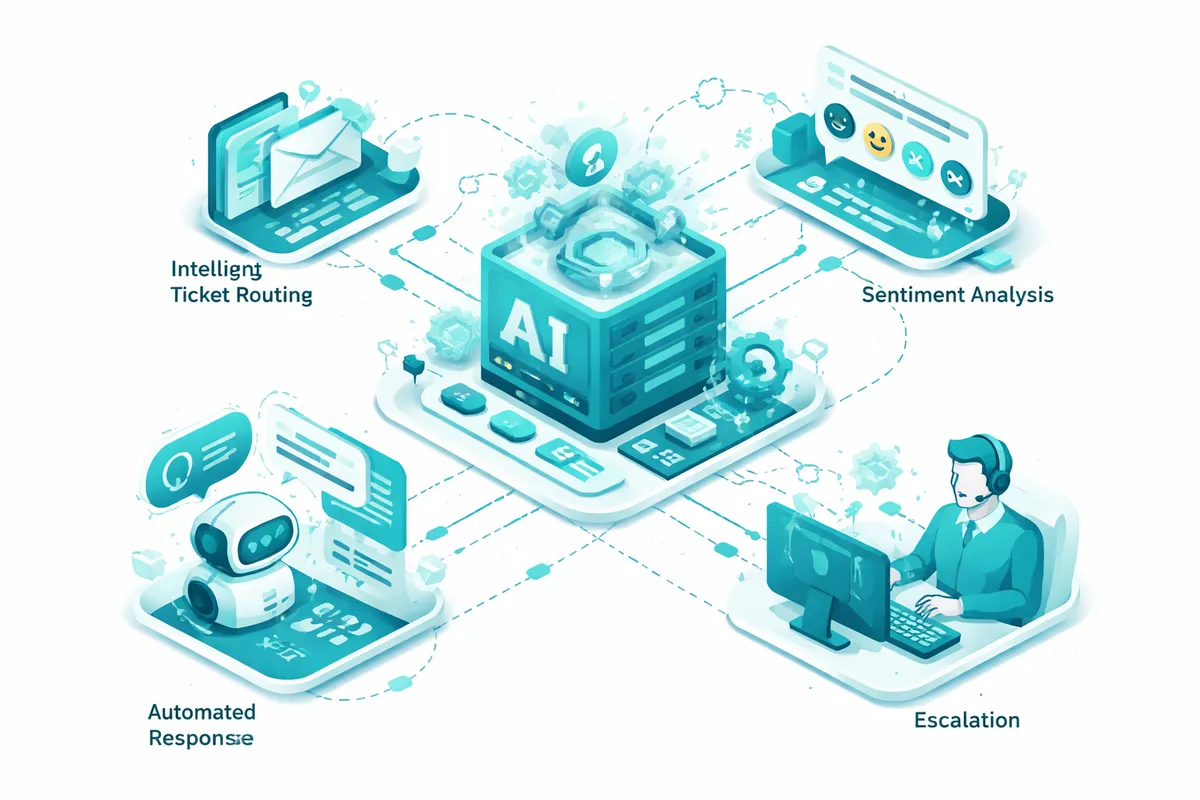
How We Build AI Customer Service for Chinatown
AI customer service for Chinatown businesses begins with documentation of the inquiries the business actually receives: the questions arriving by phone, text, social media, and email, the language distribution of those inquiries, and the hours at which they arrive. This documentation becomes the knowledge base the AI system draws on to respond accurately.
Bilingual configuration is a core element of our Chinatown customer service work. We configure systems that detect the customer's language automatically and respond in that language, handle the switching between languages that occurs in conversations with bilingual customers, and maintain the cultural register appropriate to each language context rather than producing technically correct but culturally flat responses.
The knowledge base we build for each Chinatown business is specific to that business rather than generic. A restaurant on Wentworth Avenue needs a customer service system that knows its actual menu, its specific hours including variations for Chinese holidays, its reservation policies, its location relative to the Chinatown Gate and public transit stops on Cermak Road, and the questions that its particular customer base asks most frequently.
Integration with the business's existing communication channels ensures the AI system handles inquiries wherever they arrive. For Chinatown businesses, this typically includes website chat, Google Business Profile messaging, Facebook and Instagram direct messages, and in some cases WeChat. The system handles each channel while maintaining a consistent voice and consistent information across all of them.
Industries We Serve in Chinatown
Restaurants and food businesses along Wentworth Avenue and Cermak Road receive high volumes of reservation, menu, and location inquiries from both Chinese-speaking regulars and English-speaking visitors. We build AI customer service systems handling reservation management, menu questions, hour and location inquiries, and cultural calendar questions about holiday hours and special menus that Chinatown restaurants receive seasonally.
Bakeries and specialty food retailers in Chinatown Square and along 22nd Place receive product, availability, and custom order inquiries from customers across the city. We build AI customer service systems answering product questions, communicating availability and ordering processes, and handling bilingual inquiries from both community customers and the broader food audience.
Herbal medicine and traditional health practices on Princeton Avenue receive patient inquiries about specific preparations, practitioner availability, and appointment scheduling in both English and Chinese. We build AI customer service systems calibrated to the specific information needs of patients approaching traditional Chinese medicine, including the cultural sensitivity required when discussing health topics with patients who may be sharing information they consider private.
Import retailers and specialty goods shops at Chinatown Square and along Archer Avenue receive product availability and sourcing inquiries from both the Chinese American community and the broader specialty food audience. We build AI customer service systems answering product questions accurately, communicating seasonal availability tied to the Chinese cultural calendar, and handling inquiries across the language spectrum.
Cultural institutions and community organizations at the Pui Tak Center and the Chinese American Museum of Chicago receive inquiries about programs, hours, membership, and events from both Chinese American community members and visitors from across Chicago. We build AI customer service systems communicating program and event information, handling membership inquiries, and providing the cultural context that helps visitors understand what they will experience before their first visit.
Service businesses and professional practices serving Chinatown's residential and commercial community receive appointment, service, and consultation inquiries in multiple languages. We build AI customer service systems handling initial inquiry management, appointment scheduling requests, and service information delivery in the language the client prefers, with escalation to human staff for inquiries requiring professional judgment.
What to Expect Working With Us
1. Inquiry audit and knowledge base development. We document the inquiries the business receives, identify the most frequent questions and the information those questions require, and build the knowledge base the AI customer service system will draw on. For Chinatown businesses, this process includes documentation of bilingual information needs and cultural calendar content that informs responses to seasonal and holiday inquiries.
2. System configuration and bilingual calibration. We configure the AI customer service system with the business's specific knowledge base, calibrate the bilingual detection and response capabilities, and establish escalation rules routing complex or sensitive inquiries to human staff. The system is configured to the business's voice rather than a generic customer service template.
3. Channel integration and testing. We integrate the system with the business's active customer communication channels, test responses across the range of inquiry types the business actually receives, and validate bilingual performance before the system goes live. Testing for Chinatown businesses includes both Mandarin and Cantonese inquiries to confirm accurate and culturally appropriate responses.
4. Monitoring and continuous improvement. We monitor the system's performance, review flagged conversations where the AI escalated to human review, and continuously improve the knowledge base based on inquiries that reveal gaps. Customer service systems improve over time as the range of handled inquiries grows and as the business's operations evolve through staff changes, menu updates, and hour adjustments.