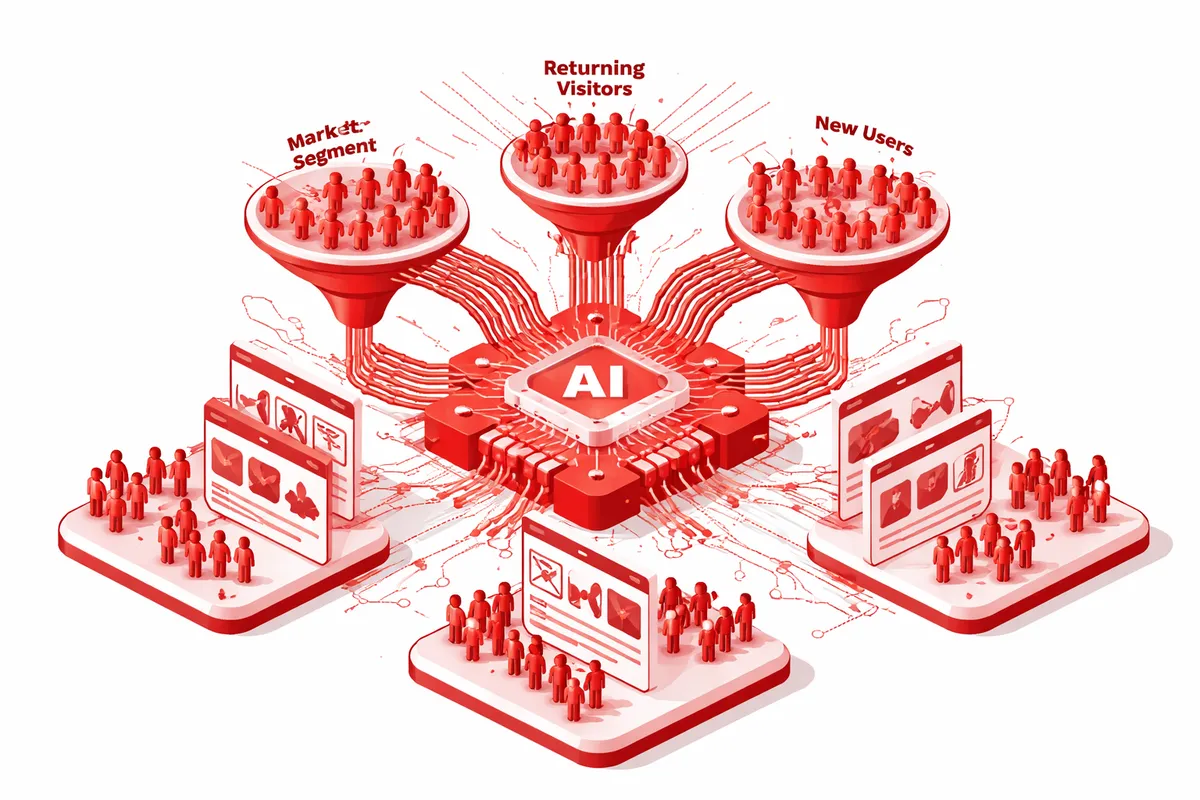
How We Build AI Content Personalization for Chinatown
Content personalization for Chinatown businesses begins with audience definition: identifying the distinct segments the business serves, the signals that distinguish those segments, and the content needs specific to each. For a Chinatown restaurant, segments might be defined by language preference, visit frequency, the occasions that bring them to the restaurant, and the platforms through which they discovered the business.
We then map the content library to those segments: identifying what content is relevant to which audiences, what needs to be produced in multiple language versions, and what requires cultural adaptation rather than simple translation. A Lunar New Year promotion that works for the existing Chinese American customer base requires different cultural grounding than the same promotion designed to reach the broader Chicago food audience curious about Chinese New Year traditions.
The AI personalization infrastructure we build connects audience signals from the business's digital touchpoints, such as email behavior, social media engagement, website activity, and reservation history, to content delivery decisions that adjust what each segment sees. The infrastructure is built around the business's existing tools where possible, adding personalization capabilities to platforms the business is already using rather than requiring wholesale system replacement.
Bilingual personalization is a technical and editorial challenge we address specifically for Chinatown. Personalization systems delivering Chinese-language content need calibration to the difference between Mandarin and Cantonese, to simplified versus traditional character conventions, and to the cultural calendar governing when specific content is timely for Chinese-speaking audiences.
Industries We Serve in Chinatown
Restaurants and food businesses along Wentworth Avenue and Cermak Road serve audiences with fundamentally different relationships to Chinese cuisine and different language preferences. We build content personalization programs that deliver menu storytelling to first-time visitors, seasonal content to established regulars, and cultural context to the broader food audience, each calibrated to what the audience already knows.
Bakeries and specialty food retailers in Chinatown Square and along 22nd Place serve both the local Chinese American community purchasing products for cultural occasions and the broader Chicago food audience discovering specialty items through food media. We build personalization programs delivering tradition-grounded content to the community audience and discovery-oriented content to the broader audience, timed to the Chinese cultural calendar.
Herbal medicine and traditional health practices on Princeton Avenue serve patient populations ranging from long-term Chinese American patients with native understanding of traditional medicine to newer patients exploring TCM for the first time. We build content personalization programs delivering practice-specific content to established patients and educational content to those new to the tradition, with language personalization for Mandarin and Cantonese-speaking segments.
Cultural institutions and community organizations at the Pui Tak Center and the Chinese American Museum of Chicago serve members and supporters with varying degrees of connection to the Chinese American community. We build content personalization programs delivering institution-specific content to active members and community-building content to broader audiences, timed to the programming calendar and cultural events anchoring Chinatown's annual rhythm.
Import retailers and specialty goods businesses at Chinatown Square and along Archer Avenue carry products whose significance is immediately understood by Chinese American shoppers and requires explanation for the broader Chicago audience. We build personalization programs delivering product knowledge to initiated audiences and cultural context to uninitiated ones, with personalization adapting to seasonal purchase patterns connected to the Chinese cultural calendar.
Service businesses and professional practices serving Chinatown's residential and commercial community communicate with clients who have different language preferences and different familiarity with the specific services offered. We build content personalization programs delivering appropriate expertise content to each segment, with bilingual delivery for practices whose client base includes both English-dominant and Chinese-language-dominant clients.
What to Expect Working With Us
1. Audience segmentation and signal mapping. We work with the business to define the distinct audience segments it serves, identify the signals in existing data that distinguish those segments, and map those signals to personalization decisions that make each segment's experience more relevant. For Chinatown businesses, this process always includes the language dimension and cultural calendar dimension that generic segmentation frameworks often miss.
2. Content inventory and gap analysis. We audit the business's existing content library, identify what is currently being personalized and how, and map the gaps between current personalization and the full scope of what each audience segment needs. Content gaps for Chinatown businesses frequently appear in the bilingual dimension: content that exists in English but not in Mandarin or Cantonese, or in one Chinese language variant but not another.
3. Personalization infrastructure setup and integration. We build or configure the personalization infrastructure delivering content differentiated by segment, connecting the audience signal sources the business already uses to the content delivery systems across its digital touchpoints. For most Chinatown businesses, this involves integration with existing email platforms, social media management tools, and website content management systems.
4. Content production and program management. We produce the segment-specific content the personalization program requires, manage the publication and delivery schedule, and monitor segment performance to understand which content is resonating with which audiences. Personalization programs improve over time as signal data accumulates and the content library grows; we manage the program's evolution rather than treating initial setup as the finished product.