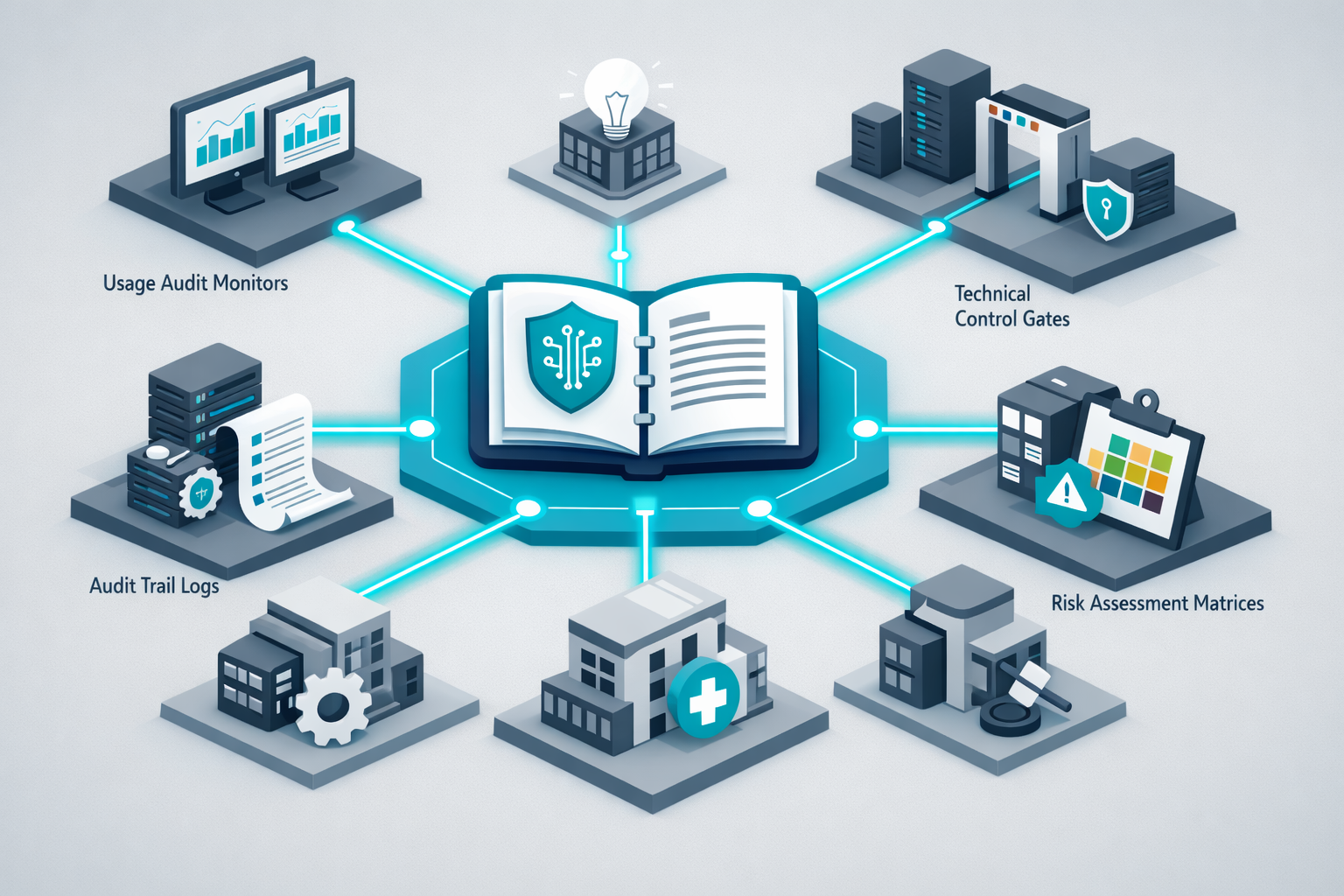
How We Build AI Compliance & Governance for Chinatown
AI governance for Chinatown businesses begins with an inventory of AI tools currently in use and a mapping of the data flows those tools involve. Many Chinatown family businesses have adopted individual AI tools as separate decisions rather than as elements of an integrated system: a reservation platform here, a marketing automation system there, a customer messaging tool added recently. A governance framework that does not account for all of these tools, and the ways they interact, will have gaps.
We then assess the applicable regulatory requirements for the specific business category, the data types handled, and the customer populations served. A restaurant on Wentworth Avenue using a reservation system with customer contact data has different obligations than an herbal medicine practice on Princeton Avenue handling patient health information. The governance framework is calibrated to actual requirements rather than built to the most conservative standard across all business types.
Bilingual governance documentation is a specific element of our Chinatown work. Governance policies that exist only in English are not accessible to staff or business principals for whom Mandarin or Cantonese is the primary working language. We produce governance documentation functional in both English and Chinese, ensuring the framework is understood by the people responsible for operating within it.
Implementation support is practical rather than theoretical. A governance framework that lives in a policy document but is not integrated into how the business actually operates provides no real protection. We design implementation steps that translate governance requirements into operational practices: how restaurant staff handle customer data requests, how the herbal medicine practice manages patient records when AI tools are involved, and how the import retailer monitors its AI-assisted inventory systems.
Industries We Serve in Chinatown
Restaurants and food businesses on Wentworth Avenue, Cermak Road, and 22nd Place use AI tools for reservation management, customer communication, and marketing automation that involve collection and processing of customer personal data. We build governance frameworks addressing data obligations, customer rights, and breach notification requirements for restaurant AI systems.
Herbal medicine and traditional health practices on Princeton Avenue operate under HIPAA when handling patient health information. AI tools used for patient communication, appointment management, or health record processing must be governed within the HIPAA framework. We build governance structures ensuring TCM practices using modern AI tools maintain patient privacy protections that federal law requires.
Import retailers and specialty food businesses at Chinatown Square and along Archer Avenue process payment data, maintain supplier records, and use AI tools for inventory management and customer relationship tracking. We build governance frameworks addressing PCI compliance for payment data, data retention requirements, and the vendor assessment processes for AI tools these businesses use.
Financial service professionals serving the Chinatown community manage client financial information and use AI tools for client communication and reporting. We build governance frameworks addressing applicable financial regulatory requirements for AI-assisted client communication, record-keeping obligations for AI-generated content, and disclosure requirements when AI tools are used in service delivery.
Cultural institutions and community organizations including the Pui Tak Center and the Chinese American Museum of Chicago collect donor data, membership information, and program participant records. We build governance frameworks addressing nonprofit data obligations, consent requirements for populations these institutions serve, and governance structures ensuring AI tools used for fundraising operate within appropriate constraints.
Service businesses and professional practices across legal, accounting, and personal service categories handle client confidential information and use AI tools to support service delivery. We build governance frameworks addressing confidentiality obligations, specific requirements for AI use in regulated professional services, and operational practices protecting client information through the full cycle of service delivery.
What to Expect Working With Us
1. AI tool inventory and data flow mapping. We document every AI tool the business is currently using, the data flowing through each, the third parties those tools share data with, and the consent and disclosure practices currently in place. Most Chinatown family businesses discover through this process that their AI tool landscape is broader than they recognized, particularly when reservation platforms and messaging tools are included.
2. Regulatory requirement assessment and gap analysis. We identify the specific regulatory requirements applicable to the business's category and data types, assess the current state of compliance, and produce a prioritized gap analysis. The highest-consequence gaps are addressed first rather than approached in the order easiest to document.
3. Governance framework development and bilingual documentation. We build the governance framework appropriate to the business's specific context, produce documentation that makes the framework operational, and ensure it is available in both English and Chinese. Documentation is designed for practical use by people operating a family business, not for regulatory appearance in an audit file.
4. Implementation support and staff orientation. We support implementation of governance practices into daily operations, train staff on their specific responsibilities, and establish monitoring and review processes to keep the framework current as the business's AI tool landscape evolves. Governance is a continuous practice, not a one-time documentation exercise.