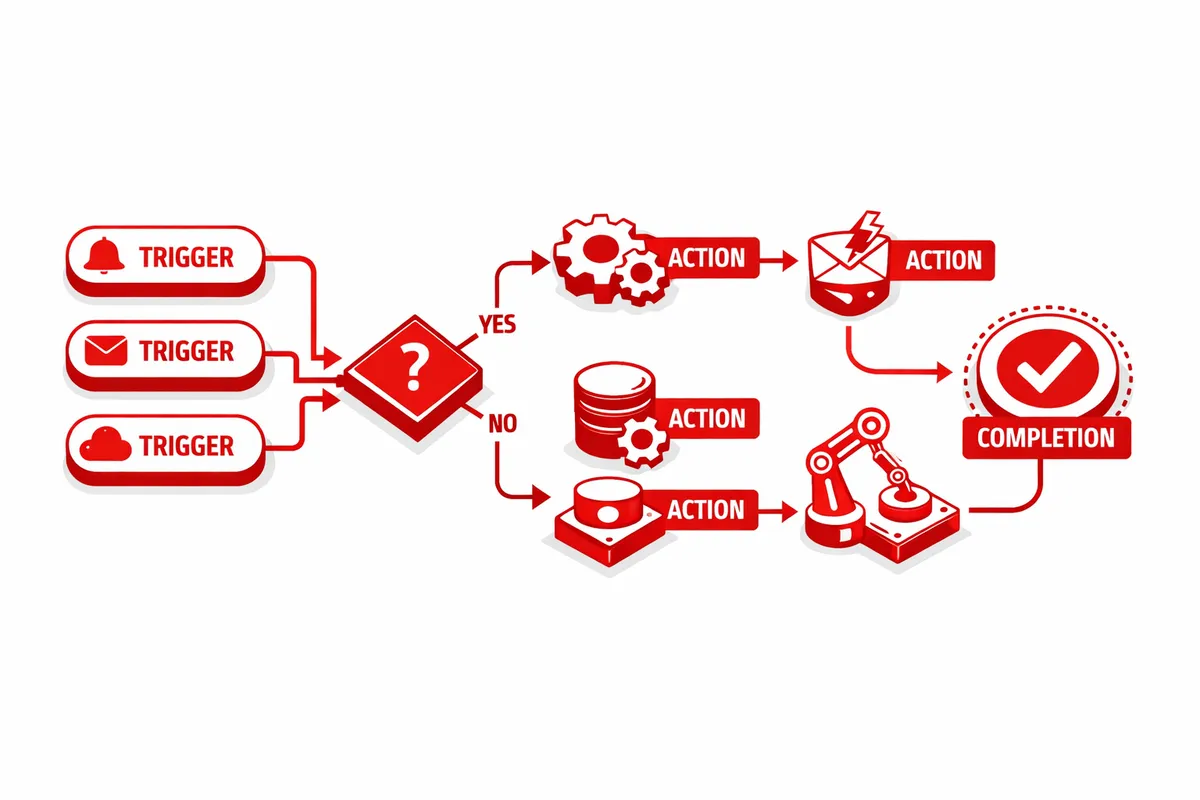
How We Build Workflow Automation for Bucktown Businesses
We begin with a detailed process audit. For Bucktown design businesses, we map the entire project lifecycle from client inquiry through final installation, documenting every handoff, every manual data entry point, and every communication that currently depends on someone remembering to send it. For retailers, we map the inventory lifecycle from vendor sourcing through customer sale. For service businesses, we map the client journey from first contact through completed engagement.
We identify the dependencies between steps. Many workflow problems in Bucktown businesses are not about individual tasks being slow but about the gaps between tasks, where information sits in one system waiting for someone to notice it and act on it in another system. Automation closes those gaps by monitoring triggers across systems and acting immediately when conditions are met.
We build with the platforms each business uses. Bucktown businesses tend to use design-forward tools: Studio Designer, Houzz Pro, Design Manager, Shopify, Square, QuickBooks, Google Workspace, Asana, and various vendor-specific ordering platforms. We integrate whatever combination your business runs on.
Industries We Serve in Bucktown
Interior design and architecture firms automate project lifecycle management, vendor coordination, client communication, and billing. A Damen Avenue design firm cut its project coordination overhead by 50 percent by automating vendor order tracking, delivery scheduling, client milestone updates, and invoice generation. When a vendor ships an order, the automation tracks the shipment, updates the project timeline, notifies the installer, and sends the client a progress update with the expected delivery window. The procurement workflow, from item selection through purchase order through vendor confirmation through delivery tracking, runs as a connected sequence rather than a series of manual handoffs between spreadsheets and email.
Boutiques and home furnishing stores along Damen Avenue automate inventory management, vendor purchasing, customer communication, and financial reporting. A furniture store automated its consignment tracking workflow, which had previously required the owner to manually reconcile consignment inventory counts, calculate consignor payments, and generate settlement statements monthly. The automation tracks consignment inventory in real time, calculates payments based on sales data from the POS, and generates settlement statements automatically at the end of each billing period.
Professional services along Western Avenue, including accounting firms, legal practices, insurance agencies, and real estate offices, automate client intake, document management, scheduling, and billing. An accounting firm automated its tax season workflow: when a client's documents arrive, the system logs the receipt, checks the document against the required checklist, notifies the preparer, tracks completion status, and triggers the review routing when preparation is complete. The firm's partners stopped spending January through April managing logistics and focused entirely on the tax preparation work their clients were paying for.
Fitness and wellness businesses near the 606 trail automate member management, class scheduling, retention workflows, and marketing. The trail's foot traffic creates a blend of members and drop-in visitors. Automation captures drop-in visitors in the CRM, triggers a membership offer sequence, and tracks conversion from trial to membership. Member engagement monitoring flags declining attendance and triggers personalized re-engagement before cancellation.
What to Expect Working With Us
1. Full process audit. We document every manual workflow in your business, including the informal processes that happen in email threads and verbal handoffs. For Bucktown design businesses, this typically reveals 30 to 50 automatable processes.
2. Dependency mapping. We map how processes depend on each other, identifying the gaps where information stalls because no one noticed it was ready for the next step. These gaps are often where the largest efficiency gains hide.
3. Platform integration. We connect your existing tools so data flows between them natively. For Bucktown businesses, this typically means integrating 5 to 12 platforms that currently require manual bridging.
4. Phase one deployment in two weeks. Core automations go live: data synchronization, notification routing, daily reporting, and high-frequency task automation. Immediate time savings begin.
5. Full system deployment in four to six weeks. Complex workflows with multi-step logic, conditional branching, and exception handling complete the build.