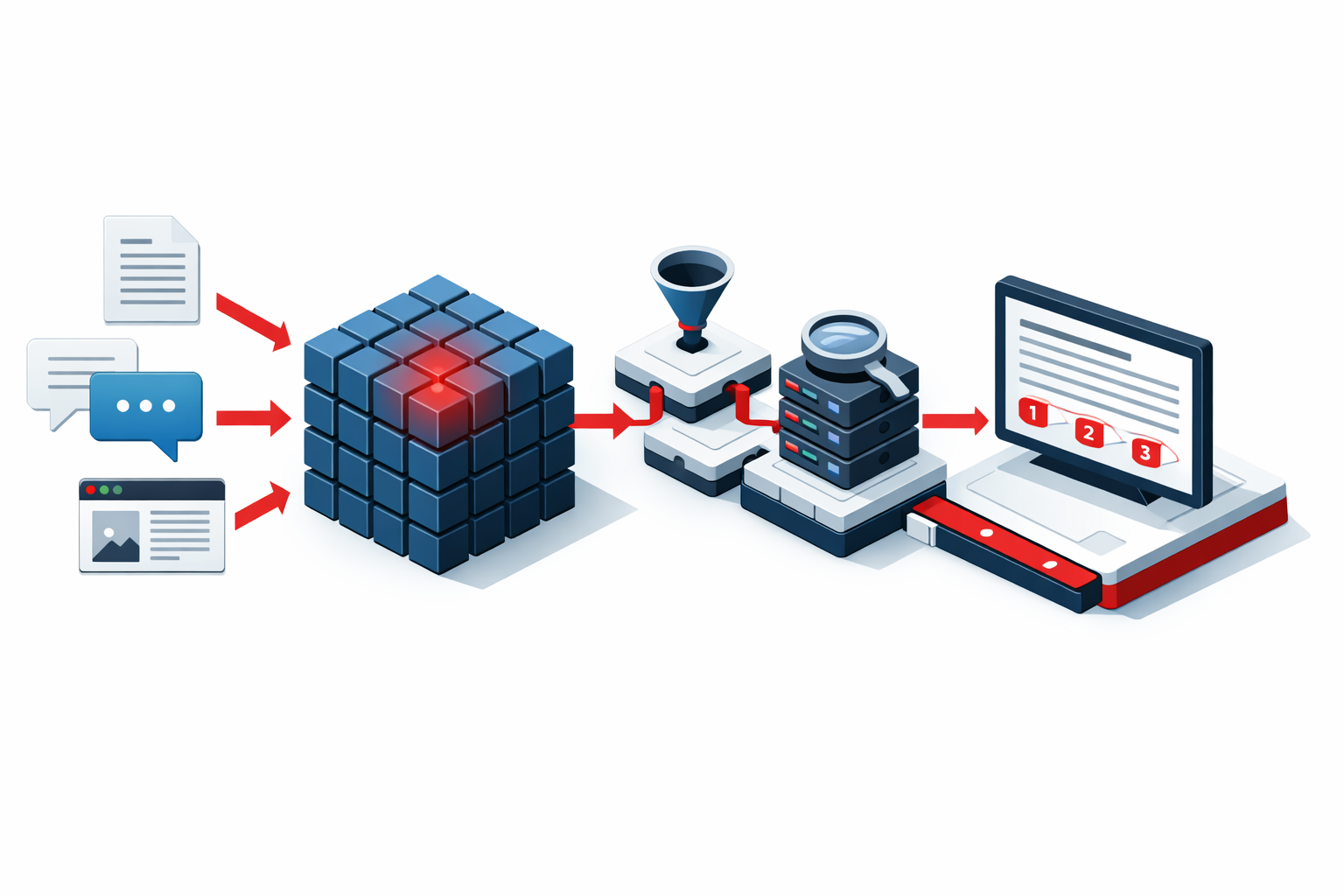
How We Build RAG Development for Bucktown
RAG development begins with a knowledge inventory. We spend time with your team documenting what knowledge assets exist in your organization: which project files contain reusable research, which case studies have been written up, which strategic frameworks are documented, which process guides exist, which client research reports capture insights applicable beyond the original engagement. We assess what format each knowledge asset is in, what quality condition it is in, and what needs to happen to make it indexable.
Most Bucktown organizations discover through this inventory that they have more relevant knowledge than they thought, and that it is in worse shape for systematic retrieval than they hoped. Files are organized inconsistently. Document formats vary. Some knowledge is in email threads that have never been compiled into standalone documents. The inventory and preparation phase addresses this systematically, creating the clean, well-organized knowledge corpus that effective retrieval requires.
We prepare your knowledge corpus for AI indexing: extracting text from PDFs and legacy file formats, normalizing document structure, chunking documents appropriately for retrieval accuracy, adding metadata that helps the retrieval system understand what each document contains and when it is relevant to retrieve. We build the retrieval index and configure the generation layer that synthesizes retrieved content into responsive answers.
We deploy a natural language interface through which your team asks questions and receives answers grounded in your specific knowledge. The interface returns not just the generated answer but the source documents it drew from, so users can verify the basis for answers and access full context when needed. This transparency matters particularly for professional service organizations where the source of an insight or recommendation may matter to clients.
We test retrieval quality systematically before full deployment, verifying that questions your team actually asks receive accurate, relevant, well-grounded answers from your documents. We refine retrieval configuration until quality meets the standard your professional work requires.
Industries We Serve in Bucktown
Creative and marketing agencies along Milwaukee Avenue and Damen Avenue use RAG to make past campaign research, strategic thinking, and creative approaches accessible to current teams. A strategist preparing a brand strategy for a new client searches the agency's knowledge base for past research on the client's industry, relevant competitive analyses from prior work, and strategic frameworks the agency has developed. The search returns relevant material from past engagements, grounded in the agency's actual experience rather than generic category knowledge.
Consulting and professional service firms near The 606 trail and around Holstein Park deploy RAG to make strategic frameworks, research findings, and engagement methodologies accessible across the team. A junior consultant preparing a landscape analysis searches the firm's past research and receives organized, attributed findings from prior engagements in the same sector. A senior consultant preparing a client recommendation searches the firm's knowledge base for relevant precedents and supporting data. Both work faster and produce better-informed outputs.
Design studios and architectural firms in Bucktown use RAG to make process documentation, past project approaches, client research, and design rationale accessible to the full team. When a designer is handling a project type the studio has done before, she searches the knowledge base for past work and accesses research, client insights, and approach documentation that informs her current project rather than reinventing the wheel.
Legal and professional service practices with small teams use RAG to make research, precedent analysis, and matter documentation searchable in real time. Associates research issues against the firm's existing work product rather than starting from scratch with external research for situations the firm has already analyzed.
Educational institutions and training organizations use RAG to make curriculum materials, research, and institutional knowledge accessible to instructors and students. Faculty members searching for relevant research across the institution's published work, program documentation, and course materials access indexed resources rather than navigating disconnected file storage.
Nonprofits and community organizations throughout Bucktown use RAG to make program documentation, donor history, and organizational knowledge accessible to staff across functions and tenure levels. New staff members access institutional knowledge from day one rather than spending months developing tacit knowledge through experience.
What to Expect Working With Us
1. Knowledge inventory and corpus preparation. We conduct a structured review of your knowledge assets with your team, assess what exists and in what condition, and develop a preparation plan. We execute document preparation: extracting text, normalizing formats, chunking content appropriately, and adding retrieval metadata. This phase typically takes two to four weeks depending on the volume and variety of your knowledge assets.
2. RAG system configuration and indexing. We configure the retrieval system, build the document index, and set up the generation layer that synthesizes retrieved content into answers. We configure the interface through which your team will query the system. We establish source attribution so users can always trace an answer to the underlying documents.
3. Retrieval quality testing and refinement. We test the system against a representative set of questions your team actually asks and evaluate the relevance, accuracy, and completeness of returned answers. We refine retrieval configuration, adjust chunking and indexing approaches, and iterate until retrieval quality consistently meets the professional standard your work requires.
4. Team training and ongoing knowledge management. We train your team on how to use the system effectively, how to interpret source attribution, and how to contribute new knowledge to the system as it is created. We establish a knowledge management practice so new project work, research, and strategic thinking is systematically added to the knowledge base rather than accumulating in inaccessible file storage.