How We Build No-Code Platform Development for Bucktown
Bucktown businesses value practical tools over impressive technology. We approach every project by identifying the specific operational problem, designing the simplest system that solves it durably, and building something the owner can maintain without calling a developer every time the business changes.
For boutique retailers on Damen Avenue and Milwaukee Avenue, the build starts with a data model that links products to vendors, costs, and sales history, then connects to the commerce platform already in use. Shopify and Square both integrate with Airtable through Zapier or native connections. The retailer stops reconciling spreadsheets after every order and starts reviewing a live inventory system that updates automatically.
For fitness studios and yoga operators near Holstein Park, the architecture centers on an instructor record linked to certifications with expiration alerts, availability by day, assigned classes for the current schedule, and pay calculations for the month. Views show the studio owner which certifications expire in the next 60 days, which instructors have open availability when a sub is needed, and what the monthly payroll calculation looks like. Automations send renewal reminders before certifications lapse.
For design firms and professional services along Armitage Avenue, the build focuses on a client and project tracking system with pipeline stages that match the firm's actual sales process, linked to contact records and automated follow-up sequences.
Industries We Serve in Bucktown
Boutique clothing and retail stores on Damen Avenue use Airtable inventory systems with Shopify or Square integrations that keep physical and online stock synchronized, track vendor relationships and cost margins, and give the owner real buying data for the next season rather than best guesses.
Yoga studios and fitness operators near Holstein Park build instructor management tools in Airtable that track certification status, availability, class assignments, and class-based pay calculations: the operational layer behind the customer-facing scheduling software these businesses already use.
Design firms and creative offices along Armitage Avenue manage client pipelines and project tracking in Airtable CRM systems built around their specific sales stages, connected to email through Zapier automations that handle follow-up and milestone notifications without manual effort.
Independent coffee shops and restaurants near the 606 trail build catering inquiry systems and private event intake tools in Airtable that capture lead details, track status, and automate the follow-up sequences that convert inquiries into bookings.
Real estate offices along Western Avenue build client and listing management tools in Airtable that link buyer preferences to available properties, track showing history, and automate the communication sequences that keep active buyers engaged without manual outreach.
Independent professional services in Bucktown's residential fabric, therapy practices, consultancies, and personal training businesses, use no-code for client intake, session tracking, and the billing coordination that generic practice management platforms handle with frustrating inflexibility.
What to Expect Working With Us
1. Discovery and platform recommendation. We start by understanding the specific operational problem your Bucktown business is trying to solve. Platform selection follows from requirements. We explain the recommendation and tell you honestly if no-code is not the right fit.
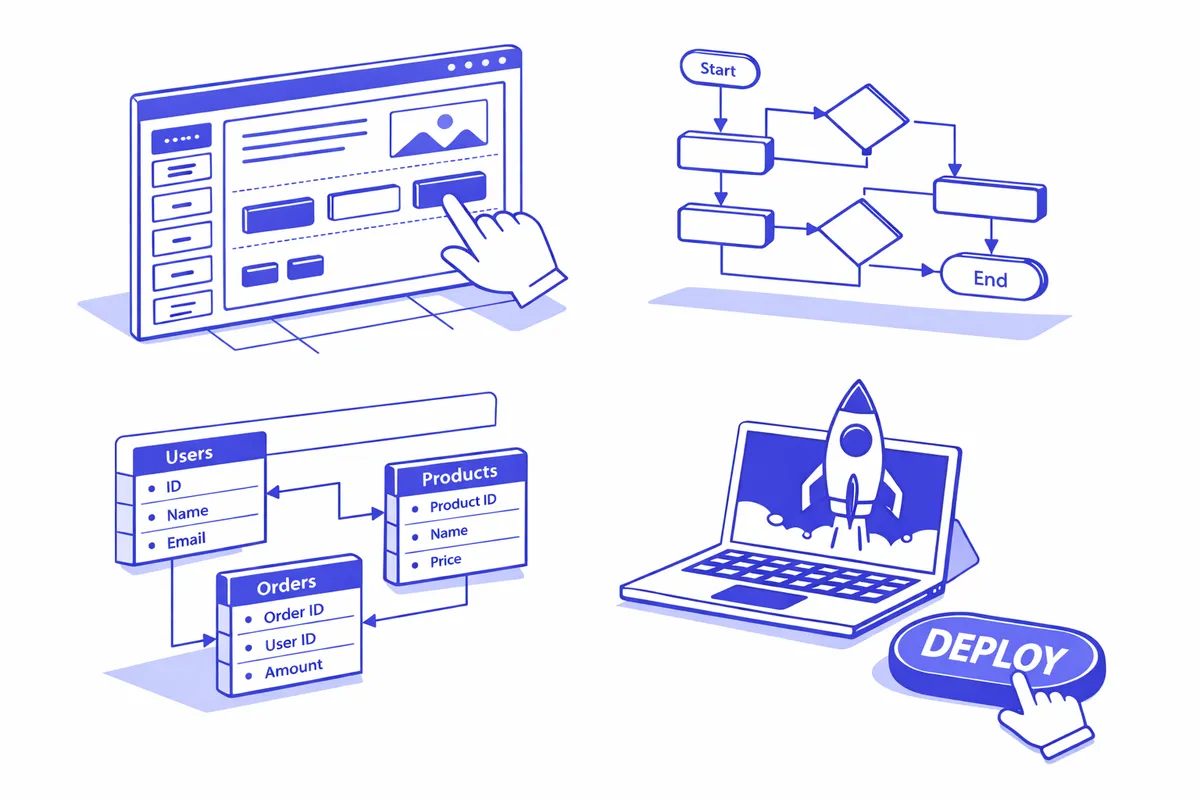
2. Architecture before configuration. We design the data model before touching the platform. For Bucktown owner-operators who will maintain the system themselves, a clean architecture from the start prevents the painful rebuilds that bad data models create at scale.
3. Build with your team's validation. You access the system as it develops. Your team checks that the tool matches your actual process at each stage before we finalize. The clothing buyer on Damen Avenue tests the inventory views before we call the build complete.
4. Handover your team can use. Training is hands-on. Documentation covers the system your team will actually maintain. The objective is that you can add a product category, adjust a pay formula, or modify an automation without calling us.