How We Build Inventory Management for Bucktown
We start with a count and a walk-through. Before we configure anything, we go through the actual space: the floor on Damen Avenue, the closet-sized stockroom, the basement overflow. We need to see how product physically moves through a Bucktown storefront, because a yoga studio managing retail and class supplies has a different flow than a clothing boutique with hundreds of SKUs across sizes and colors.
Then we build the catalog around how you actually buy and sell. We structure SKUs, variants, and categories to match your merchandise, set par levels and reorder points against the space you have, and load your real product so you are reviewing your own inventory, not a sample. For a boutique near the 606 trail that means size and color variants tracked individually, because "in stock" without the size is not in stock to the customer standing there.
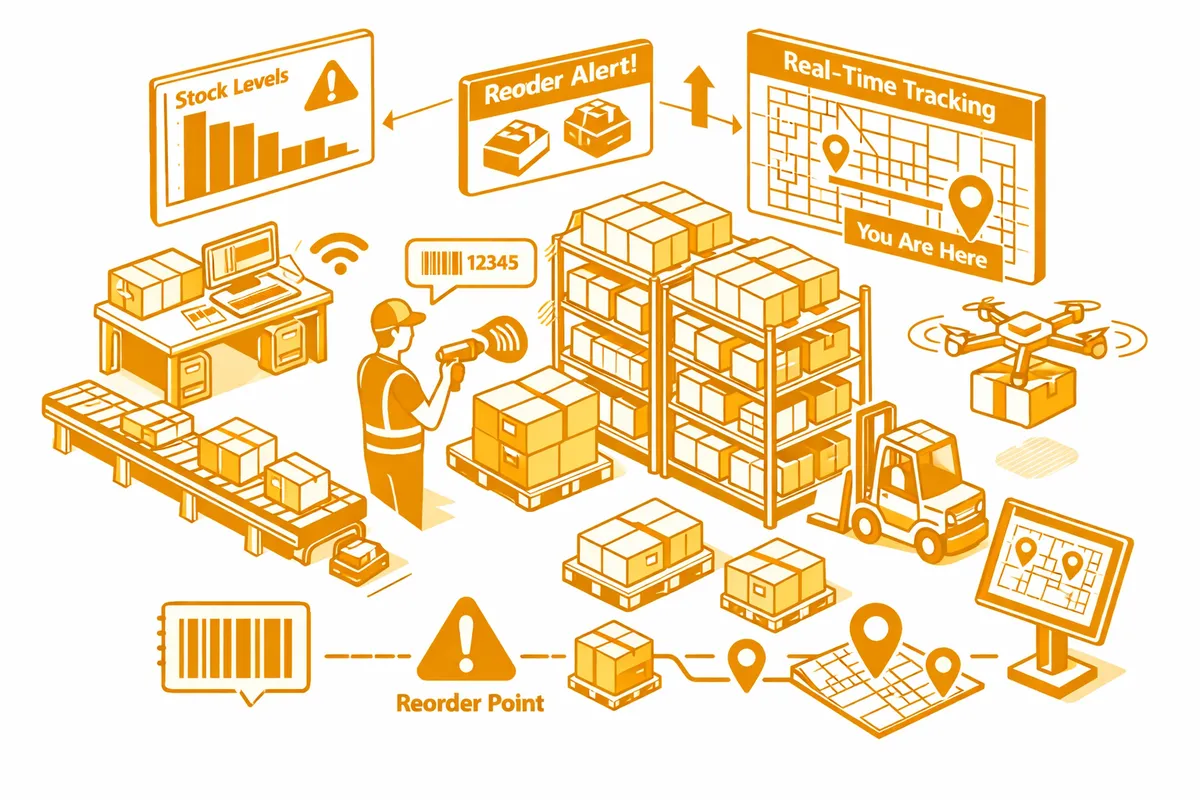
We connect the system to your point of sale so every sale decrements the count automatically, and we add the AI layer where it earns its place. The system reads your sell-through history and flags what to reorder and when, predicts how a seasonal buy will move based on prior cycles, and warns when slow product is taking up backroom space better used by something that turns. We can also process supplier invoices and packing slips automatically, so receiving a shipment off Armitage Avenue updates the count without manual entry. Then we test against your real receiving and selling, and train your staff on the floor.
Industries We Serve in Bucktown
Boutique clothing and apparel shops along Damen Avenue and Armitage Avenue carry deep size and color variants in shallow backrooms. Inventory management tracks every variant separately, so a boutique near the 606 trail knows it has the medium and not just the style, reorders fast-moving sizes before they gap, and stops over-ordering the variants that sit.
Yoga and fitness studios near Churchill Field Park and Holstein Park sell retail alongside running on consumable supplies. An inventory system lets a studio off North Avenue track mat and apparel stock next to towels, cleaning supplies, and props, with reorder alerts that keep both the retail shelf and the practice space supplied without overbuying.
Design firms and home goods retailers around Milwaukee Avenue handle higher-value, lower-velocity inventory where each piece occupies real space. Inventory management gives a design shop near the Bucktown stretch of Milwaukee a precise read on what is in the showroom, what is in storage, and what is committed to a client, so capital is not tied up in product that is not turning.
Coffee shops and specialty food retailers along Damen Avenue and North Avenue manage perishable stock and packaged goods on tight timelines. An inventory system helps a cafe near Pulaski Park track bean and supply levels, time reorders to actual usage, and cut waste from perishables that expired in a backroom nobody had a current count of.
Independent restaurants off Armitage Avenue and Milwaukee Avenue run kitchens where food cost is decided by inventory discipline. Inventory management gives a restaurant near Holstein Park a current count of ingredients and supplies, ties usage to what actually sold, and flags the gap between expected and real consumption that points to waste or shrinkage.
Real estate offices and staging businesses in Bucktown maintain furniture, decor, and staging inventory that moves between properties and storage. An inventory system lets an office near Churchill Field Park track which pieces are in which unit, what is available to stage a new listing, and what is sitting in storage, so the staging inventory is an asset that gets used rather than lost.
What to Expect Working With Us
1. Space and stock audit. We walk your actual Bucktown storefront, from the selling floor on Damen Avenue to the basement overflow, and see how product physically moves. The constraint we are designing around is your real square footage, so we measure it before we configure anything.
2. Catalog build to your buy. We structure the SKU catalog, variants, par levels, and reorder points around how you actually merchandise, then load your real product. You review your own inventory in the system and confirm it matches the floor before we go further.
3. POS integration and AI tuning. We connect the system to your point of sale so sales update counts automatically, and we calibrate the AI reorder and forecasting logic against your sell-through history. We time this so the system is steady before a seasonal cycle like the warm-weather 606 surge or the holiday run.
4. Receiving rollout and review. We test the system against a real shipment and a real sales day, train your staff at the counter, and then track accuracy in the weeks after launch. We tighten par levels and forecasting as your numbers come in across a full season.