How We Build HR Automation for Bucktown
We size the solution to the business. A boutique retailer on Damen Avenue needs a different scope than a design firm with fifteen full-time staff and a rotating set of project contractors. We do not install enterprise HR platforms in businesses that do not need them, and we do not recommend custom development for workflows that an existing platform can handle.
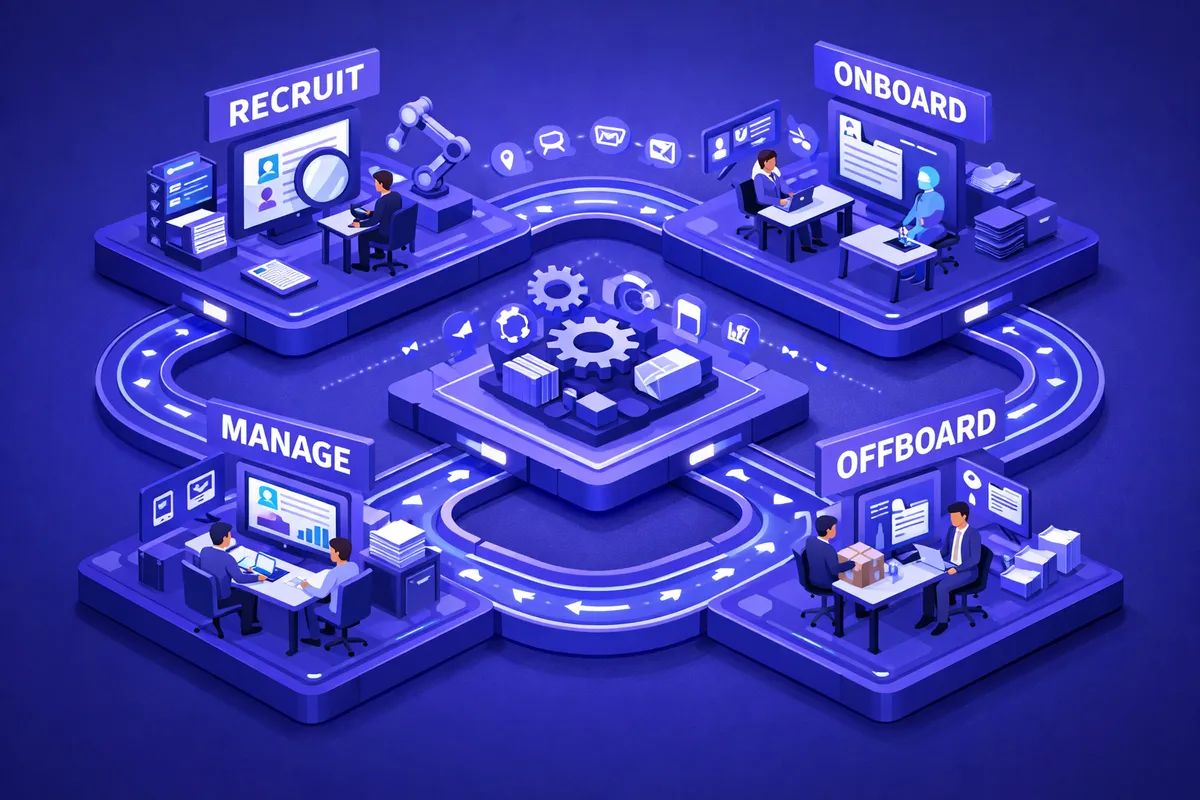
For most Bucktown small businesses, the highest-value starting points are new hire onboarding, compliance training tracking, and PTO and time-off management. Onboarding automation replaces the paper folder with a digital workflow that routes each required document to the new hire directly, tracks completion status, escalates items that are approaching deadlines, and confirms completion to the manager without requiring the owner to chase each step individually.
Compliance training is a recurring requirement that most small businesses manage through memory: a reminder to run food safety training before the summer, a note to complete harassment prevention training by the state deadline. Automation replaces memory with scheduled sequences that trigger automatically, track each employee's completion status, and send reminders to employees and managers when deadlines approach.
For Bucktown design firms and creative agencies, we build the contractor onboarding and offboarding workflows separately from the full-time employee workflows. Each contractor engagement triggers a workflow that collects the project agreement, W-9, certificate of insurance, and any applicable NDA. The workflow tracks the engagement timeline and triggers offboarding steps when the project end date approaches. That cycle runs without owner intervention once the initial setup is complete.
Industries We Serve in Bucktown
Boutique clothing and retail stores along Damen Avenue automate seasonal hire onboarding at volume, required harassment prevention training completion tracking, anniversary-based performance review scheduling, PTO request routing and approval, and offboarding for seasonal staff at end-of-season. The Damen corridor sees significant seasonal hiring for summer and holiday retail peaks; automation manages those cycles without proportionally increasing the owner's administrative time.
Yoga studios and fitness businesses near Holstein Park and The 606 trail automate instructor certification tracking and renewal reminders, new client and member intake separate from staff HR, instructor onboarding with required certification verification, and the scheduling of annual safety and CPR training renewals. Fitness businesses frequently mix employee and independent contractor instructors; separate workflows handle each correctly.
Independent restaurants and coffee shops in the Bucktown and Milwaukee Avenue corridor automate food handler certification tracking, health card renewal reminders, tip credit documentation, required food safety training assignment, anniversary-based performance reviews, and new hire onboarding including state I-9 documentation requirements. Owner-operators who are managing the floor and the kitchen simultaneously cannot also be manually chasing training completion for each staff member.
Design firms and creative studios near Pulaski Park automate contractor and freelance onboarding with separate document workflows, project agreement renewal tracking, certificate-of-insurance expiration reminders, full-time employee onboarding including equipment provisioning requests, and annual performance review scheduling. Design firms that mix employees and contractors need systems that handle each relationship type correctly without the owner managing the distinction manually.
Real estate offices along North Avenue and Armitage Avenue automate new agent onboarding including license verification and state continuing education tracking, annual CE deadline reminders, and the document management for agent agreements and commission structures. Real estate compliance has specific continuing education requirements that manual tracking frequently misses near deadline.
Coffee shops and neighborhood food businesses automate food handler certification for all food-contact staff, annual required training completion, new hire orientation documentation, and the tip pool documentation requirements for employers using tip credits under Illinois law.
What to Expect Working With Us
1. Workflow mapping scaled to your operation. We spend time understanding how HR processes actually run at your business, not how they are supposed to run. For most Bucktown small businesses, the actual process is significantly more manual than any documentation suggests. That mapping reveals the highest-value automation opportunities specific to your size and industry.
2. Platform selection that fits the scale. We recommend platforms appropriate for small and mid-size independent businesses, not enterprise solutions that require a full-time administrator. For a Bucktown boutique retailer with eight employees, the right HR automation platform is different from what a 150-person company would use. We match the tooling to the business size.
3. Compliance baseline review. Before automating compliance workflows, we review current state requirements for your industry and employment type. Illinois food handler requirements, state harassment prevention training deadlines, I-9 completion timing: we confirm the current requirements and build the automation to those standards rather than assuming what the requirements are.
4. Owner handoff and ongoing support. Because most Bucktown businesses do not have an HR staff member to manage the automation, we build systems designed for owner operation. The handoff includes documentation written for non-HR professionals and a support period where we handle questions that arise in the first full operating cycle.