How We Build ERP Integration for Bucktown
ERP integration starts with a process audit, not a software sale. We document the existing data flows: where inventory is tracked, how purchase orders are generated and received, how customer transactions post to accounting, how payroll interacts with the books, and where the manual reconciliation steps currently live. For a Bucktown boutique, that audit might reveal that inventory is managed in a spreadsheet, sales post manually from Square, purchasing is tracked in email threads with suppliers, and QuickBooks is updated by an accountant every two weeks from exported reports. Each of those manual steps is a candidate for elimination.
Platform selection follows the audit. For most Bucktown independent businesses, the ERP question is not whether to implement SAP or Oracle; it is whether QuickBooks, Xero, or a lightweight platform like Cin7 or Lightspeed is the right core, and which adjacent systems need to be connected to it. We recommend platforms based on your actual workflows and scale, not on vendor relationships or what is most impressive on a spec sheet.
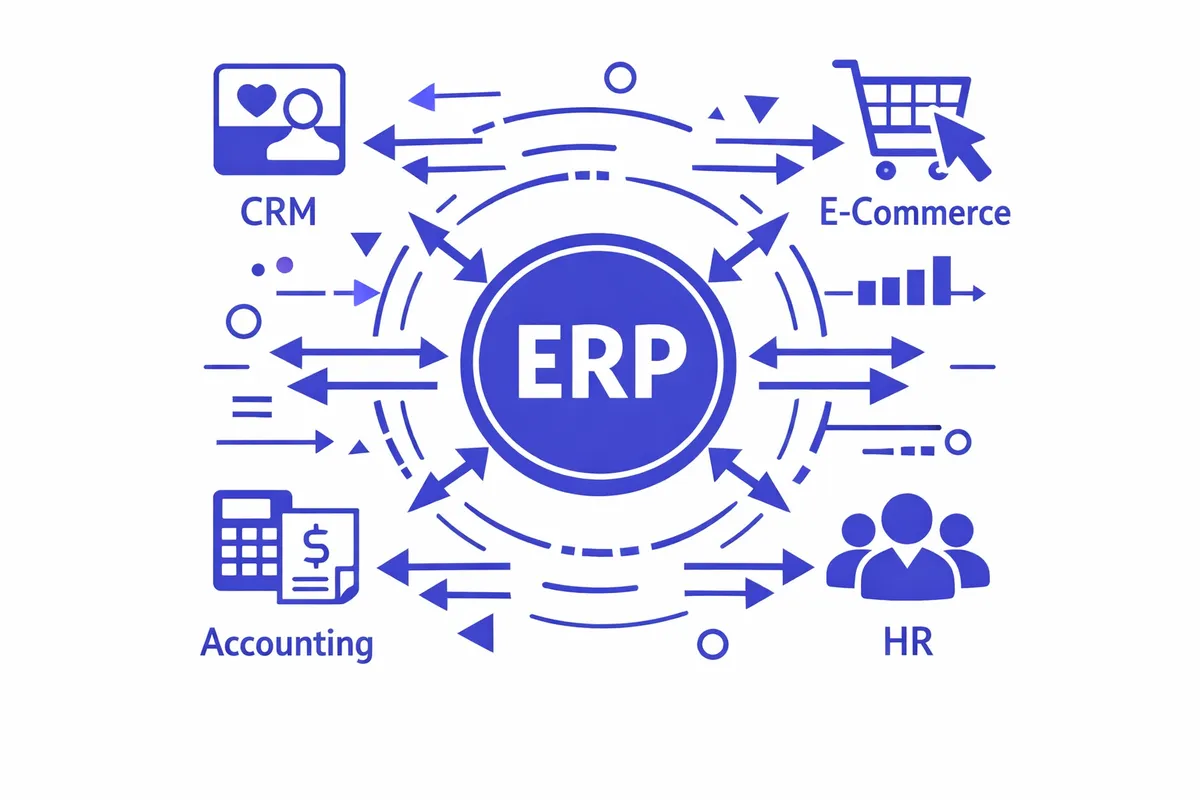
Integration architecture comes next. A boutique with Shopify as its e-commerce layer, Square at the register, a separate inventory management tool, and QuickBooks for accounting needs a clear data hierarchy: which system is the system of record for each data type, and in which direction does data flow. We map those relationships explicitly before writing a line of integration code, because changing the architecture mid-build is significantly more expensive than getting it right at the start. Once the architecture is approved, the build runs in phases, with each data layer tested in staging before connecting to production systems.
Industries We Serve in Bucktown
Boutique clothing and accessories retailers on Damen Avenue scaling beyond a single storefront need ERP integration to maintain inventory accuracy across channels. When the in-store register, the Shopify store, and a potential wholesale account all draw from the same inventory, a properly integrated system adjusts the shared inventory ledger after every sale regardless of channel. Purchase orders generate automatically when SKUs fall below threshold, and the accounting system receives the cost and revenue entries without manual data entry.
Design firms and creative studios in Bucktown's converted loft spaces manage project-based revenue, contractor payments, and client billing cycles that require accurate job costing against actuals. ERP integration connects time-tracking to project profitability reporting, contractor invoices to purchase order workflows, and client billing milestones to cash flow projections. The result is real-time visibility into which projects are profitable and which are bleeding margin before the engagement closes.
Yoga studios and wellness operations along Armitage Avenue that have grown into multi-location operations manage class revenue, membership billing, instructor payroll, and supply purchasing across platforms that often do not communicate. ERP integration creates a single view of operations: revenue by location, instructor cost by class type, membership churn against acquisition rates, and supply spend against budget.
Real estate offices and property management firms on Western Avenue deal with transaction-based revenue, commission calculations, and property expense tracking that is notoriously difficult to manage across disconnected systems. ERP integration connects transaction management platforms to accounting, commission calculation tools to payroll, and property expense tracking to budget reporting so the firm operates on current numbers rather than month-end reconciled summaries.
Independent restaurants and food-and-beverage operations near Holstein Park that have grown beyond a single location need integrated inventory, purchasing, and POS data to manage food costs accurately. Recipe-level food cost tracking requires the POS, inventory, and purchasing data to connect so the cost of goods sold reflects actual usage against actual purchase prices. Without that integration, food cost management is guesswork.
Coffee shops and specialty retailers near The 606 trail that have added wholesale accounts to their retail operations need to manage two sales channels, potentially different pricing structures, and inventory that serves both. ERP integration keeps wholesale orders, retail POS sales, and inventory all reconciled against the same stock without requiring someone to manually update a spreadsheet after every wholesale shipment.
What to Expect Working With Us
1. Process audit and platform recommendation. We document your current operations, map the manual steps that cause errors or consume management time, and recommend the ERP architecture best suited to your actual scale and workflows. For a Bucktown boutique at the stage where ERP first makes sense, the recommendation often involves integrating existing platforms rather than replacing them.
2. Integration architecture and phased build plan. We define the data hierarchy, integration direction, and build sequence before any code is written. Phases are sequenced so the highest-value integrations come first and each phase tests cleanly before the next begins.
3. Parallel operation and data migration. During the transition period, old and new systems run in parallel so nothing breaks during the switch. We migrate historical data where it matters for reporting continuity and validate data integrity at each phase before decommissioning the legacy process.
4. Training and operations handoff. Your team needs to understand the new system well enough to operate it confidently and to recognize when something looks wrong. We run role-specific training, provide documentation, and remain available for the first thirty days of live operation to address questions that only arise when people are using the system under real conditions.